The Munich issue
Viktualienmarkt at Dawn — Munich's Famous Food Market Before the Crowds Arrive
Before the tour groups descend, Munich's 140-stall market belongs to a 5:30am coffee ritual, a standing-room doughnut queue, and the families who've run its counters for generations.

By Chiara FontanaWhere Munich actually eats
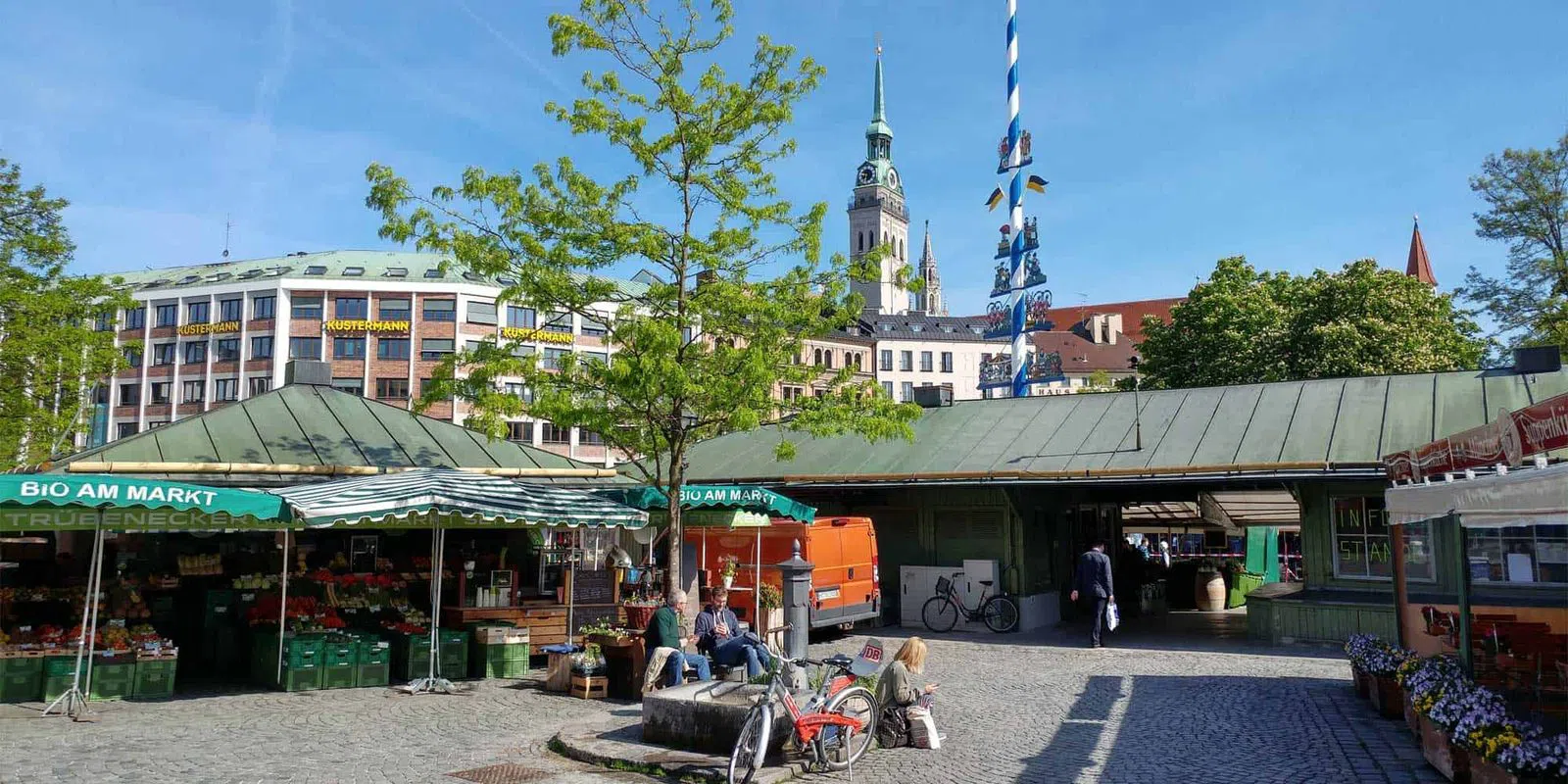
At 5:28am the Viktualienmarkt is still dark under its chestnut trees, tarpaulins snapping in the cold air blowing up from the Isar, and the only sound is a metal shutter grinding upward two minutes early because Karnoll's has never once opened late. By six the coffee is already scalding, the first pretzels are stacked in wax paper, and Munich's most photographed market belongs, briefly, only to the people who work it. This is the version of the Viktualienmarkt that most visitors never see — not because it's hidden, but because it happens before their alarms go off.
The Ritual That Opens the Market
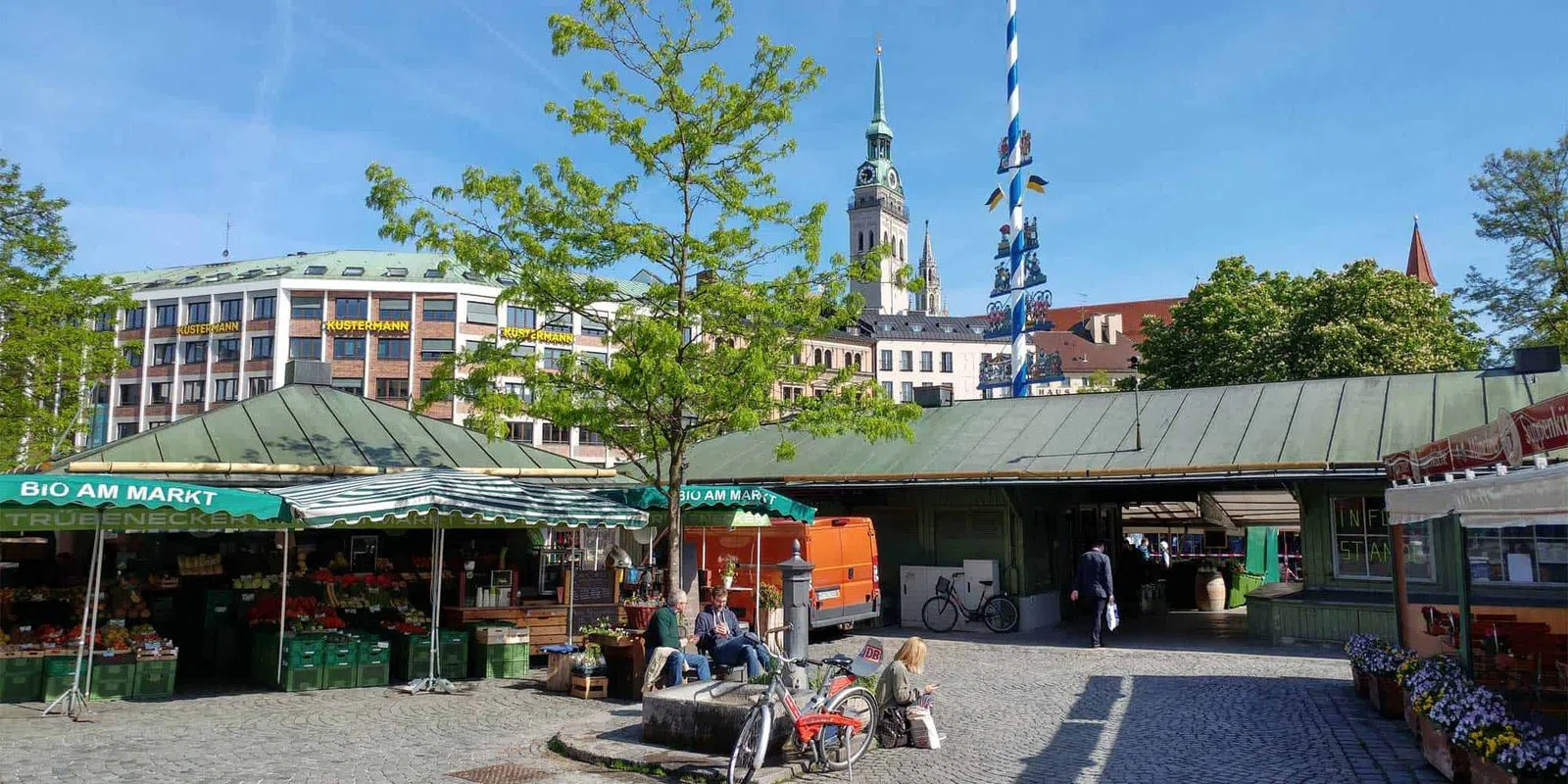
The Viktualienmarkt, a few minutes' walk south of Marienplatz in the old town, has been Munich's working larder since 1807, when the city relocated its farmers' stalls off the main square to make room for growing town hall traffic. It's still exactly that: an open public square, no admission, no reservation, nothing stopping a family of eight from drifting stall to stall with strollers and cameras. Browsing costs nothing; a coffee or a snack runs €2-8. But the square everyone photographs at eleven, jammed three-deep around the beer garden, is a completely different place at six — quiet enough to hear the bottle crates being stacked, cold enough that the stallholders' breath shows, and populated almost entirely by people who work here rather than visit.
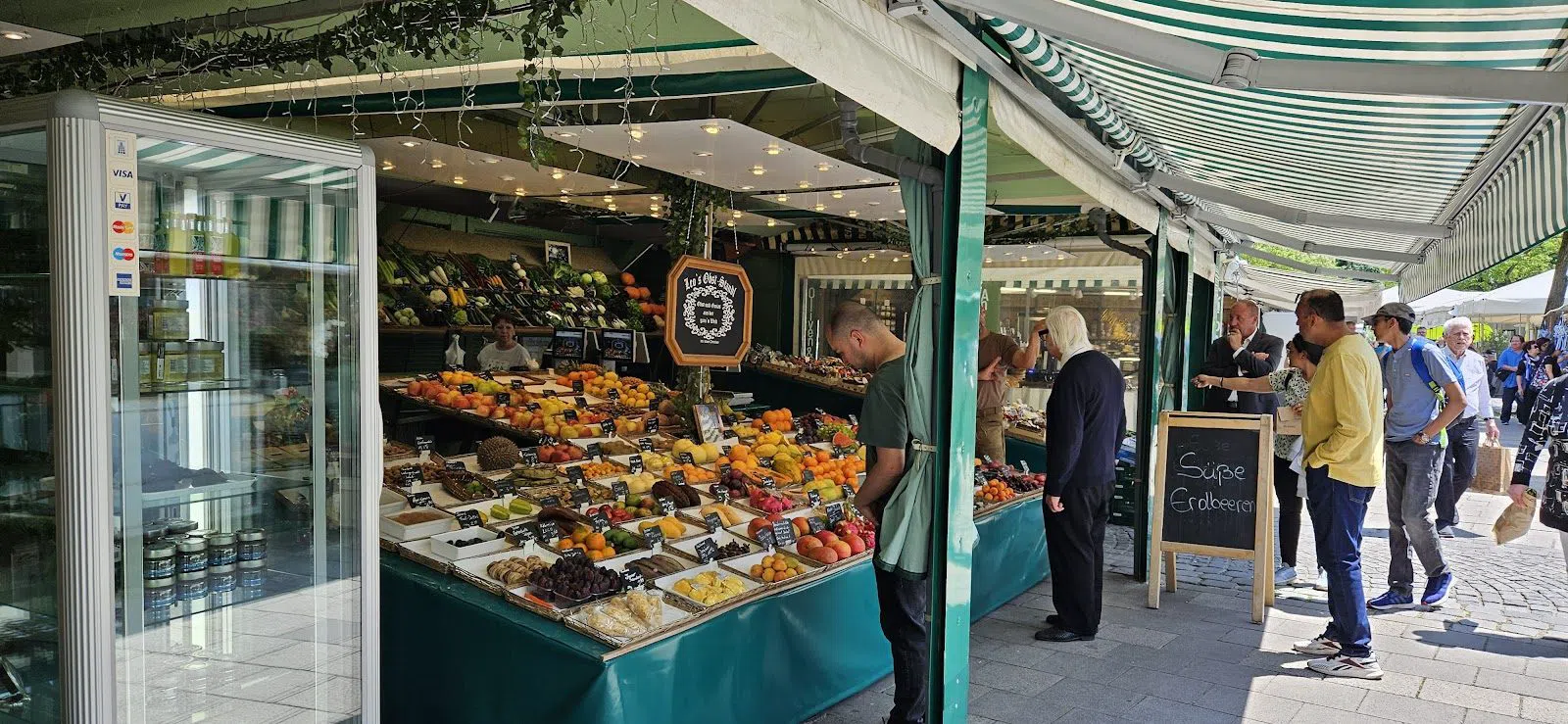
The first shutter up, every single morning, belongs to Karnoll's Back- und Kaffeestandl, a walk-up counter tucked among the market's eastern stalls. It has opened at 5:30am daily since 1974, run now by the second generation of the same family, and for decades it wasn't really a tourist stop at all — it was where the market's own traders bought their coffee before the public arrived. There's no seating, just a counter to lean on, a pretzel (€2-5) in one hand and a coffee in the other, and it's fine for two or three people to cluster around it, though anything larger starts blocking the stallholders trying to get past with trolleys. This is the dawn ritual, more than any other stop on the square: the market's own opening bell. Stand near the counter with that first coffee for ten minutes and you'll watch the whole market assemble around you — crates thudding off delivery vans, awnings cranked out one by one, the produce stalls arranging fruit into the pyramids that tourists photograph three hours later without ever knowing who built them.
Plan your Munich trip
Live prices from our booking partners.
Free cancellation on many rooms. We may earn a commission when you book.
The Standing-Room Doughnut
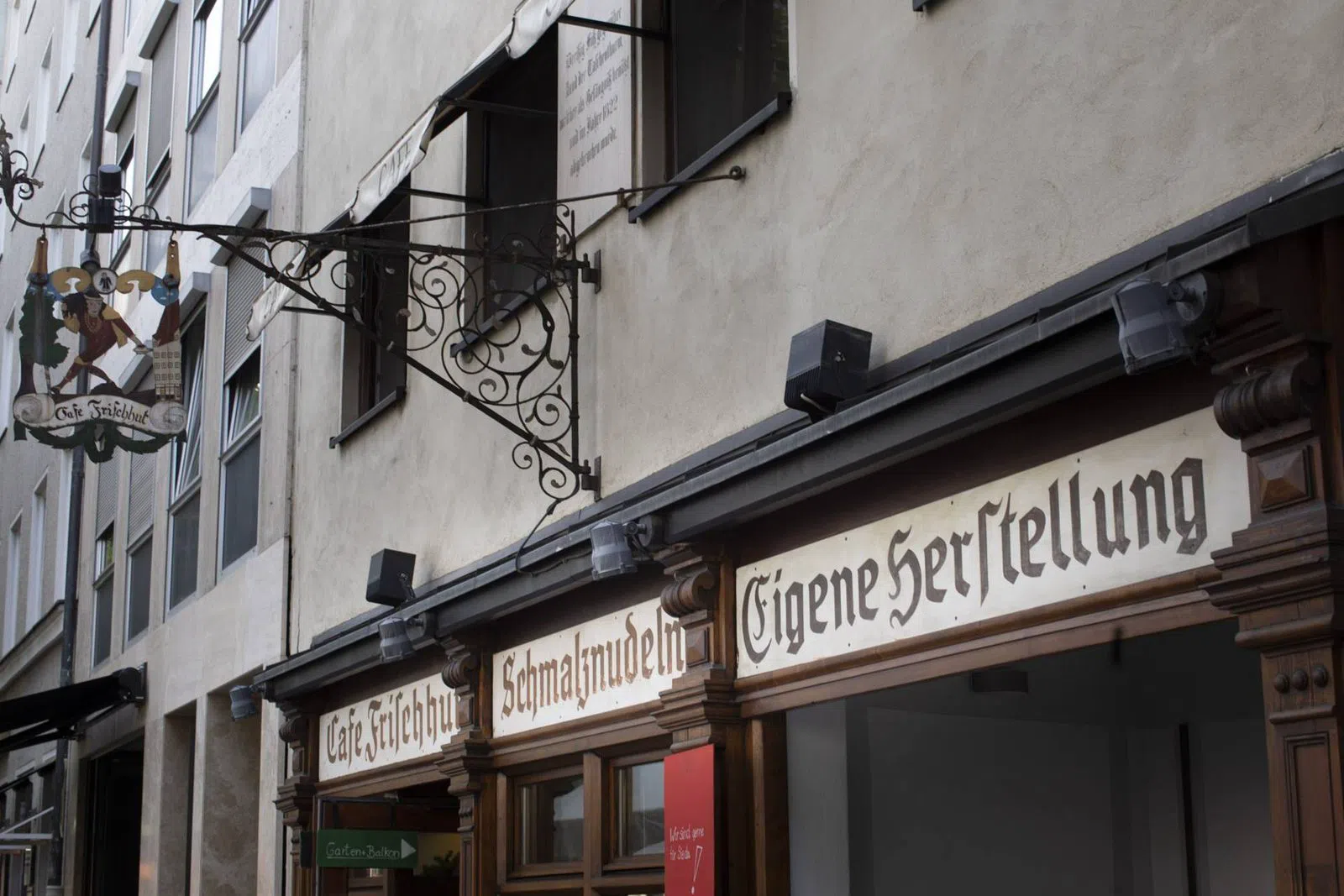
Word travels fast about Schmalznudel - Café Frischhut, a cult pastry stall that's been frying since 1973 and is known to absolutely everyone in Munich simply as "the Schmalznudel." It's standing-room only inside — no chairs, no tables, just a counter and a doorway people eat in — and it's cash only, so come with coins. A Schmalznudel itself, a flat lard-fried pastry dusted in sugar, runs €2-4 and is best eaten within about ninety seconds of being handed to you, while it's still faintly warm and the sugar hasn't gone soggy. Small groups can squeeze in fine, but this isn't a place to linger with more than four or five people — the queue starts building not long after the first stalls open, and by mid-morning it snakes well past the doorway. Go at dawn, or accept the wait later. There's a kind of etiquette to it too: order fast, eat standing where the regulars eat, and don't expect small talk from staff who've been frying since before sunrise — it's brisk, not unfriendly, and the pastry does the talking.
The Counters Where Generations Are Counted in Decades
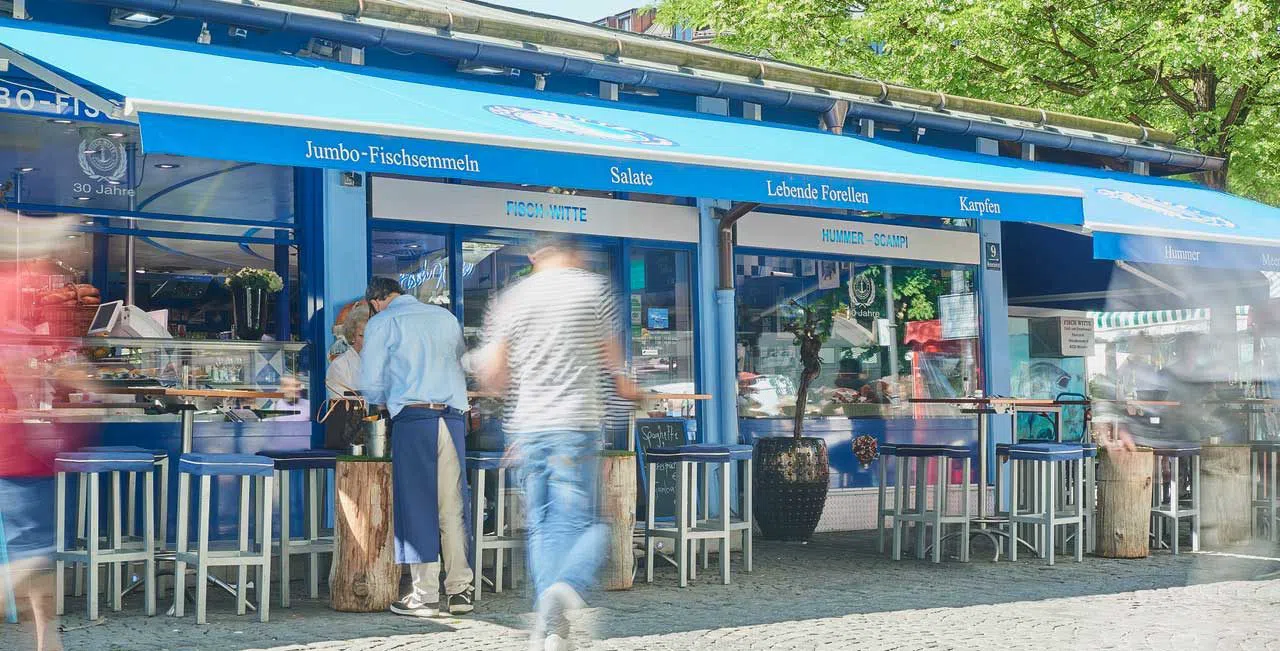
Away from the pastries, the market's oldest working identity is in its meat and fish counters, and nowhere illustrates it better than Fisch Witte, family-run by the Wittes since 1985, with a counter selling straight to shoppers and a bistro section that opens for breakfast trade — smoked fish rolls and simple plates running roughly €8-25. It's a workable stop for small or medium groups, since the bistro has actual seating, though the counter side moves fast and rewards knowing what you want before you reach the front. Come at eight and the ice underneath the fillets is still fresh from the morning delivery; come at noon and it's just as good, but the choice has thinned out.
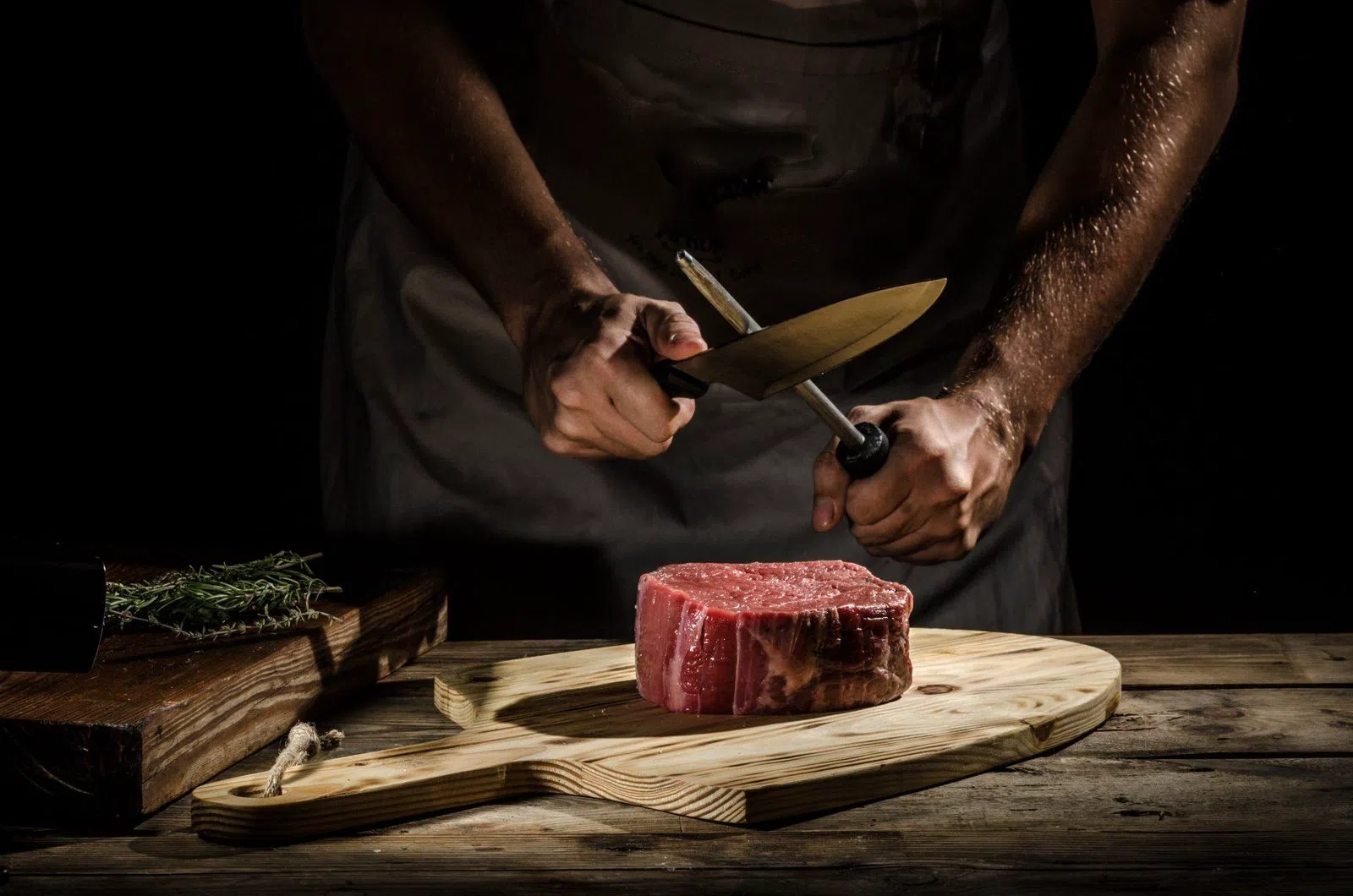
A few rows over sits Metzgerei Setschin, part of the Metzgerzeile — the butchers' row that dates to the market's earliest days, when butchers were among the first trades moved off Marienplatz. It's counter service only, no seating, and quick: a few minutes for a group to pick out sausage or a sandwich (€3-15) and move on, the handcraft here passed down rather than taught from a manual.
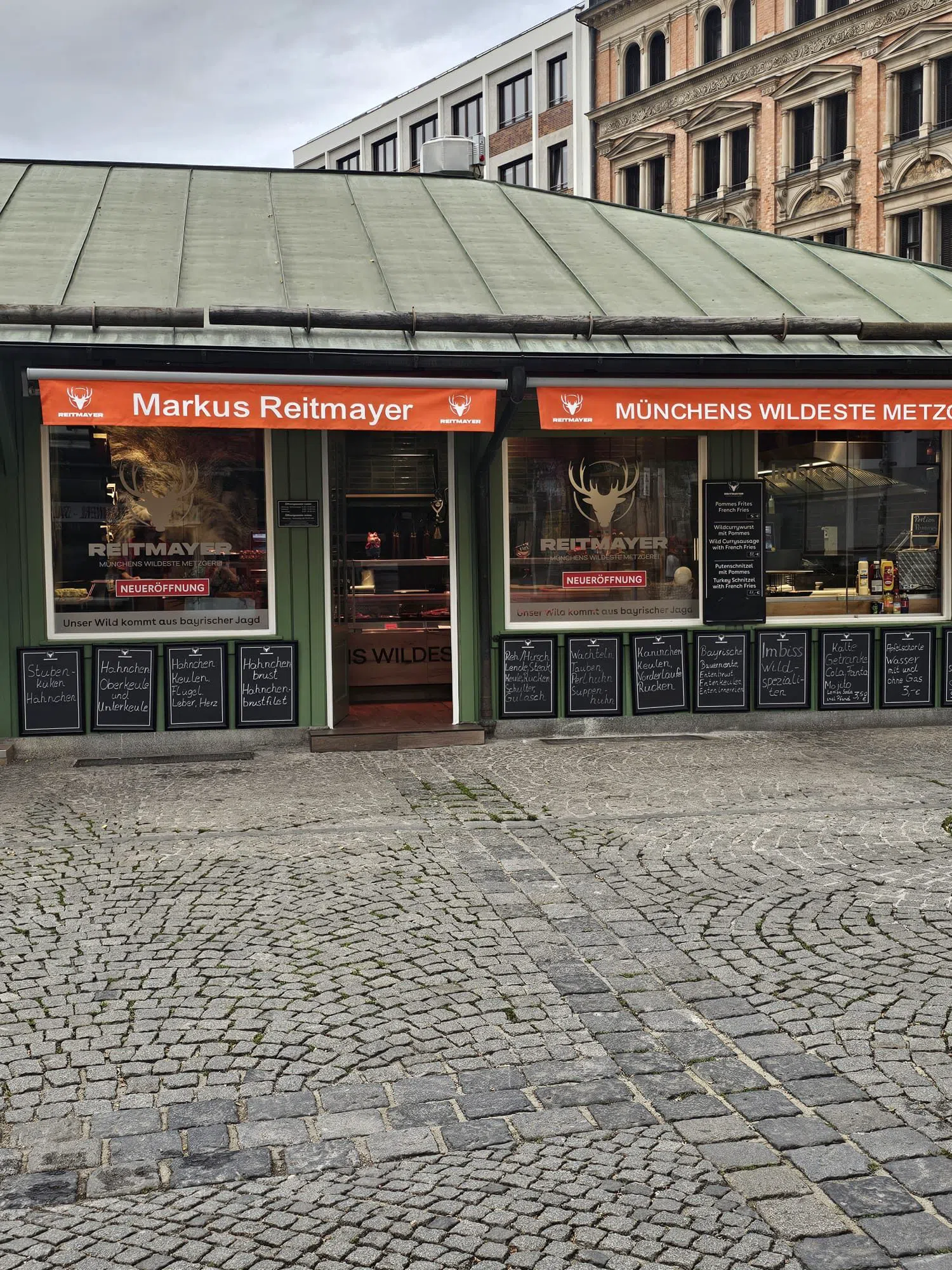
Less obvious, and worth seeking out specifically, is Wild und Geflügel Reitmayer, a game and poultry stall sourcing directly from Bavarian hunters. Most first-time visitors walk straight past it toward the flashier fruit displays, which is exactly why it's worth a stop — a browse costs nothing but a few minutes, and €6-20 buys anything from a package of venison to a ready-to-cook pheasant. It's the clearest evidence on the square that specialist trades, not just produce stalls, have survived here for generations, quietly supplying restaurant kitchens across the city long before the first tourist wanders past at ten.
The Produce Stalls Waking Up
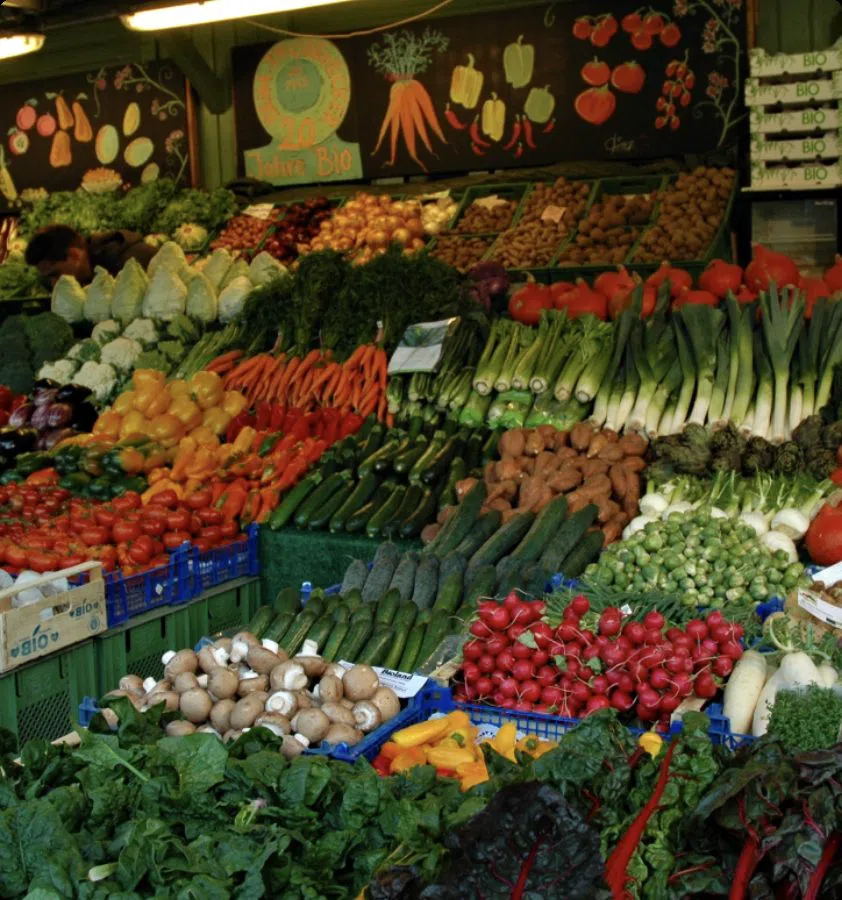
By 7am the fruit and vegetable stalls are in full swing, and Beim Trübenecker is usually among the first properly trading — organic since 1993, with a small juice counter alongside the produce (€2-10). It's an honest contrast to the market's more photogenic exotic-fruit displays: less spectacle, better indicator of what Munich actually cooks with that week — the kind of stall a local shopping for dinner will stop at without a second thought, radishes and asparagus in season stacked in plain wooden crates rather than arranged for effect.
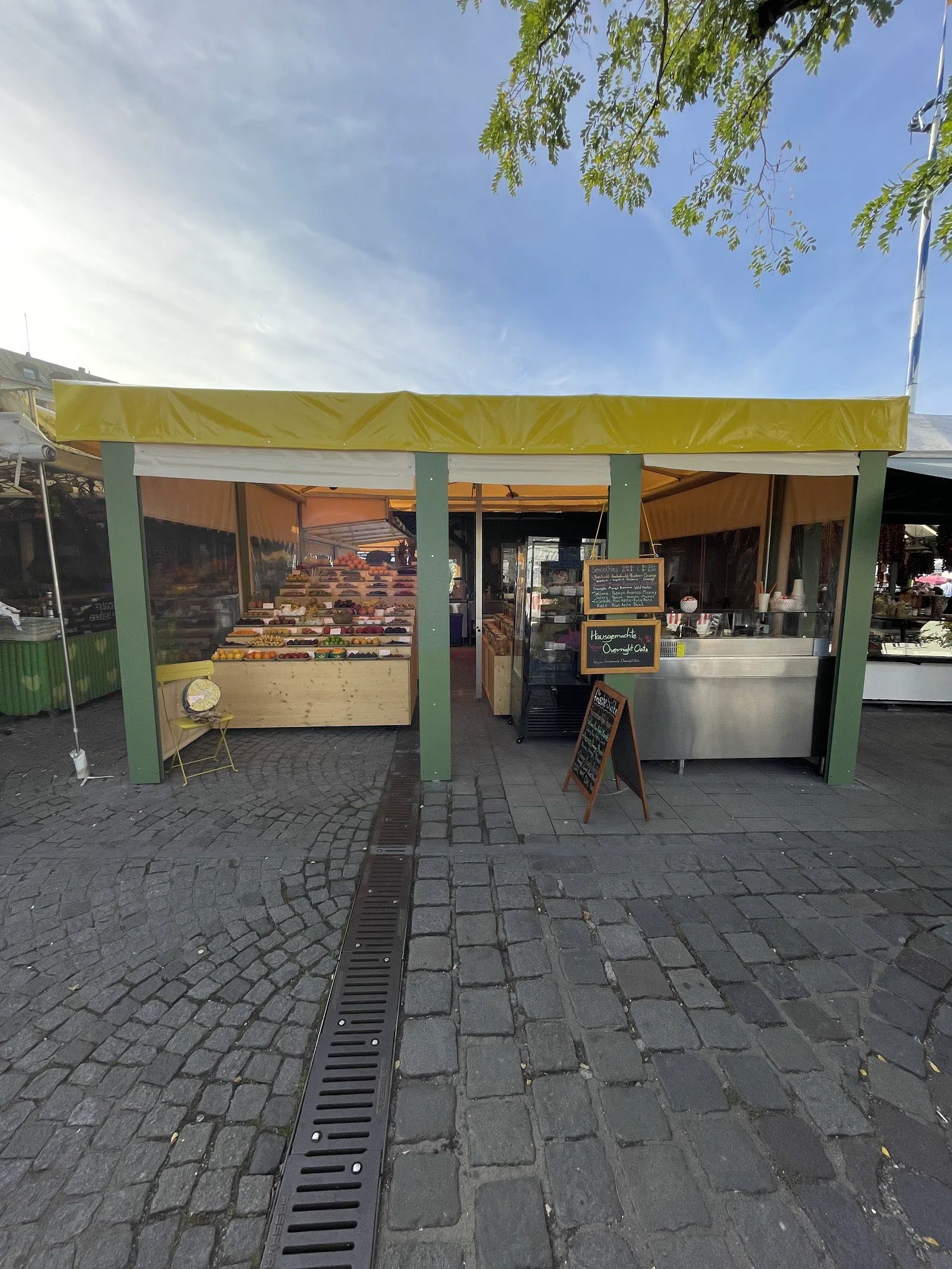
That said, the display everyone stops for is Exotenmüller, the market's most photographed fruit stall, piled with pineapples, dragon fruit, and citrus arranged like a still life (€2-12). It's worth including on any dawn walk purely for how it looks in the low morning light — but it's fair to say most Münchners shop the regional stalls first and treat this one as spectacle rather than their actual grocery run.
Once the Rush Softens: Slower Browsing
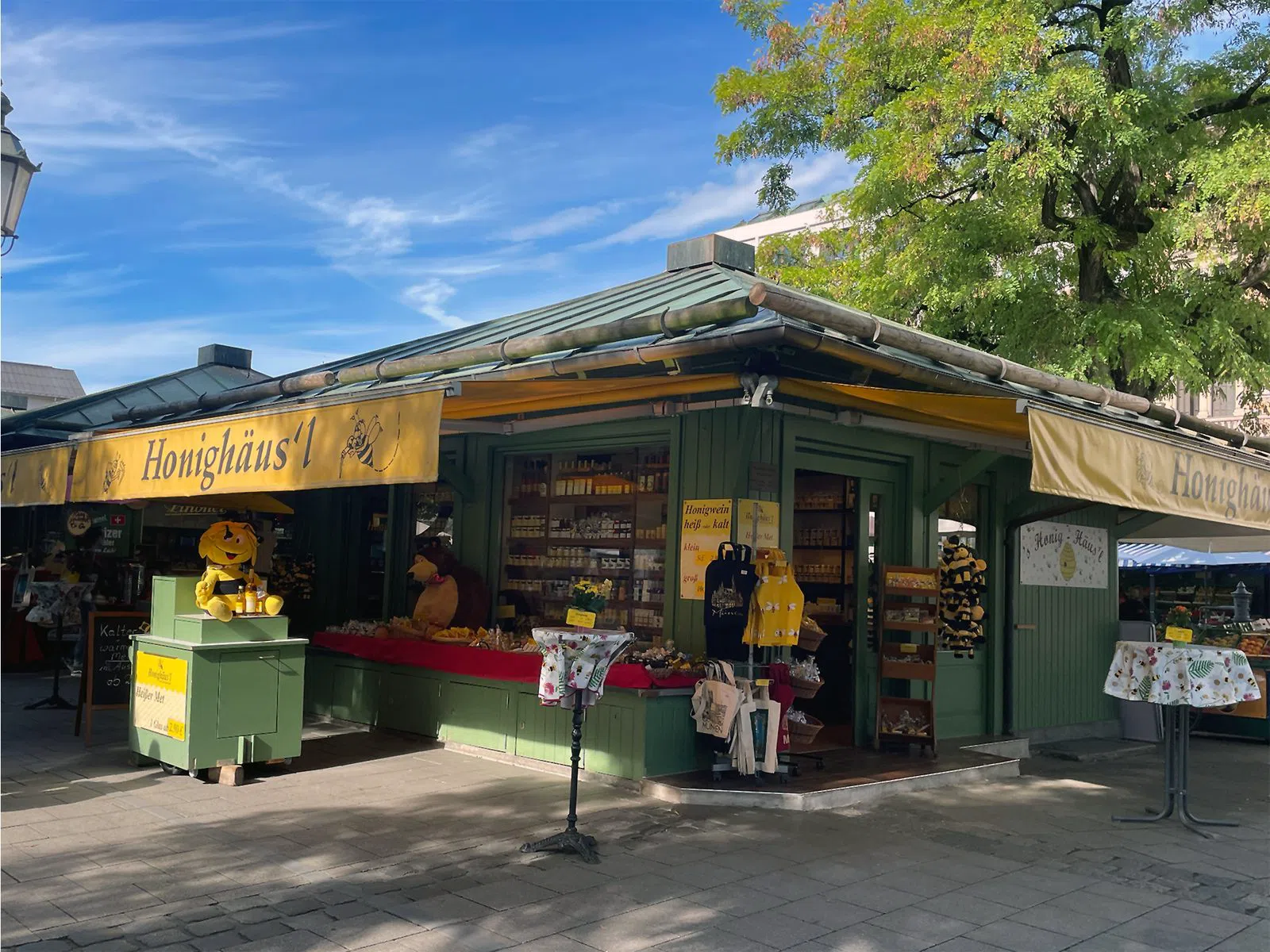
As the morning eases past its coldest hour, two stops reward unhurried browsing rather than a quick counter transaction. Honighäusl stocks more than sixty honeys from twenty countries, run by Wolfgang Kager since 1995 and the market's only dedicated honey specialist — a small stall, but one built for standing and tasting rather than queuing, with jars from €5-15. Groups are fine here since there's nothing to hold up, and Kager or one of his staff will usually talk you through a taste of two or three honeys before you commit to a jar — chestnut and forest honey are the ones worth asking for if the shelf looks overwhelming.
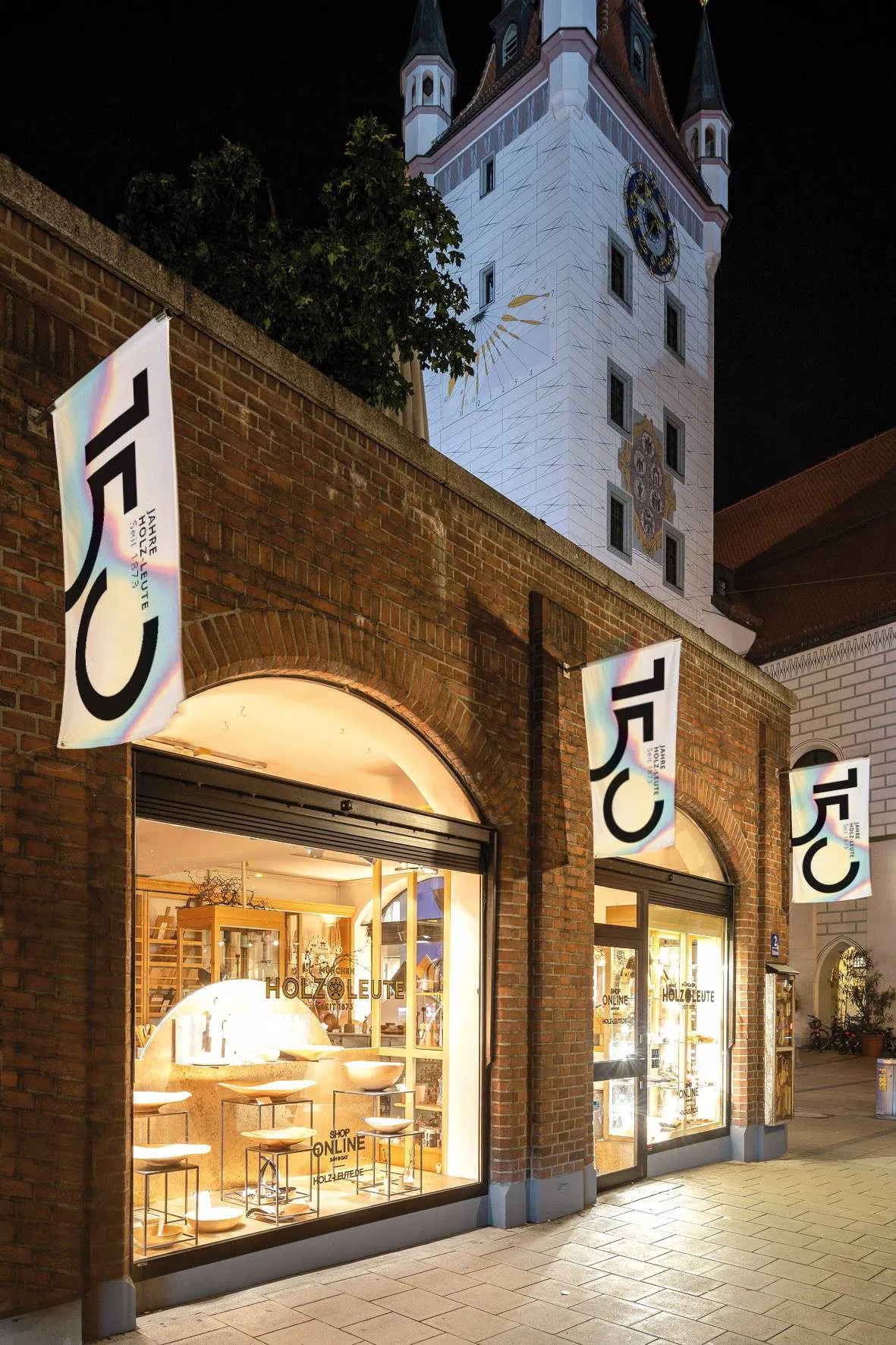
A few steps away, Holz-Leute isn't food at all — it's the oldest business on the entire Viktualienmarkt, trading in handmade wooden goods since 1873. It's a tiny shop, best browsed in twos or threes rather than as a crowd, with pieces from €5 up to around €60. It's the single best piece of evidence that "generations of family trade" here isn't just a phrase applied to food stalls — some of the square's history predates most of its food businesses by over a century.
Late Morning: Sitting Down at Last
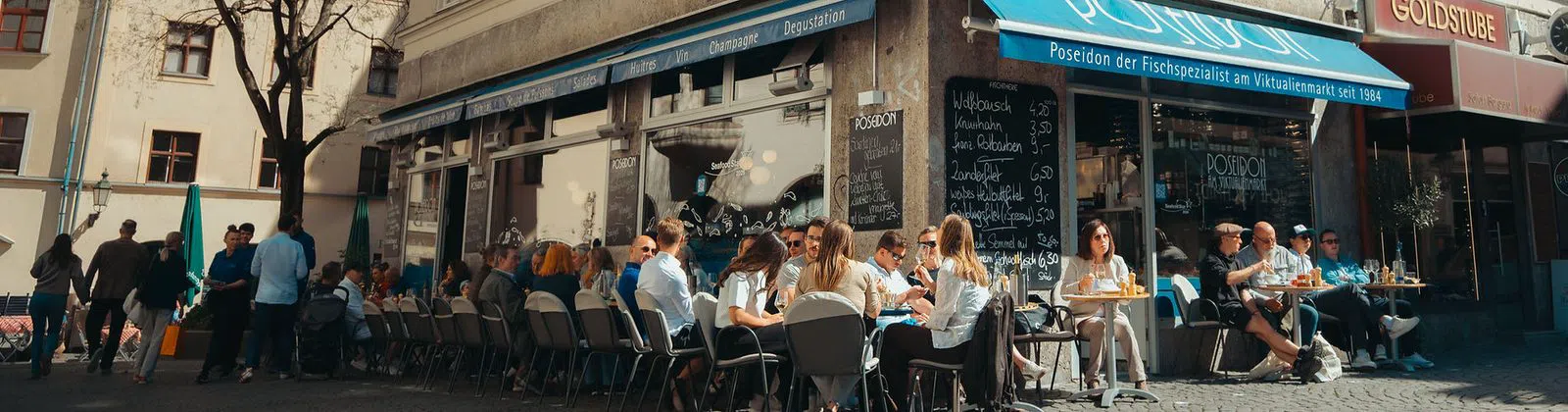
Once the dawn calm gives way to proper foot traffic, Poseidon am Viktualienmarkt is the natural follow-on stop — a fish bistro run by the Mergen family since 1984, with sit-down tables that comfortably handle groups of four to eight and a menu (€10-25) built around whatever the fish counters were selling that morning.

For coffee with an actual chair under you, Rischart Café am Markt opens among the earliest of the market's cafés and is the natural spot to watch the square wake up properly, once the dawn deliveries have settled into daytime trading. Seating is comfortable for groups of four to six, and coffee or a pastry runs €3-10.
And when the morning tips toward midday and the crowd stops being mostly stallholders, Münchner Suppenküche becomes the square's great social leveller — trading since 1982, a walk-up soup counter (€5-9) where office workers, tourists, and market traders all queue in the same line, no seating reserved for anyone. Groups queue individually rather than as a block, which is the honest way to do it here — this isn't a stop that suits a party of ten trying to sit together, more a place to grab a cup and keep wandering.

Where the Morning's Produce Lands on a Plate
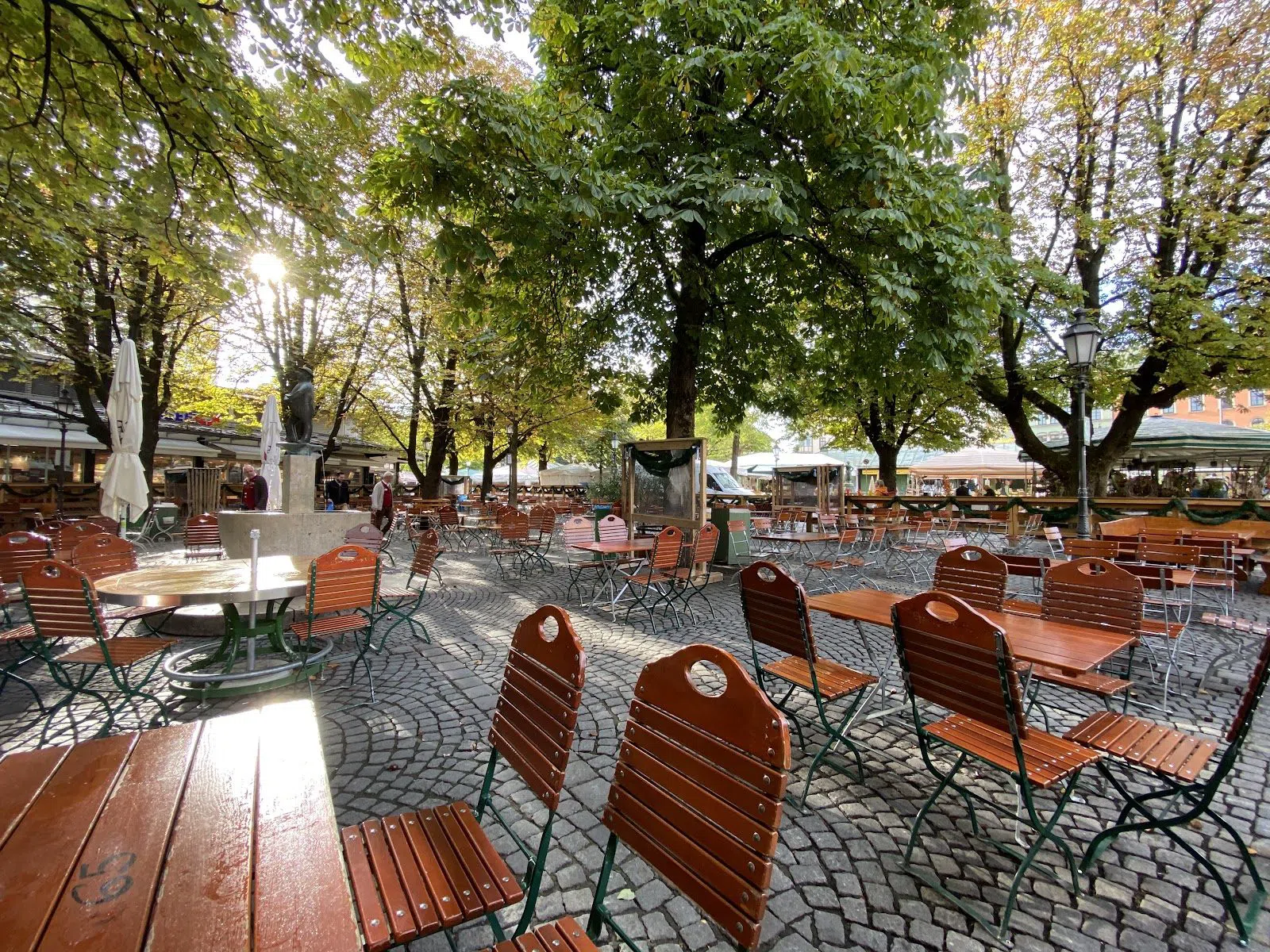
By the time the Biergarten am Viktualienmarkt opens at 9am, the market has fully turned over from working dawn to public daytime, and the beer garden is the fitting place to end a morning that started at Karnoll's counter six hours earlier. It's self-service with communal benches, no booking, genuinely excellent for groups since nobody's holding a table — order a beer and a snack for roughly €3-12 and watch the produce that was being unloaded at dawn turn up, a few stalls away, on other people's plates.
Getting There, Timing It Right, and What to Bring
The Viktualienmarkt sits a short walk south of Marienplatz, reachable on foot from almost anywhere in Munich's old town, or via the U-Bahn and S-Bahn lines that converge at Marienplatz station one stop away. For dawn itself, arrive by 5:45am if the point is watching Karnoll's open — any later than 7am and the character has already shifted from working ritual to public market.
Carry cash. Several of the oldest stalls, the Schmalznudel most notably, still don't take cards, and even where card payment exists, small transactions move faster with coins. Budget for a grazing morning rather than a sit-down meal: €15-25 covers a pretzel, a Schmalznudel, a coffee, and a snack from one of the counters, with a proper bistro breakfast at Fisch Witte or Poseidon pushing that toward €25-40 per person. Layers matter more than most people expect — the square is unshaded and exposed to whatever wind comes off the river, and 5:30am in Munich, even in summer, runs colder than the forecast for midday suggests.
The market itself never really closes to browsing, but the working rhythm described here — coffee at dawn, pastries by seven, produce and meat counters through the morning, a beer garden by nine — repeats daily, weather aside, and rewards showing up with no fixed itinerary beyond arriving early. Weekends push the later hours toward genuinely crowded, so if the goal is the quiet version of the market rather than the postcard version, a weekday dawn beats a Saturday every time. For anyone building a longer stay around it, the Munich guide covers how the Viktualienmarkt fits into the wider city, and the Munich hotel search is the place to start if a 5:30am alarm sounds more appealing with a market five minutes from the front door.
Before you go
What time does the Viktualienmarkt actually open?
There's no single gate that opens - it's a public square - but Karnoll's Back- und Kaffeestandl has served coffee at 5:30am daily since 1974, and that's the closest thing the market has to an opening bell. Most food stalls are trading by 7am, and the beer garden opens at 9am.
Do I need to book anything to visit the Viktualienmarkt at dawn?
No. It's an open public square with no admission and no reservations required anywhere on it. The only booking-adjacent reality is timing yourself around the queue at Schmalznudel - Café Frischhut, which builds fast once the morning gets going.
Is the Viktualienmarkt a good stop for a group?
The square itself easily absorbs groups wandering stall to stall, and sit-down spots like Poseidon am Viktualienmarkt, Fisch Witte's bistro, and the Biergarten am Viktualienmarkt work well for four to eight people. Standing-room counters like Schmalznudel and Karnoll's suit two or three at a time rather than a crowd.
Do the market stalls take card payment?
Some do, but several of the oldest, including Schmalznudel - Café Frischhut, are cash only. Carry cash generally - small counter transactions move faster with coins regardless of whether a card is accepted.
How much should I budget for a morning at the Viktualienmarkt?
A grazing morning of pretzel, Schmalznudel, coffee, and a snack from one of the counters runs roughly €15-25 per person. A proper sit-down breakfast at Fisch Witte or Poseidon am Viktualienmarkt pushes that toward €25-40.