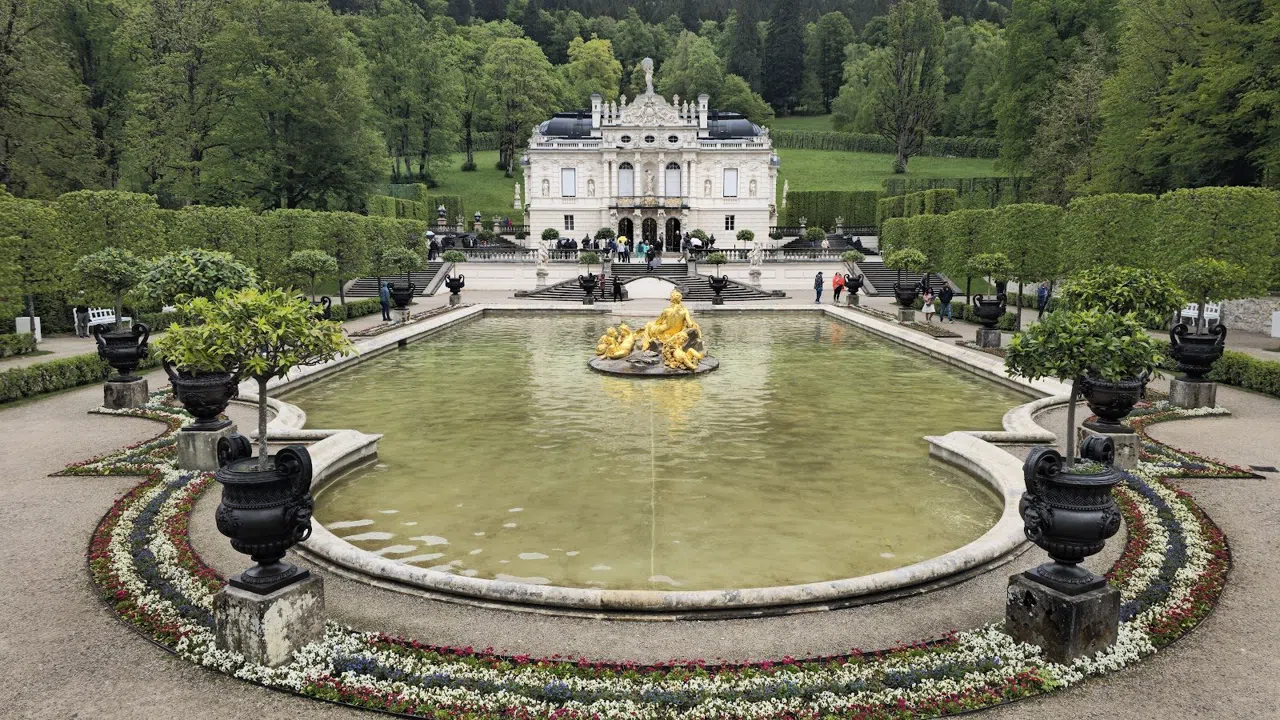

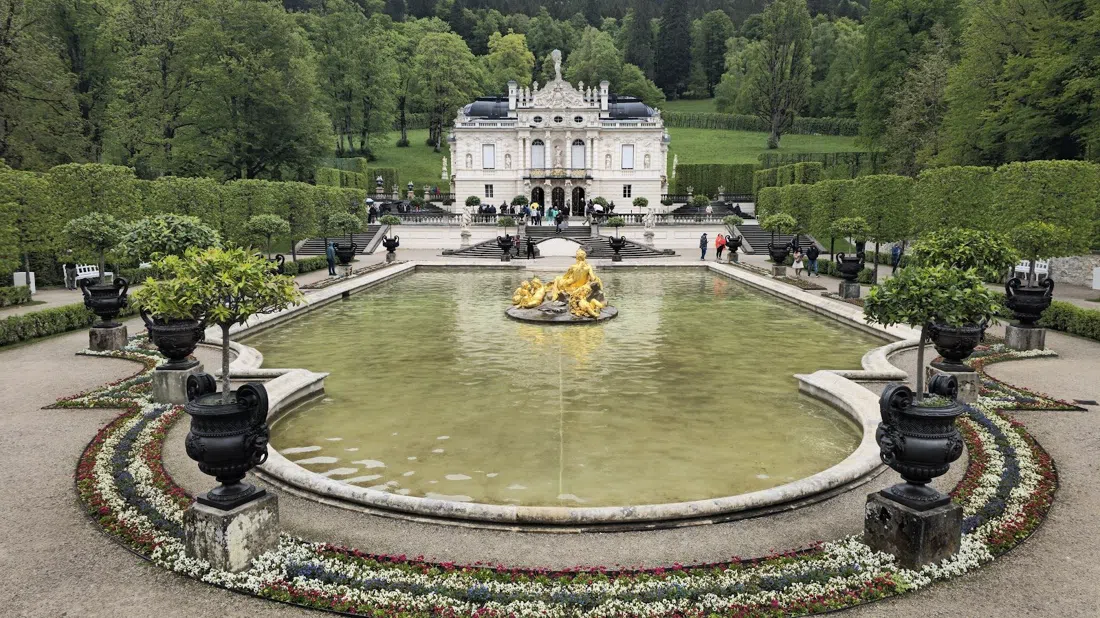
The car park at the head of the Graswangtal smells of wet spruce and cold gravel, and for the first four minutes of the walk in, nothing about Linderhof looks like a palace. There is an avenue, a clipped hedge, a ticket window. Then the parterre opens and there is a small white villa built for an audience of one, with a wall of mountains standing directly behind it. In September the valley stays cold until mid-morning, the coach traffic thins after four, and the building finally reads the way Ludwig II meant it to: private.
What you are actually walking into
Linderhof Palace (Schloss Linderhof, at the closed end of the Graswangtal, roughly 100 km southwest of Munich) is the only one of Ludwig II's building projects he finished and genuinely lived in, and that fact drove the whole design. There is no court ballroom for two hundred guests. It is a single-occupancy house at the dead end of a valley that goes nowhere, built by a king who had stopped enjoying people and wanted somewhere he could stop seeing them.
That changes how you should budget the day. The building is small, the tour is short and tightly controlled, and most of your time on site is spent outdoors. Anyone who plans this like a big-palace day (three hours inside, a café, home) gets the proportions backwards and ends up with forty minutes of ticketed interior and no idea why they drove two hours.
The interior is a 25-minute guided walk, and there is no unescorted wandering: you go in with a group or you do not go in. Tours are capped at 40 people and leave every five to ten minutes in German and English, so the queue moves considerably faster than its length suggests. You see the Hall of Mirrors, where candlelight was multiplied into something closer to a hallucination than a room, and the peacock-blue bedchamber that anchors the far end of the house. Photography indoors is banned outright. No upgrade buys it, so decide in advance that you are here to look rather than to file. Adult entry is EUR 11, reduced EUR 10. Under-18s are free, and students over 18 get in free with ID, which makes this one of the cheapest serious interiors in the region for a young traveller.
The Venus Grotto and why 2026 is the year to bother
The Venus Grotto (Venusgrotte, 50 m uphill behind the palace) is the actual headline. It reopened in April 2025 after roughly a decade of restoration costing about EUR 60 million, with the artificial shell and the crystal thrones rebuilt. For most of the 2010s and early 2020s, people came to Linderhof and simply could not see the strangest thing here: a man-made cave with a lake, built so that a king could be rowed across it in a shell-shaped boat while coloured light changed on the rock.
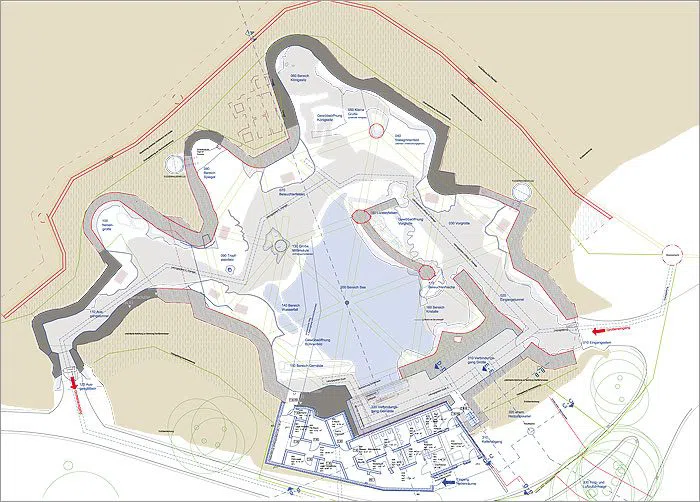
Tours run up to 50 people every 20 minutes and last about 15 minutes. It costs EUR 9 adult, EUR 8 reduced on its own, or it is included in the EUR 18 combination ticket with the palace, which saves you EUR 2 over buying both separately and is the only ticket worth considering if you have come this far.
The hard constraint: the grotto is open only from 15 April to 15 October. A September visit sits comfortably inside that window; an autumn-half-term plan does not. If the grotto is the reason you are coming, September is the last full month that guarantees it.
Two things are missing from the park in 2026
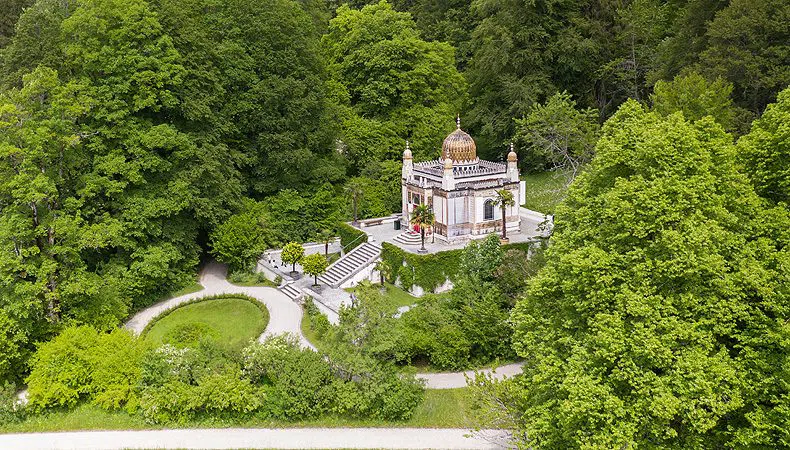
Know this before you commit a day. Linderhof Park and Water Parterre (the formal gardens immediately around the palace) is free and unrestricted, and it is where you will spend most of your visit, but the great gravity-fed palace fountain, which normally throws a jet 22 m into the air, is switched off in 2026 because of the water shortage. The Moorish Kiosk is under scaffolding with no interior and no exterior view until the 2028 season. Those are two of the park's five set pieces, gone.
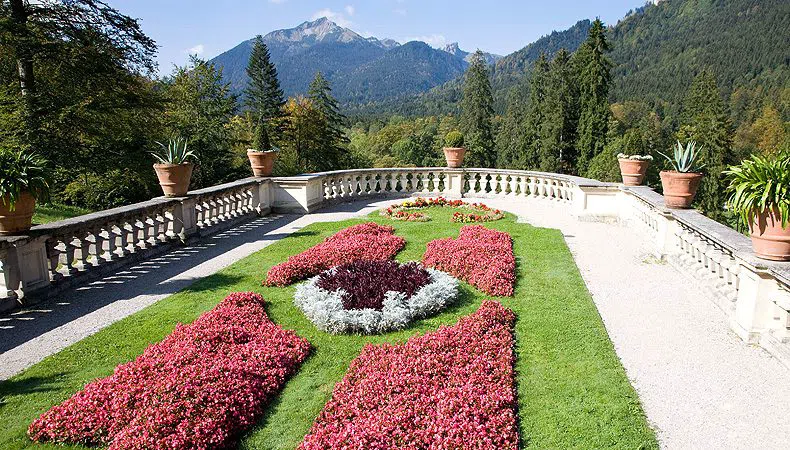
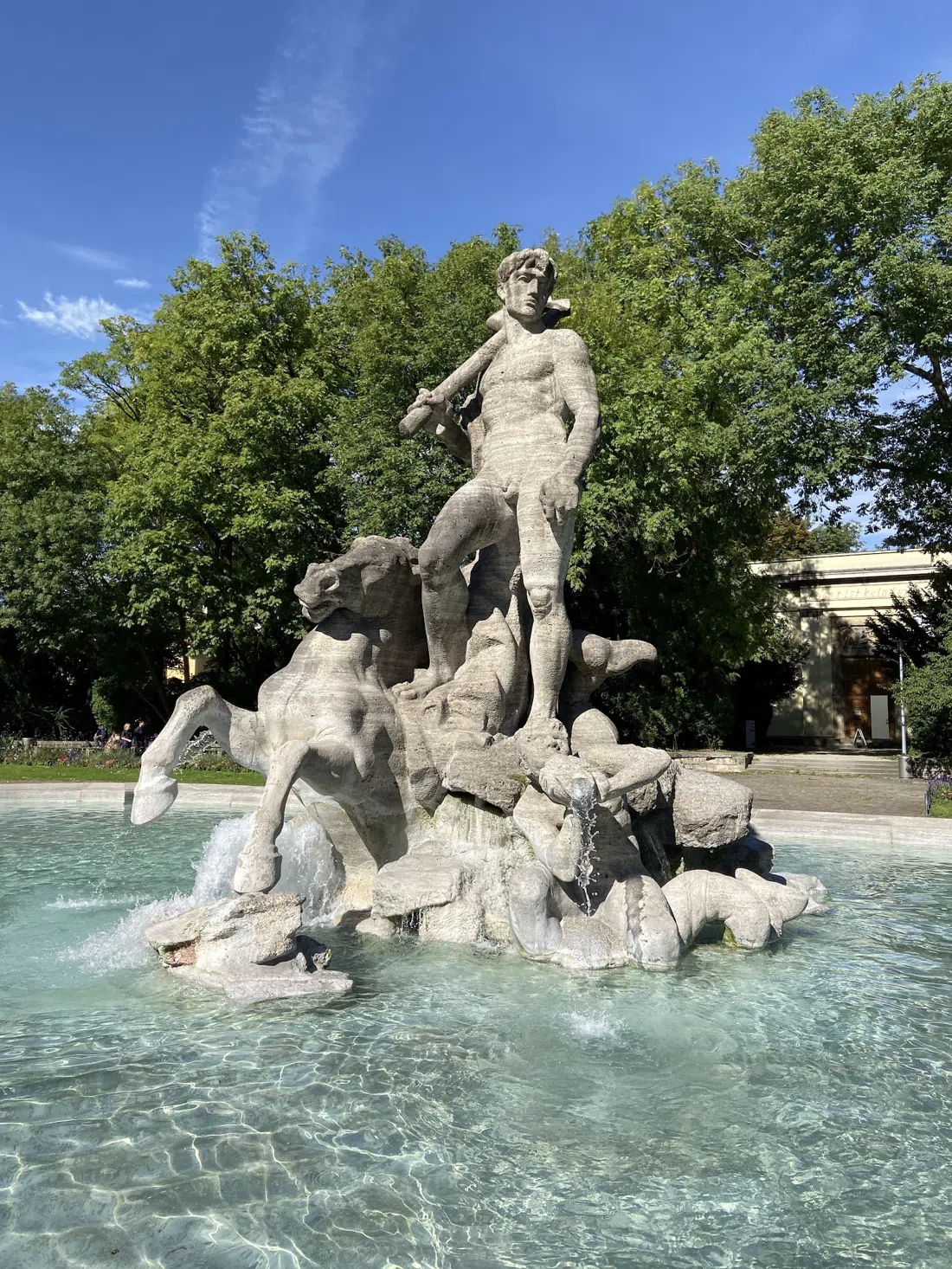
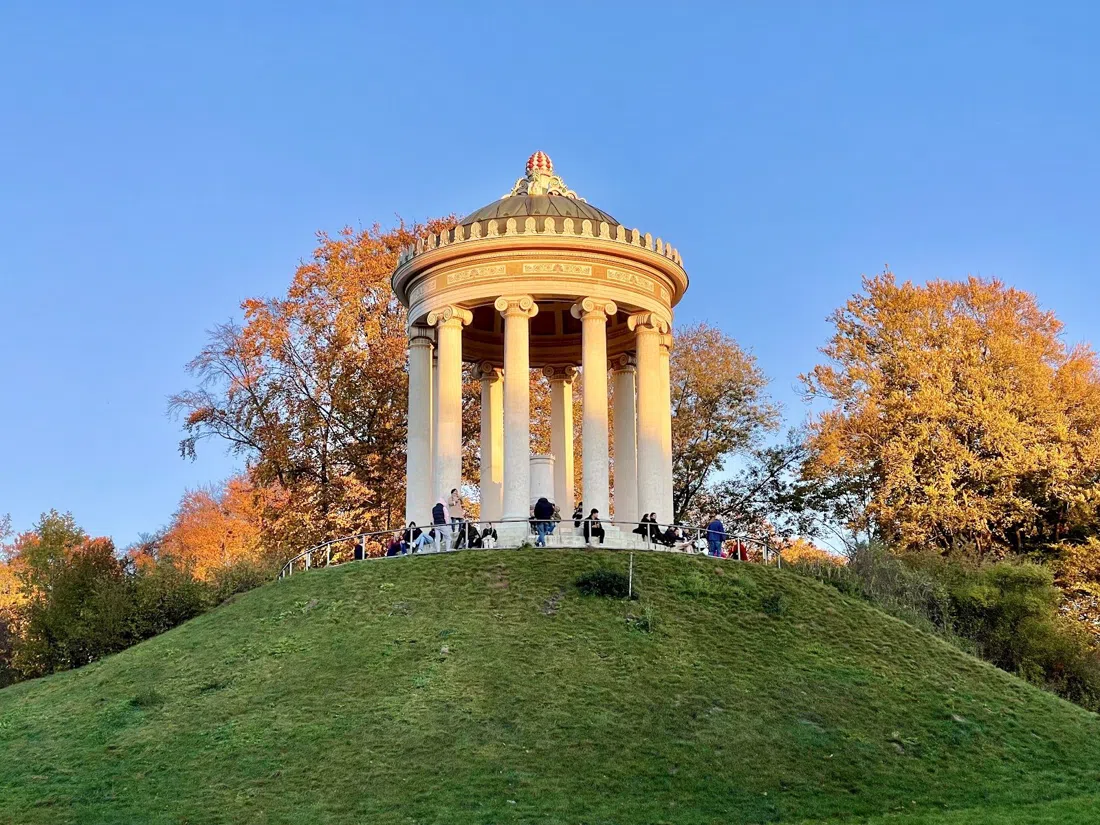
What still works is better than people expect. The Cascade, Neptune Fountain and Music Pavilion (the north axis, straight uphill from the palace front) are running on a half-hourly cycle right through the summer season, which is worth knowing because it gives you a fixed thing to walk towards rather than a vague stroll. Time a pause there and you get moving water and the stepped stone channel without the main jet.
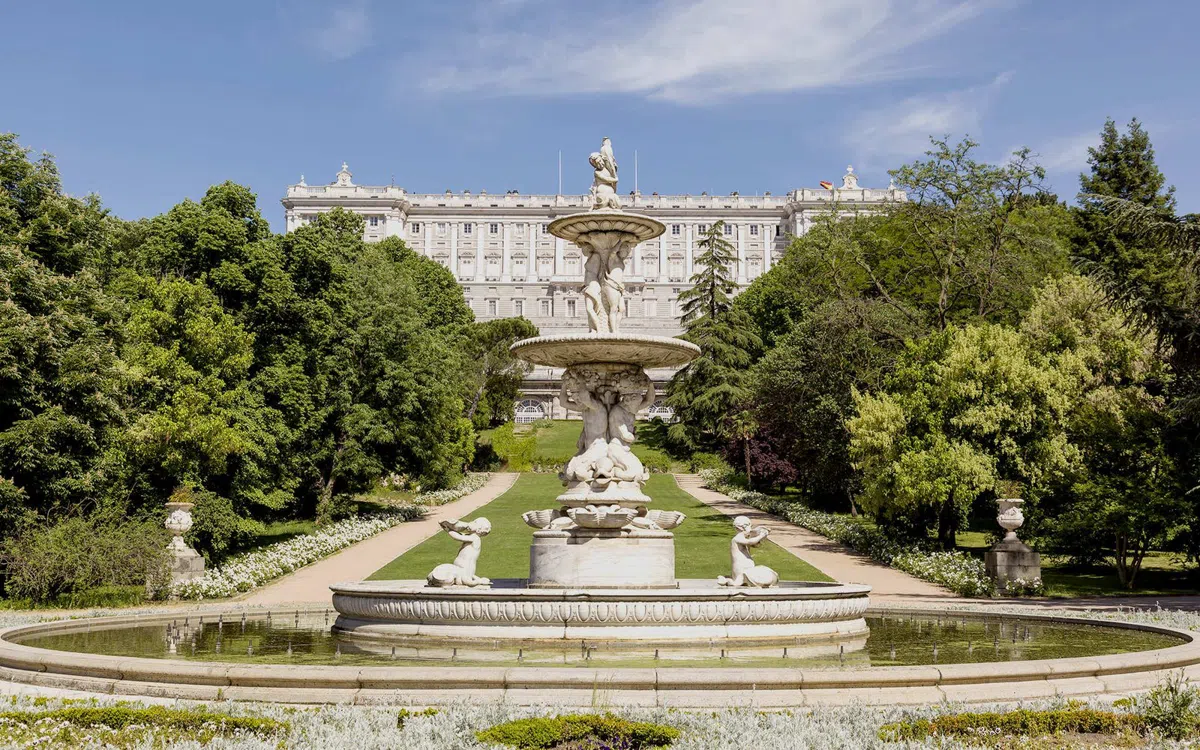
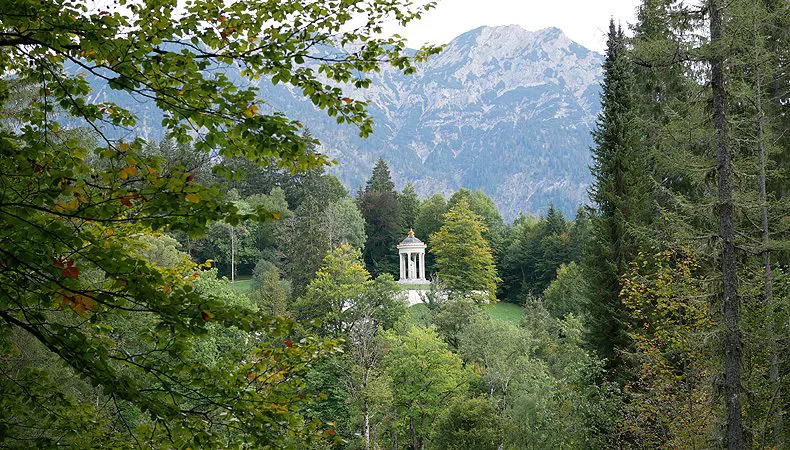
The single best thing in the park costs nothing and almost nobody does it. The Temple of Venus (the terrace gardens on the slope above the parterre) is the only place that frames the palace, the formal garden and the mountain wall in one view. The reason it stays empty is honest: the climb is up terrace steps and park paths with gradients reaching 20%. It is not a wheelchair route and it is not a tired-legs route. If you can manage it, go up before you go in, while your legs are fresh and the low September light is still raking across the parterre.
Three free outbuildings reward the walk further out. The Moroccan House (Marokkanisches Haus, in the eastern park) was bought by Ludwig from the 1873 Vienna World Exhibition and is a room he actually lived in for short spells: no ticket, no tour, five minutes, and most day-trippers walk straight past it. The interior is tiny and jams with more than a handful of people at once, so it suits couples and pairs far better than a coach party filing through. Hunding's Hut (Hundinghütte, out in the woods) is a built stage set from Act I of Die Walküre, a place Ludwig sat and read Norse legend alone; today's structure is a reconstruction. The Hermitage of Gurnemanz (Einsiedelei des Gurnemanz, further along the park paths) stages Act III of Parsifal, and the walk out to it thins the crowds naturally. Both open 11am to 6pm, 15 April to 15 October only, later than the rest of the park, which routinely catches out early arrivals who tick off the folly walk first and find the doors shut.
Finally, the Royal Lodge exhibition (Königshäuschen, by the palace) costs EUR 2 adult, EUR 1 reduced and tells the story of how the Lynder farm, a mountain farmstead, became this palace. It is small-room scale, better for two people than fifteen, and it is the one indoor option on site that stays open on limited hours through winter.
Timing the day so you are not standing in a line
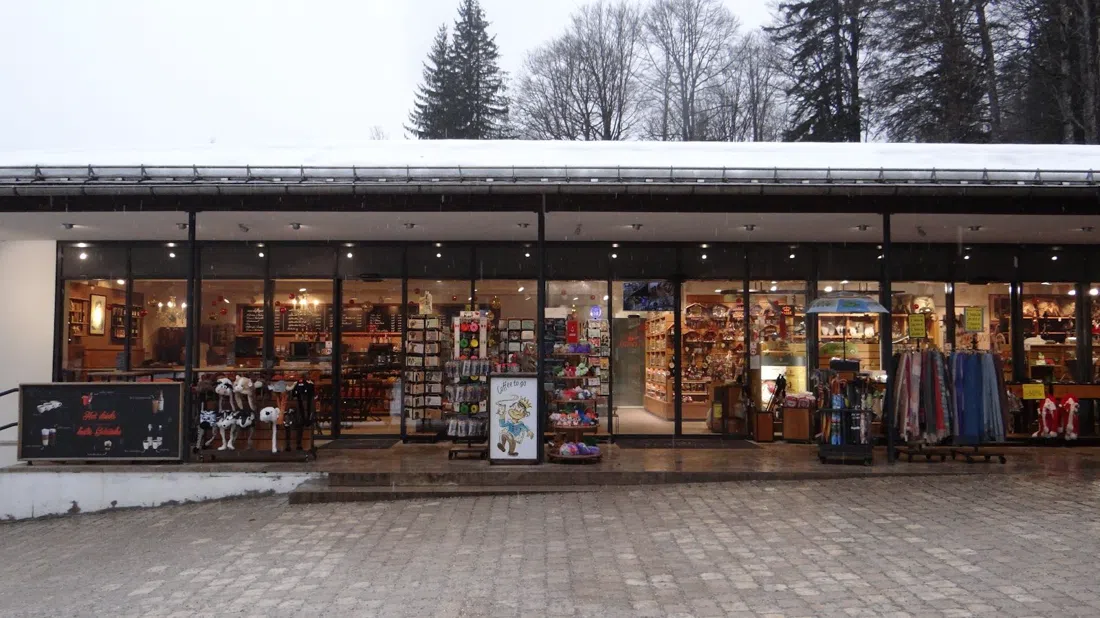
The practical sequence in September is early, uphill, inside, outward. Ludwig's Bistro & Geschenke (at the gate, by the car park) opens at 8.30am in summer, before the palace does, which makes it the obvious place to sit with a coffee while the first tour groups sort themselves out. It does Bavarian snacks, Hofbräu beer, coffee and cake, and it is explicitly set up for coach parties with a dedicated large-party line: genuinely useful if you are fifteen people, and worth avoiding at the exact moment two coaches unload if you are two.
Because palace tours leave every five to ten minutes and grotto tours only every twenty, the grotto is the slot that shapes your morning. Get your combination ticket first, note the grotto time, and fill the gap with the Temple of Venus climb or the north-axis water features rather than queuing twice. Leave the Wagner huts until after 11am. That order gets you the interior and the cave done by late morning and the park to yourself at the hour when most groups are eating.
Door tickets, booking ahead, and coming with a guide
You can turn up and buy at the window, and on a September weekday morning that usually works. The frequency of tours is your friend here, because a visible crowd does not mean a long wait. Parties of 15 or more pay a EUR 1.50 per person reservation fee, which is the cheapest insurance on this page if you are travelling as a group and cannot absorb a two-hour gap. There are 550 paid spaces in the car park and 14 coach bays, so drivers are rarely the ones who suffer.
A guided day trip out of Munich exists if you would rather not drive, and it is a steady seller rather than a scarce one. There are 7,089 traveller reviews across the bookable tours here, with the top-rated one at 4.8/5 from 2,907 reviews, and it runs seven days a week. Pricing starts from 226 USD per person for the premium end, so the comparison is straightforward: a coach seat costs several times the EUR 18 you would spend at the door, and you are buying the driving, the narration and the fixed slots rather than extra access. If you are two people with a car and a map, the door ticket is the better deal. If you are solo, nervous about alpine roads, or want the day handled, the guided option earns its money.
Eating and drinking within seven minutes of the gate
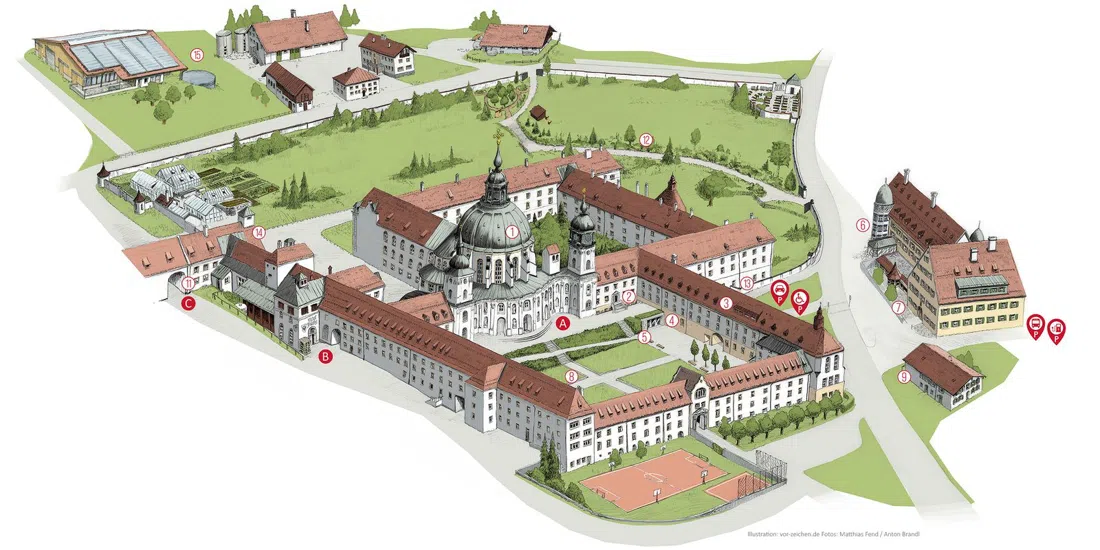
Kloster Ettal (Ettal Abbey, seven minutes down the valley) is the natural pairing and a working monastery rather than a museum. The basilica is free to enter and open 8am to 6pm daily outside services; basilica, brewery and liqueur-manufactory tours are bookable, and the liqueur tour runs about 45 minutes with a tasting at the end. The herbal Klosterlikör and the monastery beer are made on site. The Bräustüberl and beer garden serve daily from 10am to 11pm, which is the longest kitchen in this valley by a wide margin. The abbey actively courts groups and is flagged as a top group destination, so a coach is normal here. Expect company.
That is why you want the alternative in your pocket. Ettaler Mühle (a gasthof and beer garden a short hop from the abbey) is a large enough layout to absorb walk-in groups without a booking, serves daily 10am to 8.30pm and later on holidays, and does schnitzel, sausages and Bavarian mains with vegetarian and vegan options. It keeps kitchen hours long enough to catch you coming back from a late palace slot, when the abbey restaurant has already filled with parties.
Filling out the day if you have a car
September weather in the Graswangtal turns fast, so have an indoor plan. Oberammergau Museum (in the village, 10 km from the palace) charges EUR 5 adult, EUR 4.50 concession, EUR 2 child, opens daily except Monday from 10am to 5pm, and explains the woodcarving trade you see in every shop window on the street outside. It runs a full menu of bookable group tours on request: village history, the artists' village, the Romans, the parish church.
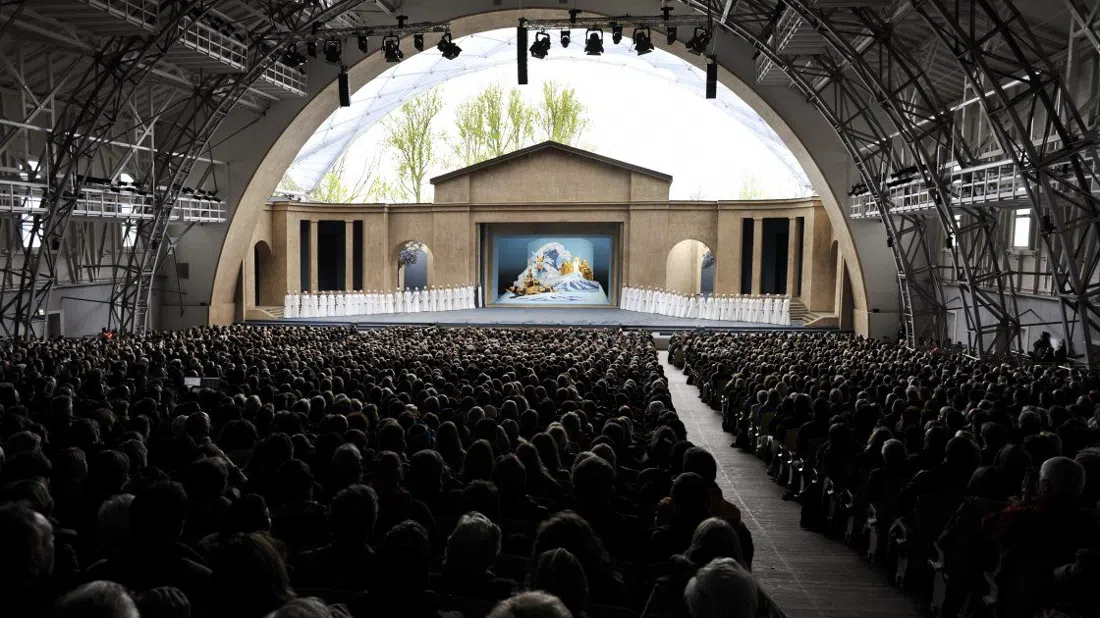
Passionstheater Oberammergau (the same village) runs backstage tours year-round, Tuesday to Sunday at 2pm, roughly 45 minutes among costumes and props, at EUR 9 adult, EUR 8 reduced, EUR 3 under-18, with combination deals alongside the museum. Since the Passion Play itself happens only once a decade, the tour is the only way to see inside. It is also the most accessible thing in this article: auditorium and foyer are barrier-free with wheelchair spaces and an accessible toilet.
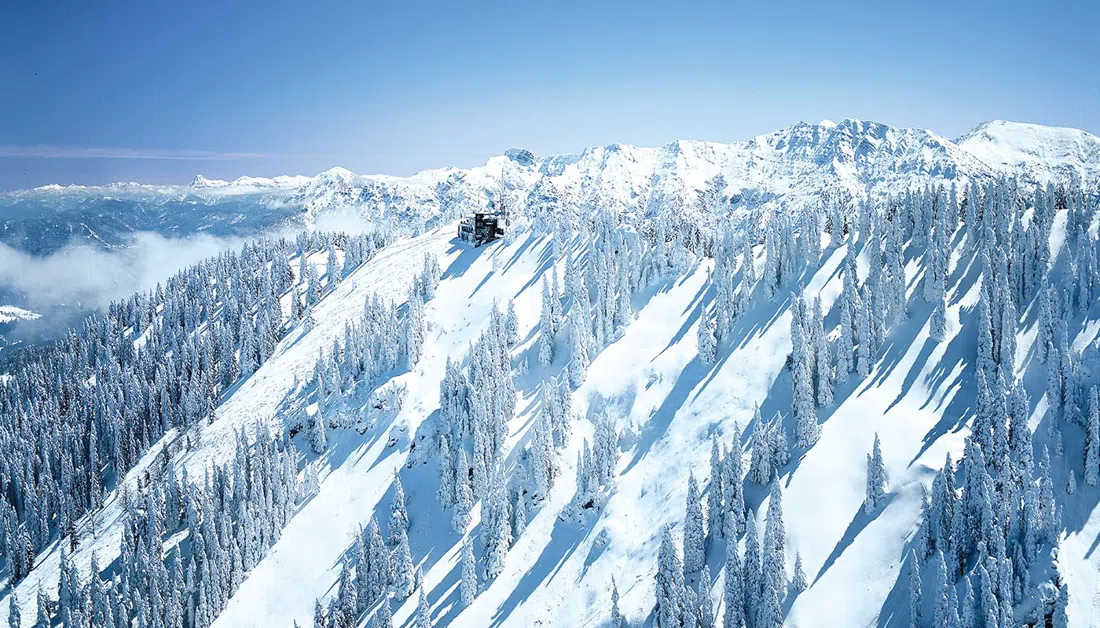
If the palace's enclosed valley leaves you wanting altitude, the Laber cable car (Laberbergbahn, above Oberammergau) runs daily 9am to 5pm through November at EUR 24.50 adult return, EUR 14.50 one way, EUR 15 child return, with a summit hut serving hot food. It is the last large-cabin double-rope circulating cable car of its kind still working, and the big cabin takes a sizeable party in one go, though there is no published group rate, so call ahead for coach numbers.
The strongest add-on of all, if you are driving, is the Wieskirche (the UNESCO-listed pilgrimage church at Steingaden, north-west of the valley). Free, open to all, 8am to 7pm in September and October, and it rewards the same early start as the palace: 8 to 10am is the quiet window before services and coaches arrive. Sightseeing stops during services, and afternoon pilgrimage masses are frequent, so go in the morning.

Is it worth it
Yes, with one condition: come for the grotto and the park, not for square metres of palace. Twenty-five escorted minutes and no photographs is a thin interior by any measure, and 2026 has taken the great fountain and the Moorish Kiosk off the board. What you get in exchange is the rebuilt Venus Grotto in its second season since a decade of closure, a free terrace viewpoint almost nobody climbs to, three Wagner follies that make the case about Ludwig better than any guide will, and a valley with a working monastery brewery in it.
It suits couples, solo travellers and anyone who likes a place that explains a person. Families on a budget do unusually well out of it, given free under-18 entry and a park you cannot be charged for. Coach groups are handled well logistically (14 bays, a bistro with a large-party line, an abbey down the road built for them), though the two best small things here, the Moroccan House and the Royal Lodge, jam badly at group scale. If the only palace day you can fit is a rushed afternoon in the rain, skip it and spend the time on the Munich guide instead.
Best time to go in September
The month is the right call for three reasons. The grotto and both Wagner huts close on 15 October, so September is your last unhurried run at the full site. The low sun sits behind the mountain wall early, which means the terrace view from the Temple of Venus is at its best mid-morning rather than at noon. And the peak-summer coach load has eased without the site going into its winter skeleton, when the Royal Lodge exhibition becomes the only indoor thing still open.
Aim for a Tuesday to Thursday. Be at the gate by 8.30am when the bistro opens, take a combination ticket with the earliest grotto slot offered, and be walking out to the Hermitage by 11am. If you can only come in the afternoon, take a late palace slot and eat afterwards at a kitchen that stays open. That is what saves the day when a tour runs long.
Practical notes
Getting there. Roughly 100 km southwest of Munich, about an hour and a half by car in clear traffic, on valley roads that are slow rather than difficult. Without a car, the route is a regional train to the Oberammergau area and then the local bus up the Graswangtal. Check the return bus time before you buy anything, because the last one home dictates your palace slot, not the other way round. The alternative is the guided coach day, which runs seven days a week.
Money. Budget EUR 18 per adult for the combination ticket, EUR 2 for the Royal Lodge, nothing for the park, the Temple of Venus, the Moroccan House, the two Wagner follies, Ettal's basilica or the Wieskirche. Add EUR 24.50 if you take the cable car. Carry euro cash. The park's small desks, the EUR 2 exhibition and a beer garden round are all easier with notes and coins than with a card, and phone signal in the valley is not something to stake a payment on.
Timing and stamina. Three hours is the honest minimum for palace, grotto and parterre. Four and a half gets you the Temple of Venus climb and the folly walk without rushing. A full day absorbs Ettal or Oberammergau. The gradients up to the viewpoint reach 20% and the grotto sits 50 m uphill of the palace, so slower walkers should add half an hour and skip the terraces rather than arrive at a tour slot wrecked.
Where to sleep. Most people do this out and back in a day from the city, which is the sane plan. Book a central base and drive or ride out early. Compare rates on the Munich hotel search and pick something within reach of the southbound routes rather than the prettiest address.