The coach pulls in at Leopoldstraße 7, the doors open, and a dozen people step down looking for a monument. Behind them is a triumphal arch on a traffic island; ahead is a six-lane boulevard under plane trees with nothing in particular to photograph. Schwabing is the one stop on Munich's sightseeing loop where the ride matters far less than the decision to get off, and the reason is two minutes east of that pavement.
What the bus is actually selling
Schwabing is a district, not a site, and what a sightseeing route labels Schwabing is Leopoldstraße (Schwabing's boulevard, running north from the Siegestor to Münchner Freiheit). Shops, offices, student cafés, wide pavements that fill the moment the sun is out. It is a public street with no door policy anywhere on it, free to walk, and a coffee along it costs €3.50-5. On its own merits it will hold you twenty minutes. Know that before you board and the stop works; expect more and it disappoints.
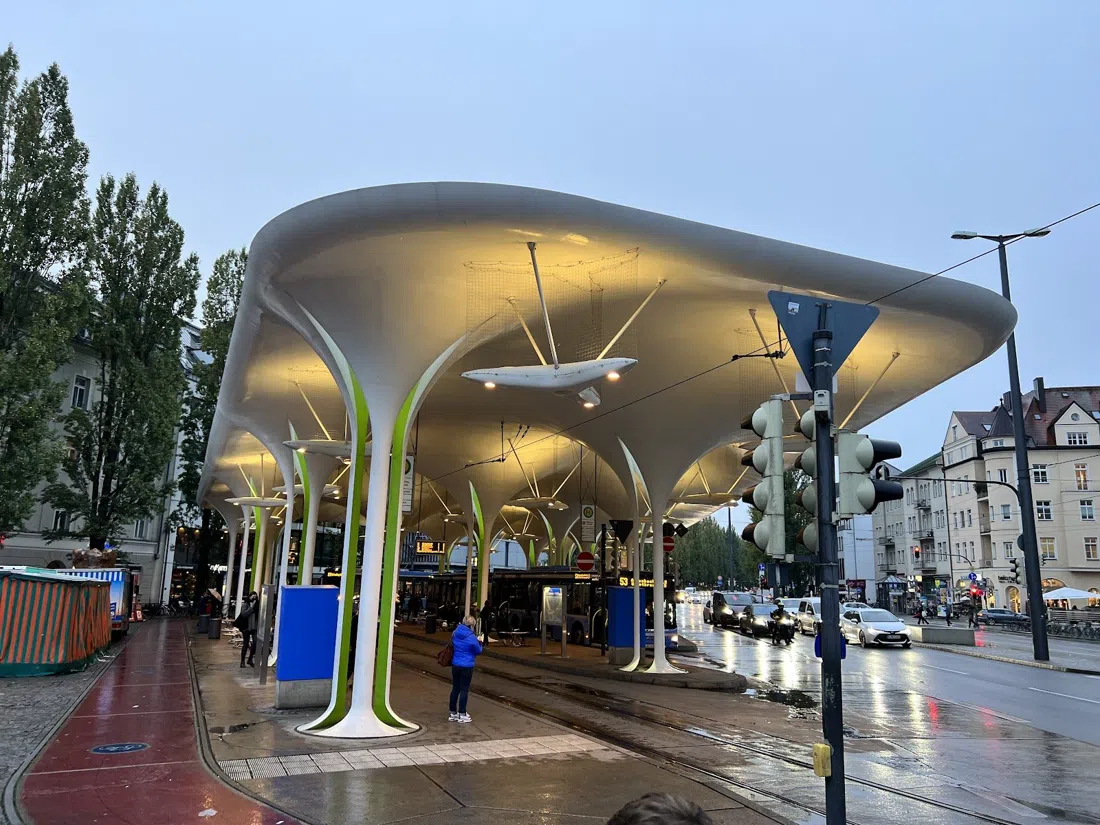
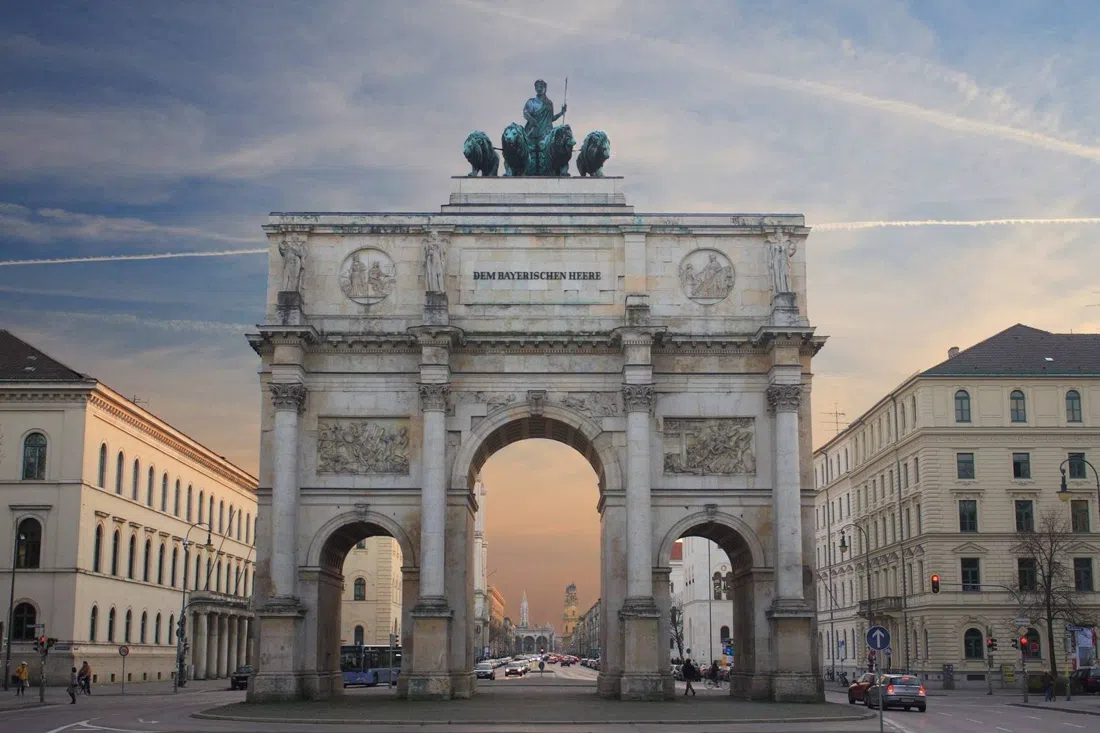
The coaches use two points on it. The southern one is at Leopoldstraße 7, beside the Siegestor (the arch that marks the hard border between Maxvorstadt and Schwabing). It is an open-air monument on a traffic island with no limit on numbers, and the round benches and tree rows added around it mean a full coach party can gather clear of the carriageway instead of spilling into traffic. Free, and five minutes is enough: one photo from the south side, one look north up the boulevard, then walk. The second stop is at Leopoldstraße/Hohenzollernstraße, further north, the better one if you want breakfast before the first departure.
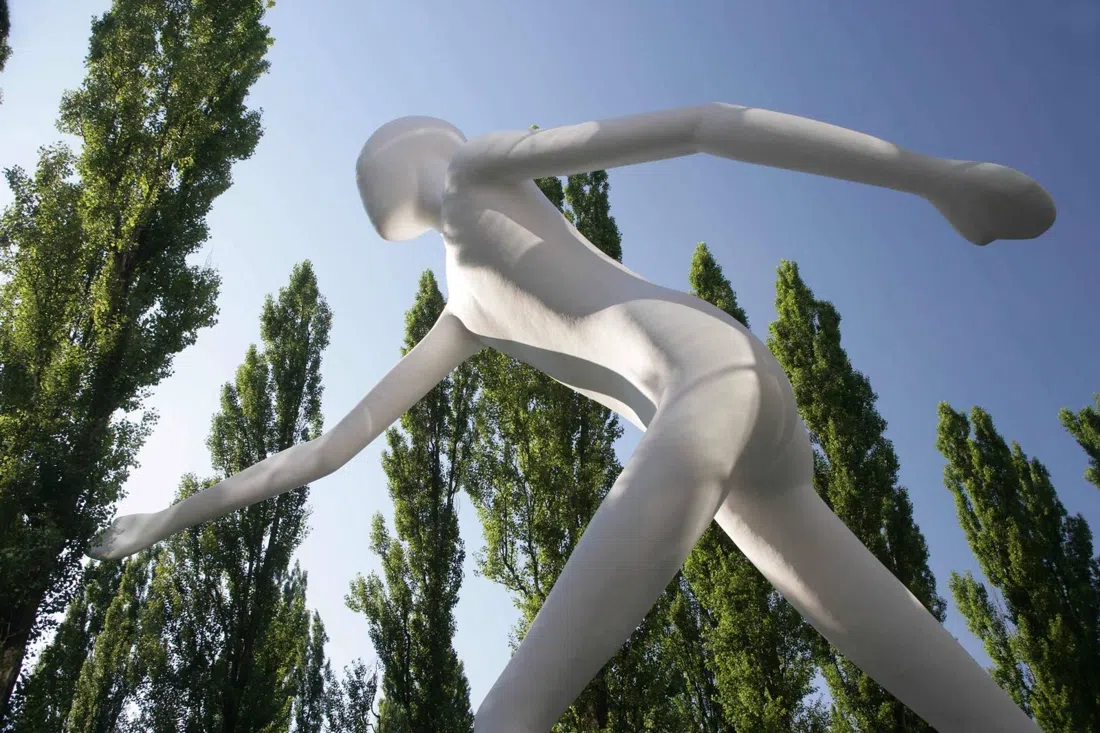
Ten minutes' walk north of the arch is Walking Man (Schwabing, on Leopoldstraße), Jonathan Borofsky's white figure mid-stride, installed in 1995 and still the single landmark here that people recognise from the top deck. The pavement is wide enough to take a coachload of photographers without anyone stepping into the cycle lane, which matters more than it sounds: Munich cyclists do not slow down for visitors. Free, two minutes, and it gives the walk north a destination.
Two minutes east and the day changes
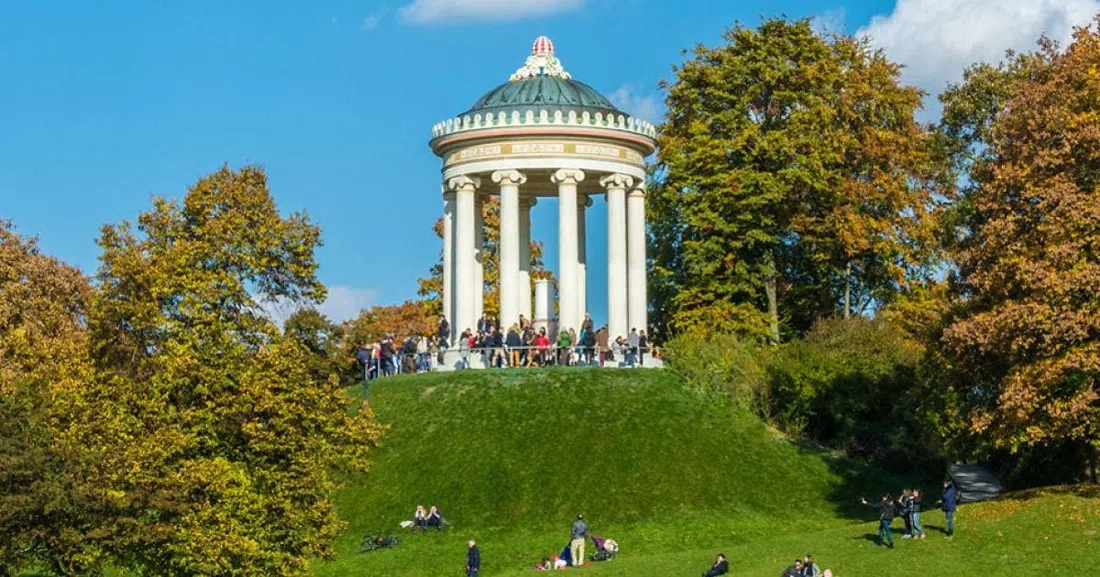
From anywhere on the boulevard you are a short walk from the Englischer Garten, and that walk is why the stop is worth taking at all. Head for Monopteros (Englischer Garten, the corner closest to Schwabing), Klenze's 1837 temple set on a 15-metre brick mound buried under turf. The view from the top takes in the whole southern park and the Frauenkirche towers, it costs nothing, and there is no gate and no limit on numbers. The climb is a short grass-and-gravel path rather than a ramp, so wheelchair users and anyone with tired knees will struggle with the last stretch; the lawn at the base is a fair substitute.
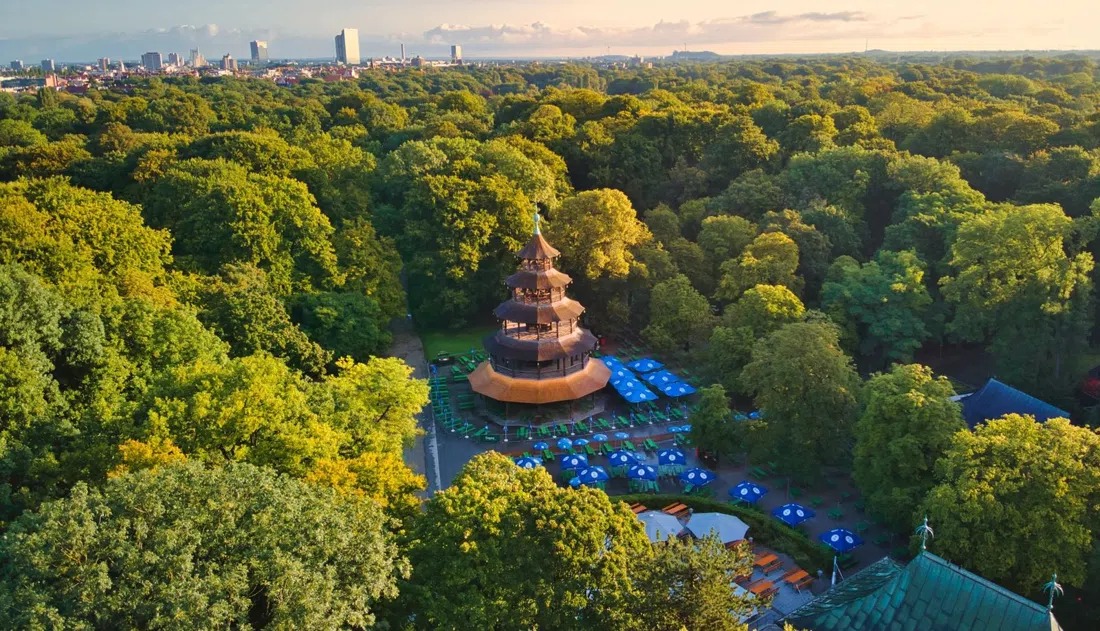
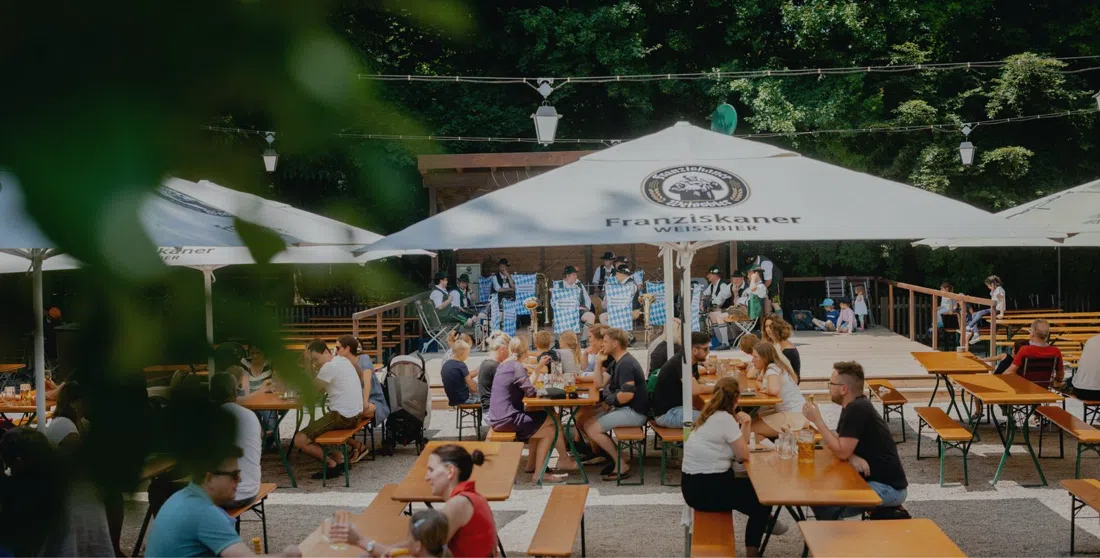
Ten minutes further into the park is Biergarten am Chinesischen Turm (Englischer Garten, Schwabing side), 7,000 seats under chestnuts, run by Haberl since 1974 and the most reliable place in the district to park a mixed-age group. A Maß of Hofbräu runs around €10.80 in 2026 and half a chicken with a pretzel roughly €15-18. Because it is self-service you can bring your own food, which is how local families keep the cost down. The group rules are strict and worth reading twice: reservations are accepted only from 50 people, only Monday to Thursday until 17:00, never at weekends, and only tied to a €106 starter platter per table of eight. Anything smaller than 50 simply turns up and finds a bench, which on a warm Saturday means splitting into twos and threes.
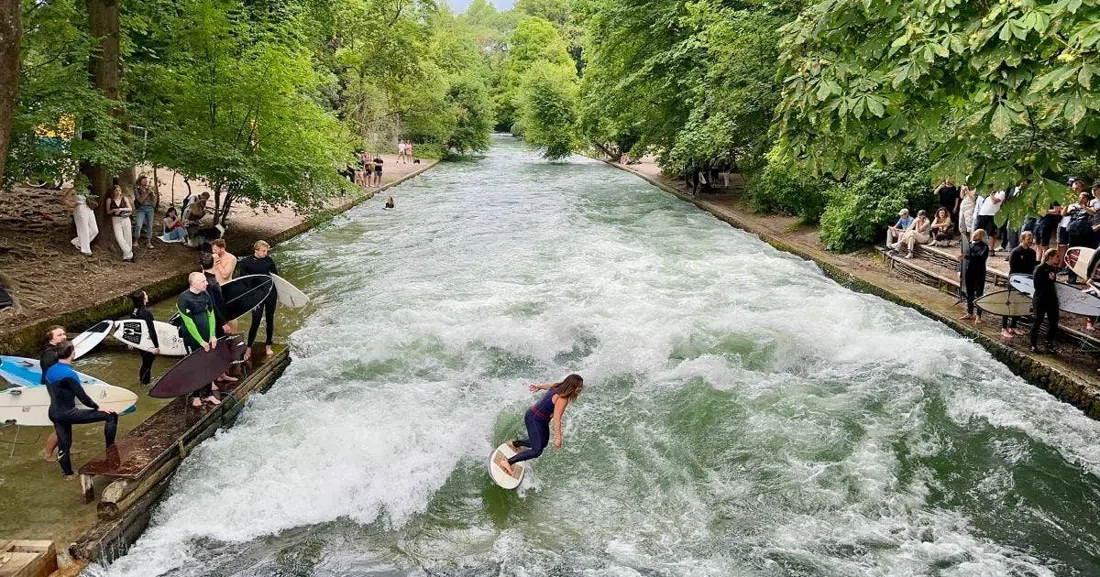
At the southern end of the park, below the Haus der Kunst bridge, is the Eisbachwelle (south end of the Englischer Garten), the standing wave in the Eisbach. Watching from the bridge parapet is free and takes any number of people. Surfing does not: it is experienced surfers only, 16 and over (14 with an adult), buddy system, quick-release leashes, and 05:30 to 22:00. The wave was closed for more than a year after a surfer died in April 2025 and reopened in May 2026 once the riverbed had rebuilt it naturally. Older guides still say anyone can jump in. That is not true now, and the people in the water are not beginners.
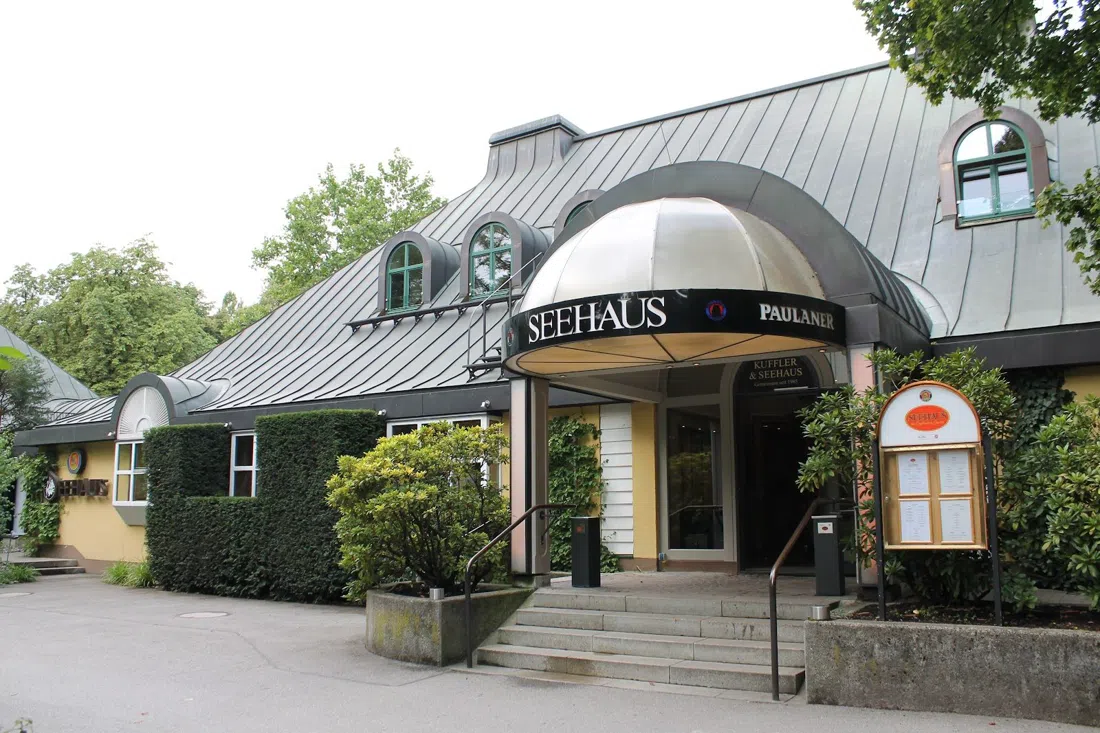
If you want a chair and a tablecloth rather than a bench, Seehaus im Englischen Garten (Englischer Garten, on the Kleinhesseloher See) is the Kuffler-run lake house at the top of the park, open daily year-round with the kitchen running to 21:30. It works on two tiers: a self-service beer garden at €10-20 a head that absorbs walk-up groups, and a table-service restaurant with mains around €22-35 where you should reserve. Further north again, Hirschau (Englischer Garten, north of the lake) is where families end up, with a playground, live music on Thursdays, Fridays, Sundays and holidays from April to September, and three shareable cold platters sold precisely because nobody comes to your table. Budget €10-20 a head plus the boards. It is a genuine 25-30 minute walk from any sightseeing stop, which is also why it stays calm when the Chinese Tower is overrun.
Indoors when the weather turns
Fifty metres from the wave, Haus der Kunst (south end of the Englischer Garten) takes coach parties easily in its big halls and sells guided group tours in advance. The house ticket is €15, reduced €5-11, under-18s and students €5, and entry is free on the last Friday of the month from 16:00 to 22:00. It opens Wednesday to Monday, 10:00-20:00, and closes on Tuesdays, which is a trap, because Tuesday is exactly when people plan to pair it with the surf wave outside.
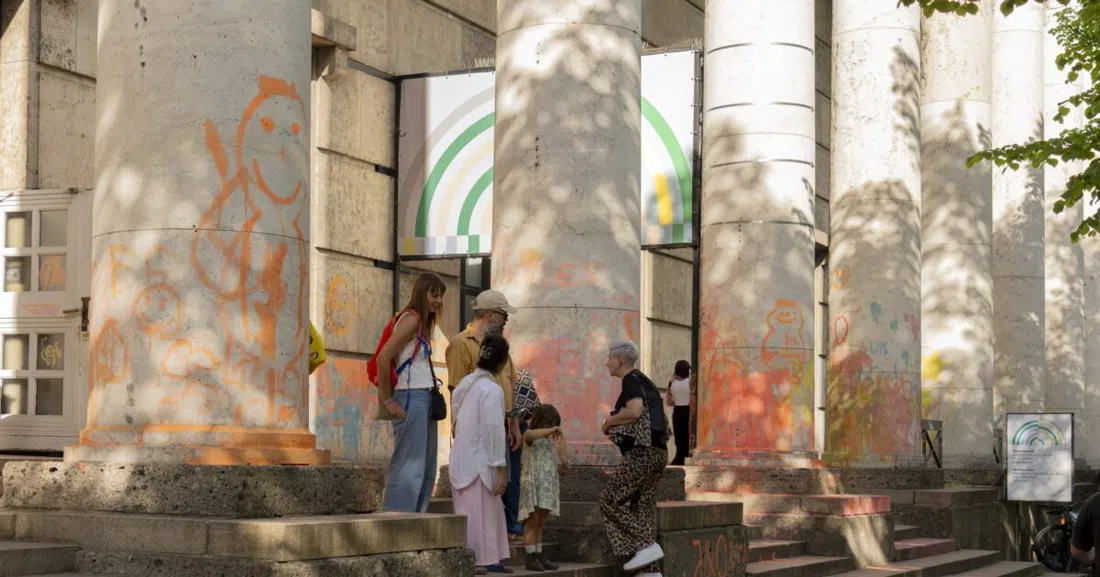
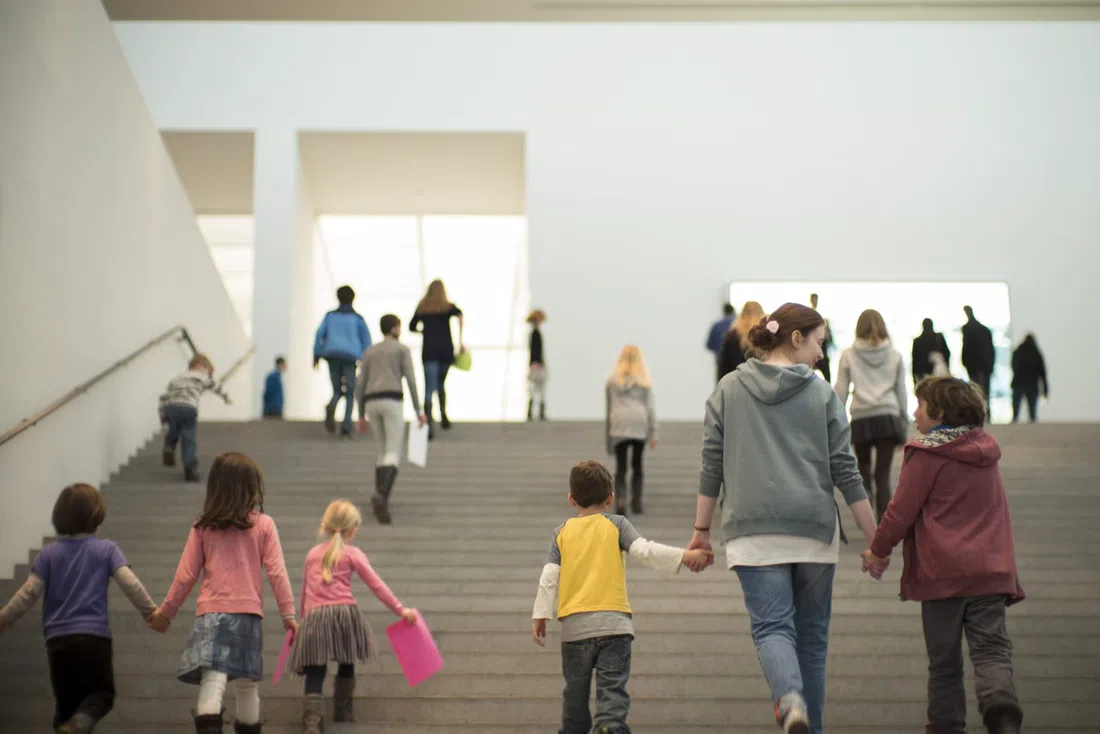
The cheaper fallback is Pinakothek der Moderne (Maxvorstadt, at the Pinakotheken stop on the loop), four museums of art, design, graphics and architecture under one roof for €10, reduced €7, under-18s free, and €1 on Sundays. It closes Mondays, and it has a cloakroom and lockers that will take day bags off a group.
Eating around the boulevard
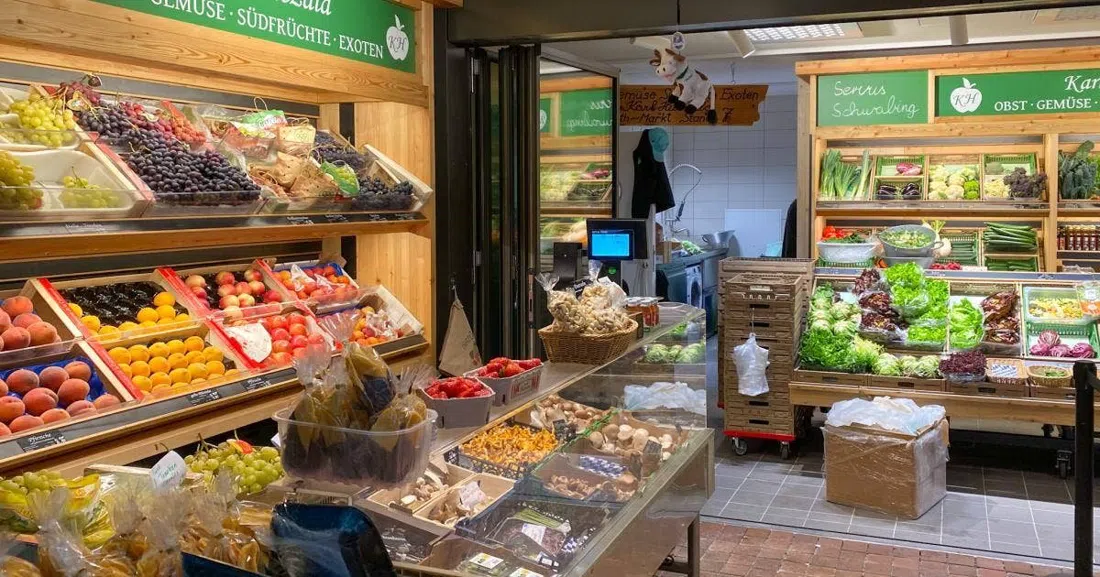
Elisabethmarkt (Schwabing-West, about ten minutes west of Leopoldstraße) has been the district's market since 1903 and reopened in 2024 after a rebuild. A market lunch is €5-15, there are no bookings and no big tables, only stand-up counters, so a group of eight naturally spreads over three or four stalls. The hours catch people out: weekdays to 19:00, Saturdays only to 14:00, closed Sundays.
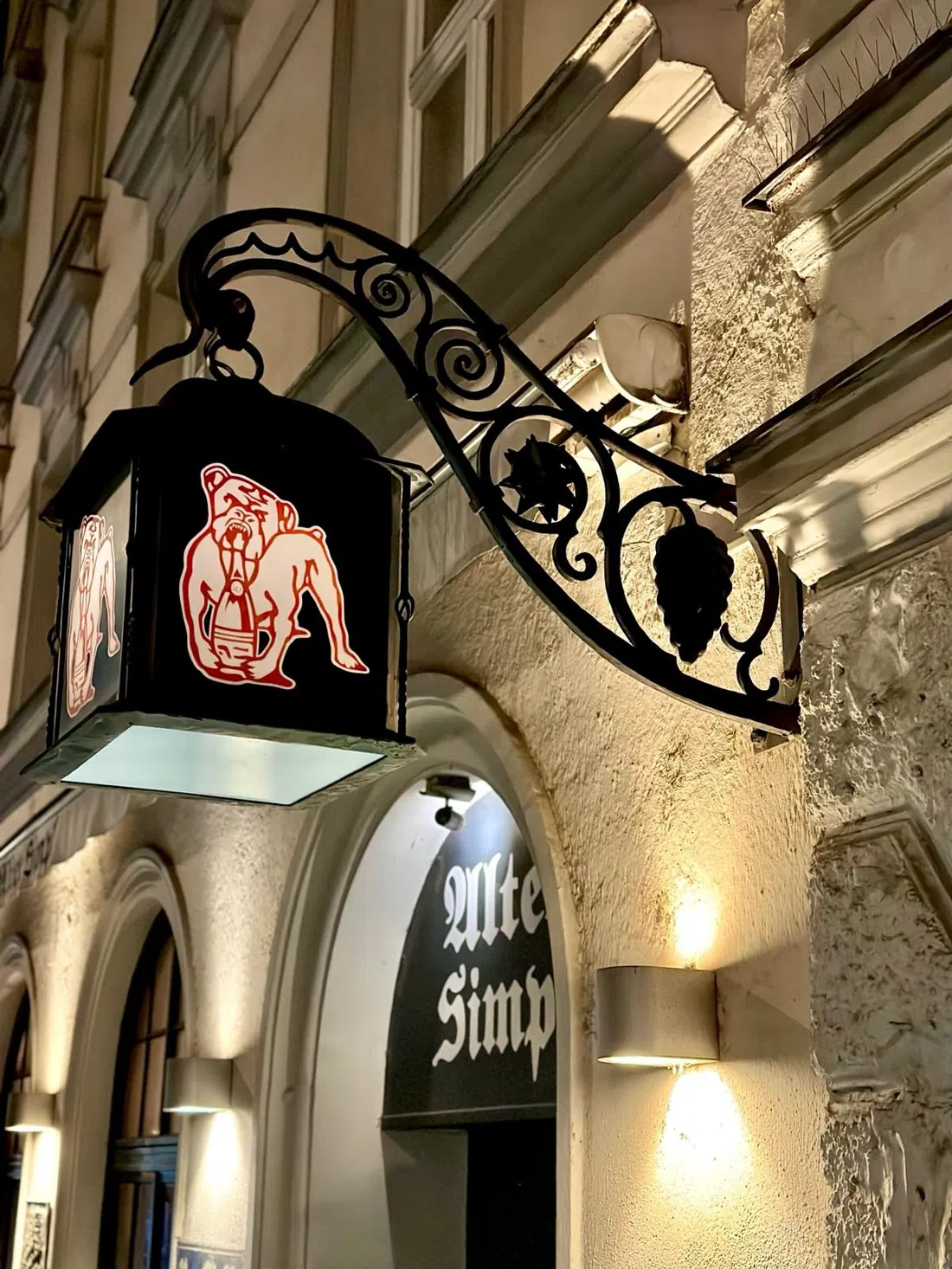
For a room with the literary history still in it, Alter Simpl (Maxvorstadt, a short walk south-west of the Siegestor) has been open since 1903, named after the satirical magazine that made Schwabing bohemian in the first place. Mains are €15-25, it runs daily from 11:30 until midnight or 01:00, and it takes online reservations. Do book, because the room is narrow and anything over six will not simply walk in.
Das Bamberger Haus (Schwabing-West, in the Luitpoldpark) is both a restaurant and an openly advertised event location, so it will take a private party or a large booking that the beer gardens refuse. The beer garden runs daily in fine weather except Mondays at €10-20; restaurant mains are €20-30, with tight hours: Tuesday to Friday from 17:00, Saturday from 12:00, Sunday 12:00-17:00. Walk up the rubble hill behind it for a free view over Schwabing-West.
After the last bus
Two Schwabing institutions only make sense once the sightseeing has stopped. TamS Theater (Schwabing, near the Englischer Garten's western edge) is a tiny fringe auditorium whose box office answers the phone and email on Monday, Wednesday and Friday from 14:00 to 18:00; expect roughly €20-35 for a ticket and give plenty of notice for a block booking. From late October 2026 Germany's best-known political cabaret, the Münchner Lach- und Schießgesellschaft, shares that stage, steps from its former home. It is German-language, so it suits visitors with the language rather than casual drop-ins.

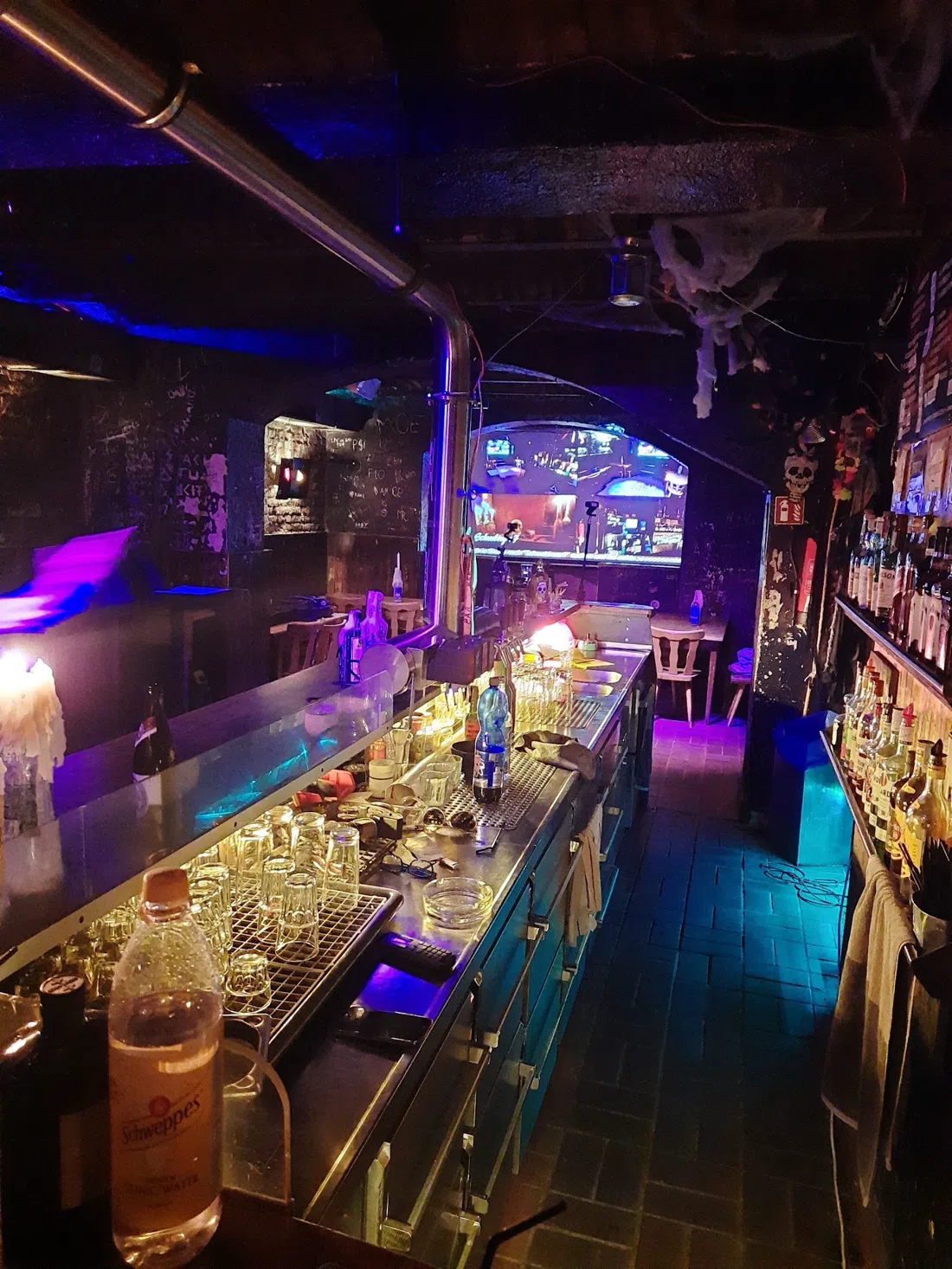
Schwabinger 7 (Schwabing) is the surviving bohemian dive, rebuilt at a new address and reopened in June 2025 after water damage. It opens at 20:00 and runs to 04:00, beer is €4-6, and there are no reservations and no door policy worth the name. The room physically cannot hold a large group, so arrive in twos and threes or not at all.
How long Schwabing takes
Riding the loop without getting off, Schwabing is roughly ten minutes of window. Doing it properly: five minutes at the Siegestor, ten minutes' walk to the Walking Man, fifteen minutes up and down the Monopteros, then an hour to ninety minutes at a beer garden table. That is a comfortable half-day of about four hours, ending back on the boulevard for the next bus. Add a museum and you have filled a full day; add Hirschau and you have added an hour of walking, most of it pleasant.
Tickets at the door or booked ahead
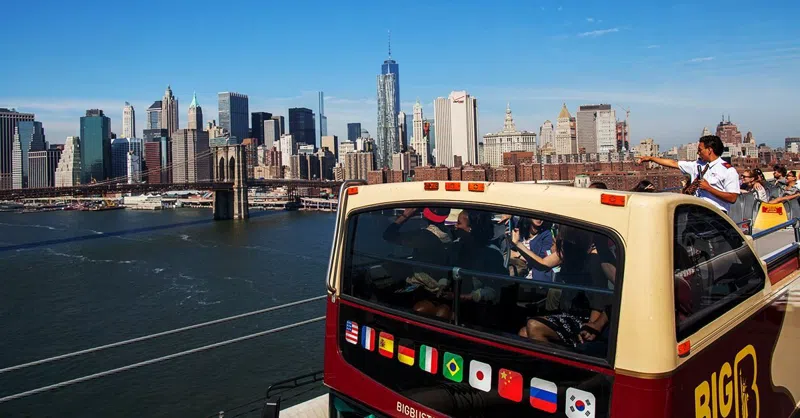
Nothing in Schwabing itself needs a ticket. The boulevard, the arch, the sculpture, the Monopteros and watching the wave are all free and all open-air, with no queue to manage. The only paid element is the bus, and the open-top loops here run seven days a week from 30 USD per person, with instant confirmation the norm. Across the bookable tours at this attraction there are about 1,750 traveller reviews, and the top one is rated 3.5/5 from 1,248 reviews, a middling score that fits the gap between what people expect from a district stop and what a boulevard actually delivers. Buying at the stop is fine outside high summer; booking ahead mainly buys you a guaranteed seat and a free-cancellation window. The one ticket worth timing rather than queueing for is the free Friday evening at the art museum, which is busier than a paid afternoon.
Access, rules and group realities
The street-level sights are the accessible ones: flat pavements, no gates, no group limits at the Siegestor or the Walking Man. The Monopteros mound is not accessible. In the park, assume no table service anywhere except the Seehaus restaurant and the Bamberger Haus dining room. Large parties should plan around the Chinese Tower's 50-person, weekday-only, platter-tied reservation rule rather than hoping; a group of twelve has no booking route at all there and must split across benches. Cafés like Cotidiano Schwabing (Schwabing, fifty metres from the Leopoldstraße/Hohenzollernstraße stop) handle six to ten on communal tables and open from 08:30 daily with breakfast at €10-18, which makes it the practical first stop before a northbound departure, but it will not take a coach-sized booking either. And keep off the cycle lanes when a group stops to photograph anything.
Is it worth it
As a sight, no. There is no monument here that justifies a dedicated trip, and anyone expecting one will be unimpressed from the window. As a stop, yes, because it is the one place on the loop where two minutes of walking puts you in a 7,000-seat beer garden, on a free viewpoint, and at a river wave with surfers in it. It suits first-time visitors using the bus as a spine for the day, families who need a playground and a bench, and anyone travelling in a mixed-ability group that wants free open-air options. It suits least people who never leave their seat, and visitors looking for the bohemian Schwabing of the magazines, which survives in two rooms, the Alter Simpl and the Schwabinger 7, and not on the boulevard. For the rest of the city's stops and how they connect, the Munich guide is the wider picture.
Best time to go
Get off between 09:00 and 11:00. The boulevard is at its calmest, the park paths are empty, and you reach the beer garden at 11:30 when benches are still free rather than at 13:00 when they are not. The alternative is late afternoon: the Chinese Tower thins out after about 16:00 and the light on the lake at the Seehaus is better than at midday. Weekdays beat weekends for everything with a rule attached, including group reservations, the market, and bench space.
Two days need watching. Tuesday closes the art museum next to the wave, which breaks the most common pairing on the route. Sunday closes the market and tightens restaurant hours, but drops the modern art museum to €1, so wet Sundays have an obvious answer. Mondays close the Pinakothek der Moderne and the Bamberger Haus beer garden.
Season matters less than people assume. April to September is the beer-garden window and the only time there is live music at Hirschau. In winter the open-air sights still work, the arch, the sculpture, and a Monopteros view that is better through bare trees, while the Seehaus and the museums give you somewhere warm. The wave runs year-round from 05:30 to 22:00, and early morning is when the better surfers are on it.
Practical notes
The U3 and U6 run directly under Leopoldstraße with stops at Universität, Giselastraße and Münchner Freiheit, so you never need to wait for the next coach. If you miss a bus, the underground does the same line in minutes. The park has no station of its own; walk in from Giselastraße or from the Haus der Kunst end. Everything described here sits inside a 30-minute walk apart, except Hirschau, which needs 25-30 minutes on its own.
Carry cash. Self-service beer gardens, market stalls and the dive bar are all faster with notes and coins, and beer garden counters usually take a deposit on the mug that comes back when you return it. A realistic day runs 30 USD for the bus, €15-18 for lunch at a bench, €10.80 for a Maß, and €0 for the arch, the sculpture, the Monopteros and the wave, so call it under €50 a head if you skip the museums, €10 more with one. Staying near Münchner Freiheit or Universität puts you on the loop and on the U-Bahn at once; the Munich hotel search covers both ends of the boulevard.