The Munich issue
The Kunstareal: Munich's Museum Quarter Where Art Sits Four Deep
A calm, walkable route through Munich's museum quarter and its outriders — from Königsplatz marble to a wall of Warhols — with the honest version of which rooms reward an hour and which suit a group of twelve.

By Bram JanssenMunich on foot, one neighbourhood at a time
Few cities keep this much art inside a ten-minute walk. In Munich's Maxvorstadt the museums stand so close together that you can move from a Leonardo to a wall of Warhols to a Greek marble without ever hailing a tram. What follows walks the Kunstareal and its outriders in the order your feet will actually take them — with the honest version of which rooms reward a quiet hour and which can absorb a coach party of thirty.
The quarter earns its nickname: at Königsplatz you are standing on top of four major collections at once, and the density only thickens as you head northeast. Treat this as a route, not a checklist. Two half-days, or one very disciplined full day, covers the core. Everything past the Pinakotheken is a deliberate detour, and I've flagged each so you can decide before you set out rather than at a ticket desk.
Königsplatz: antiquity, two ways
Start underground. The U2 stops directly at Königsplatz [Maxvorstadt], and you surface onto a colonnaded square that Ludwig I laid out to look like an open-air temple precinct. Two of the buildings facing each other are museums, and they are designed to be done together.
The Glyptothek [Königsplatz] is the reason the square exists — Europe's only museum built purely to house antique statuary, with Ludwig I's Greek and Roman sculpture arranged under domed daylight. The Barberini Faun is the star, and the galleries are calm enough that an unhurried visit takes about 45 minutes. Entry is around €6, or €1 on Sundays, and the state runs a combined ticket with the museum opposite, so buy that if you intend to see both. Group guided tours are bookable in advance; the rooms are open and easy to lead a party through.
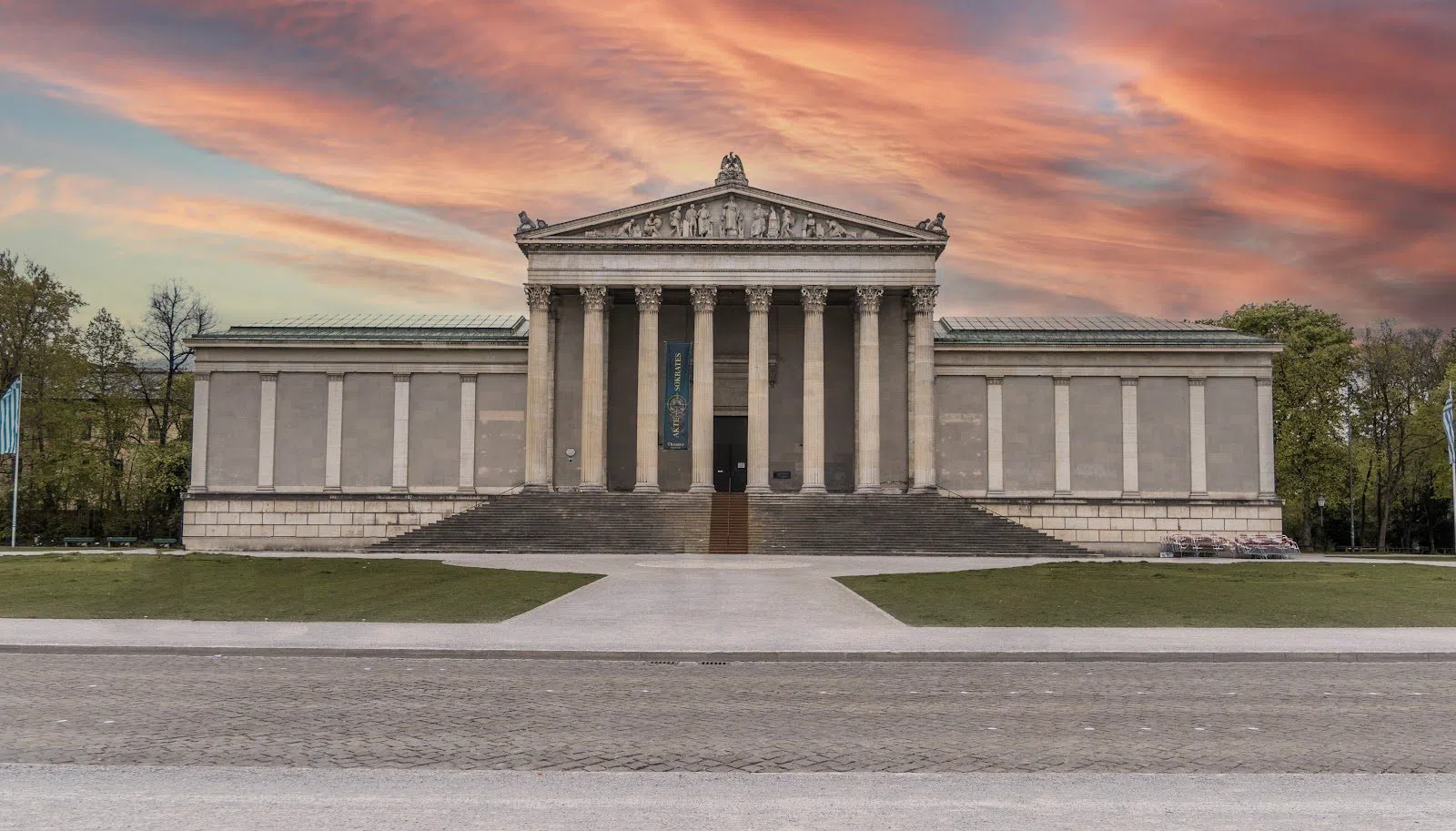
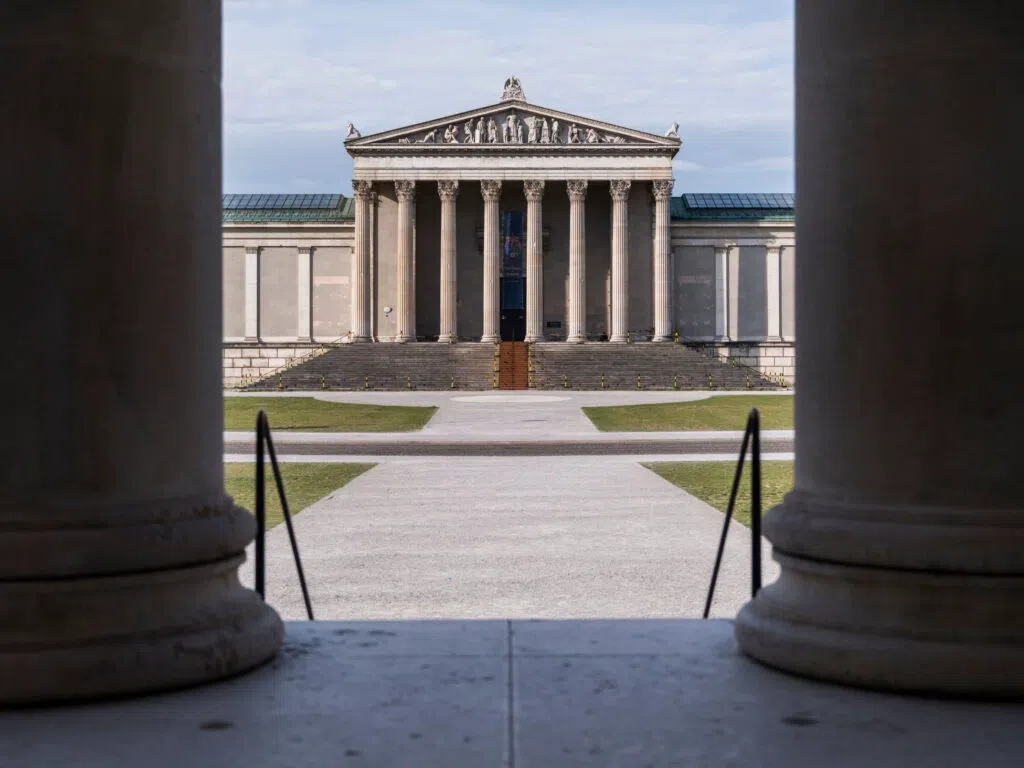
Directly across the square, the Staatliche Antikensammlungen [Königsplatz] holds the small, precious things the Glyptothek doesn't — world-class Greek vases, gold and bronzes — and makes the obvious two-for-one. Same ~€6, same €1 Sunday, same state tour desk. Between them you have a coherent hour and a half on the ancient world before you've walked more than fifty metres. For a group this pairing is genuinely efficient: one meeting point, one combined ticket, two contrasting buildings.
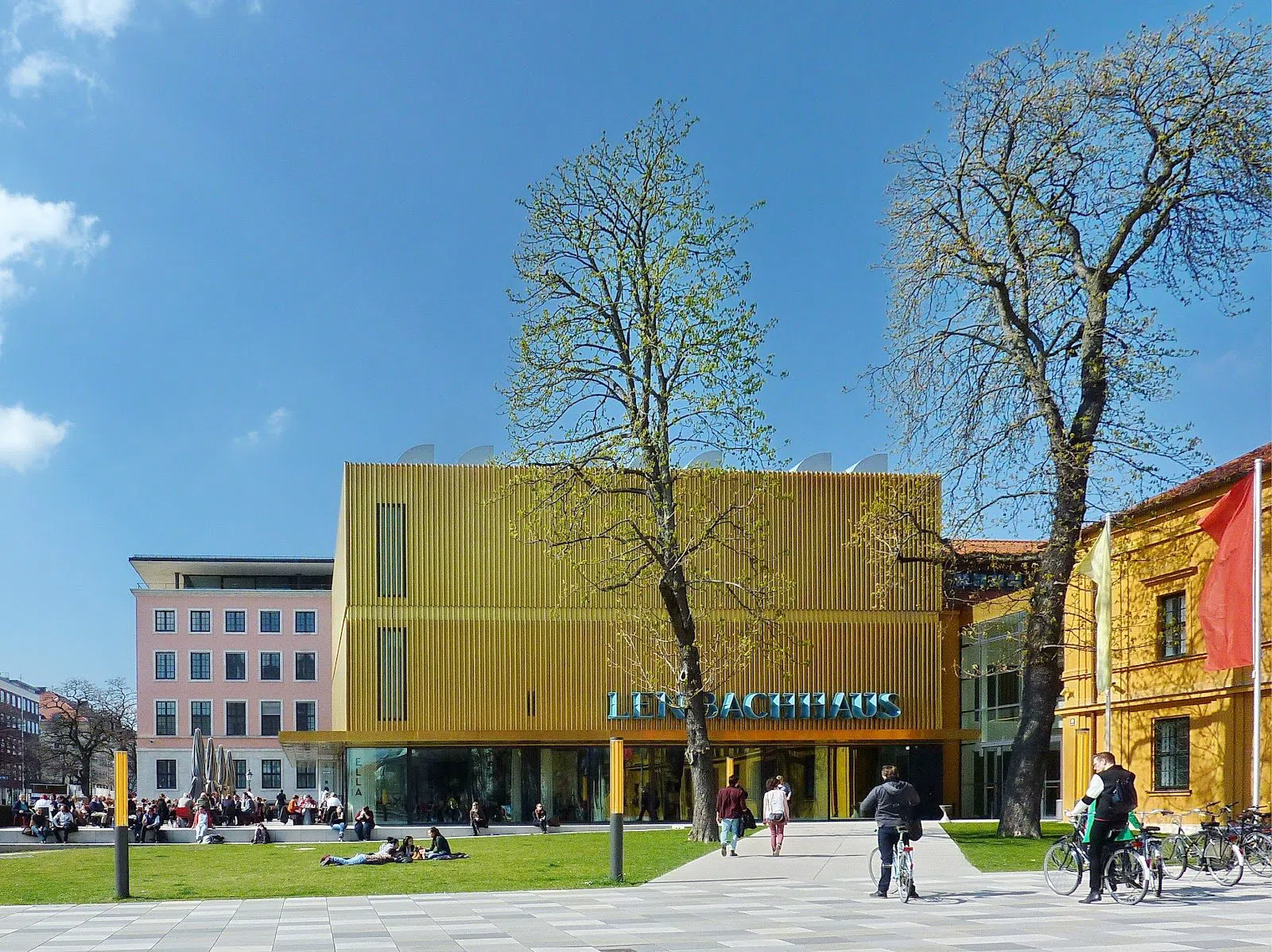
A short step off the square, at Luisenstraße, sits the Lenbachhaus [Königsplatz] — a former artist's villa now holding the greatest Blue Rider collection anywhere: Kandinsky, Münter, Marc, the colour still startling a century on. Admission is about €10. This is a city museum with a serious education department, so group tours run in several languages and are worth booking; the jewel-box scale means the villa rooms fill quickly, so a guided slot keeps a large party from clotting in the doorways. If you only have appetite for one thing at Königsplatz, and modern colour moves you more than marble, make it this.
Plan your Munich trip
Live prices from our booking partners.
Free cancellation on many rooms. We may earn a commission when you book.
The Pinakotheken and Brandhorst: the core cluster
Walk five minutes northeast and the ground shifts from antiquity to the main event. Three of these buildings share a lawn, and you can see all their entrances at once — the densest concentration of picture galleries in the country.
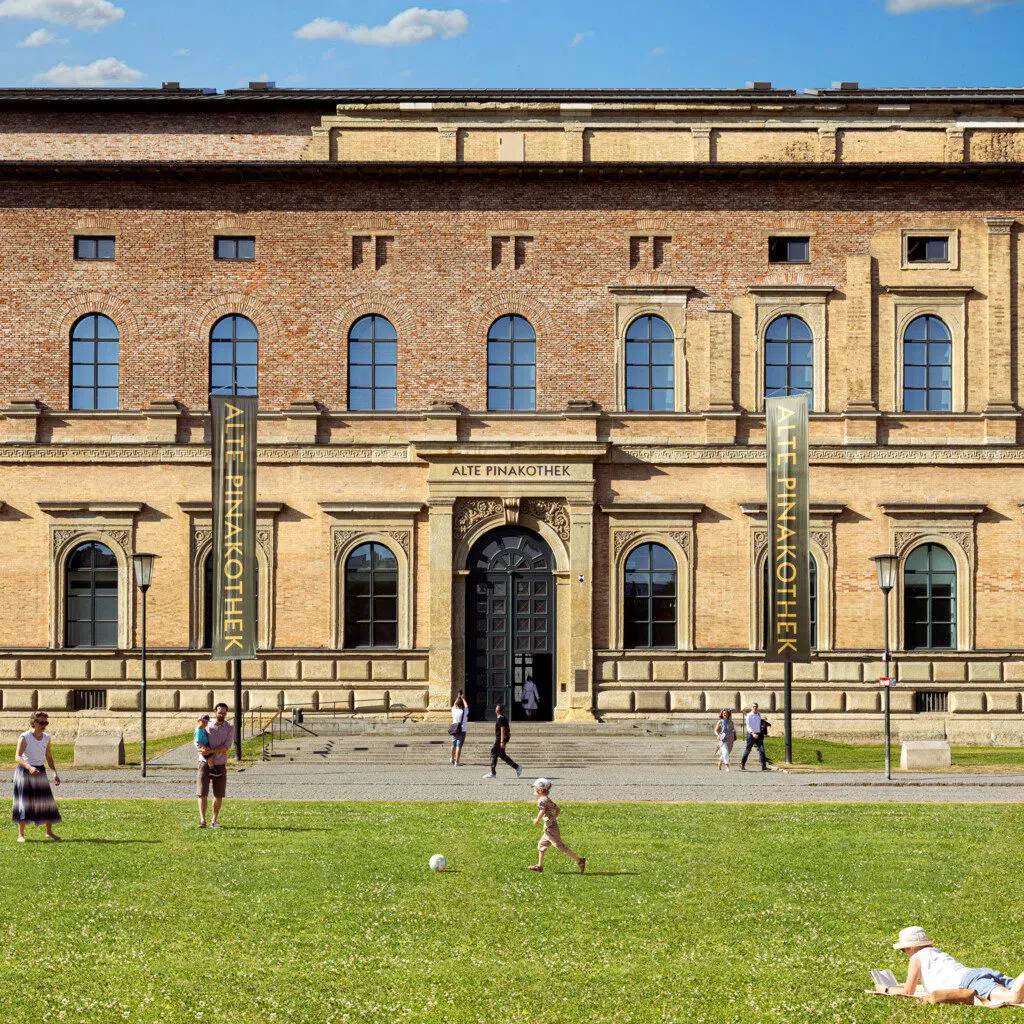
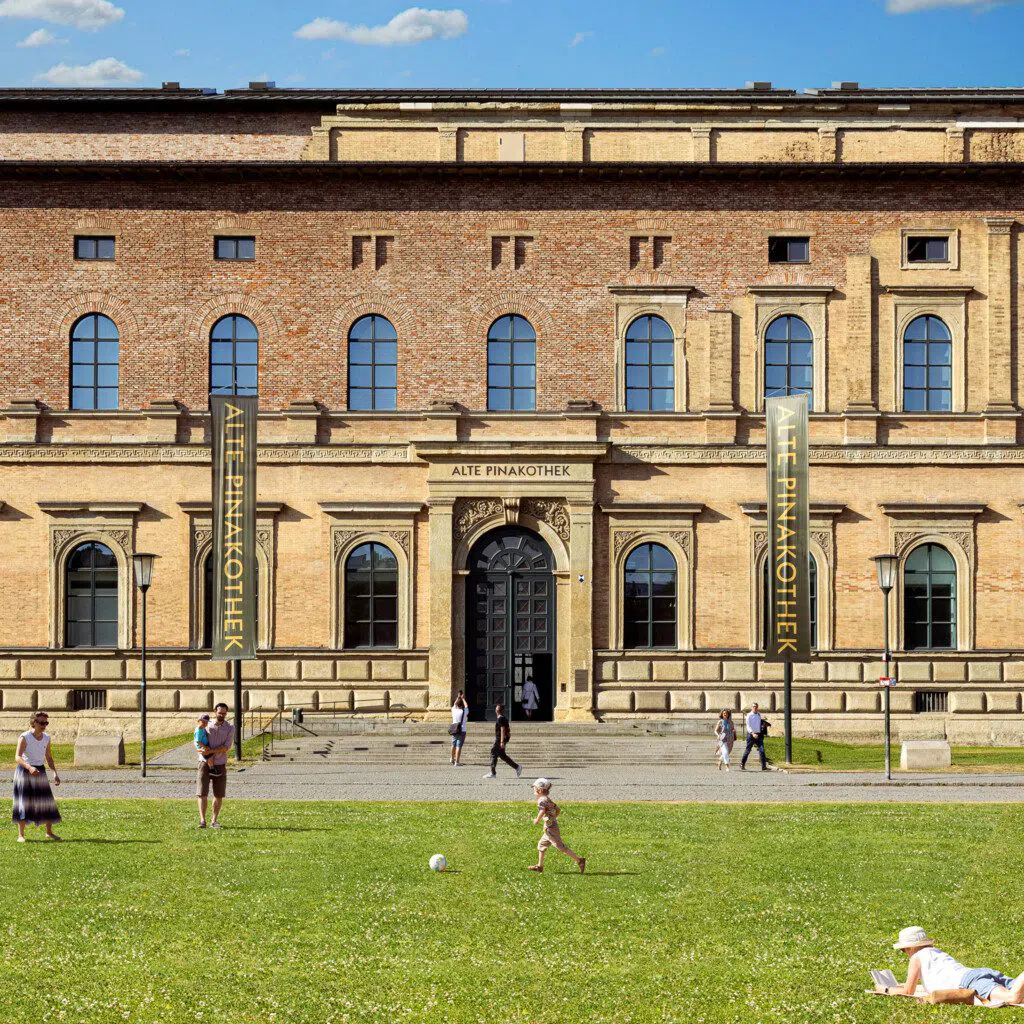
The Alte Pinakothek [Maxvorstadt] is the anchor, the house every art itinerary here is built around: Munich's flagship Old Masters gallery, hung with Dürer, Rubens and a Leonardo. At roughly €9 (and €1 on Sundays) it is the best-value serious collection in the city. There's a bonus for 2026 — with the Neue Pinakothek closed for its long renovation, a rotation of 19th-century highlights is on loan here, so a single ticket now spans more centuries than usual. The lobby is large and used to school and coach groups, and guided group tours book easily. Budget a minimum of 90 minutes; you can spend three hours and not feel you've padded it.
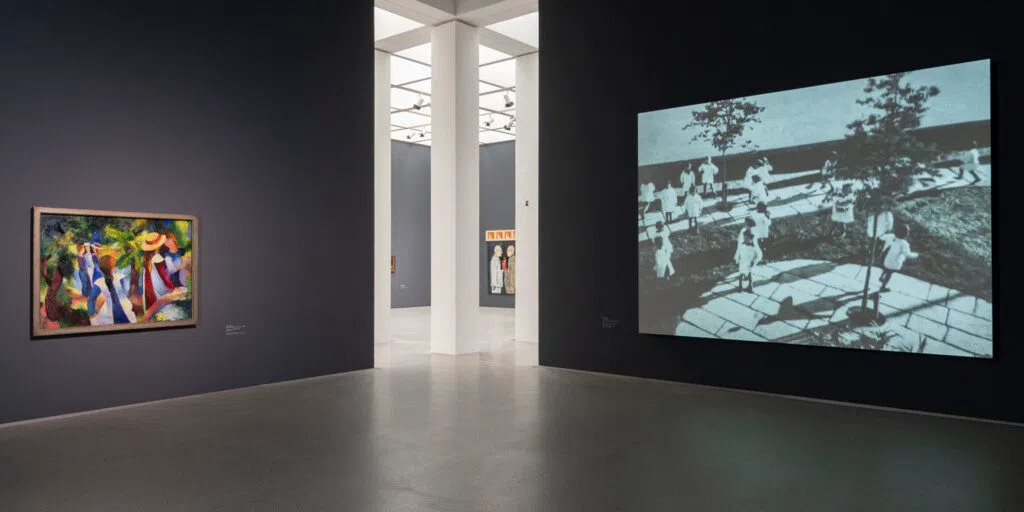
Beside it, the Pinakothek der Moderne [Maxvorstadt] is really four museums under one roof — art, works on paper, architecture, and the Neue Sammlung design collection — arranged around a vast rotunda that doubles as the most obvious group meeting point in the quarter. You move from Picasso to a wall of classic cars and a genealogy of the twentieth-century chair. Entry is around €10, €1 on Sundays. The breadth is the pleasure and the trap: decide before you enter whether you're here for painting or for design, because trying to do all four wings properly is a three-hour commitment. Group tours are bookable and the scale swallows them comfortably.
A minute further and you reach the Museum Brandhorst [Maxvorstadt], the sharpest contemporary collection in the city and, for a certain visitor, the best room in Munich. It holds the deepest Cy Twombly holdings in the world, plus Warhol, Polke and Kippenberger. It is compact — an hour does it justice — and at about €7 it's a cheap way to close the loop on the modern side of the quarter. Group guided tours are arranged by request; the smaller footprint means a party of a dozen is comfortable but thirty would be a squeeze, so keep group numbers sensible here. This trio — Old Masters, moderns, contemporary — is the Kunstareal's spine. If your time is short, this is the walk to protect.
The shopping core: the easy sells
Not every good museum sits in Maxvorstadt. Two more are folded into the Altstadt, close enough to Marienplatz that you can bolt one onto a day of walking the old town.
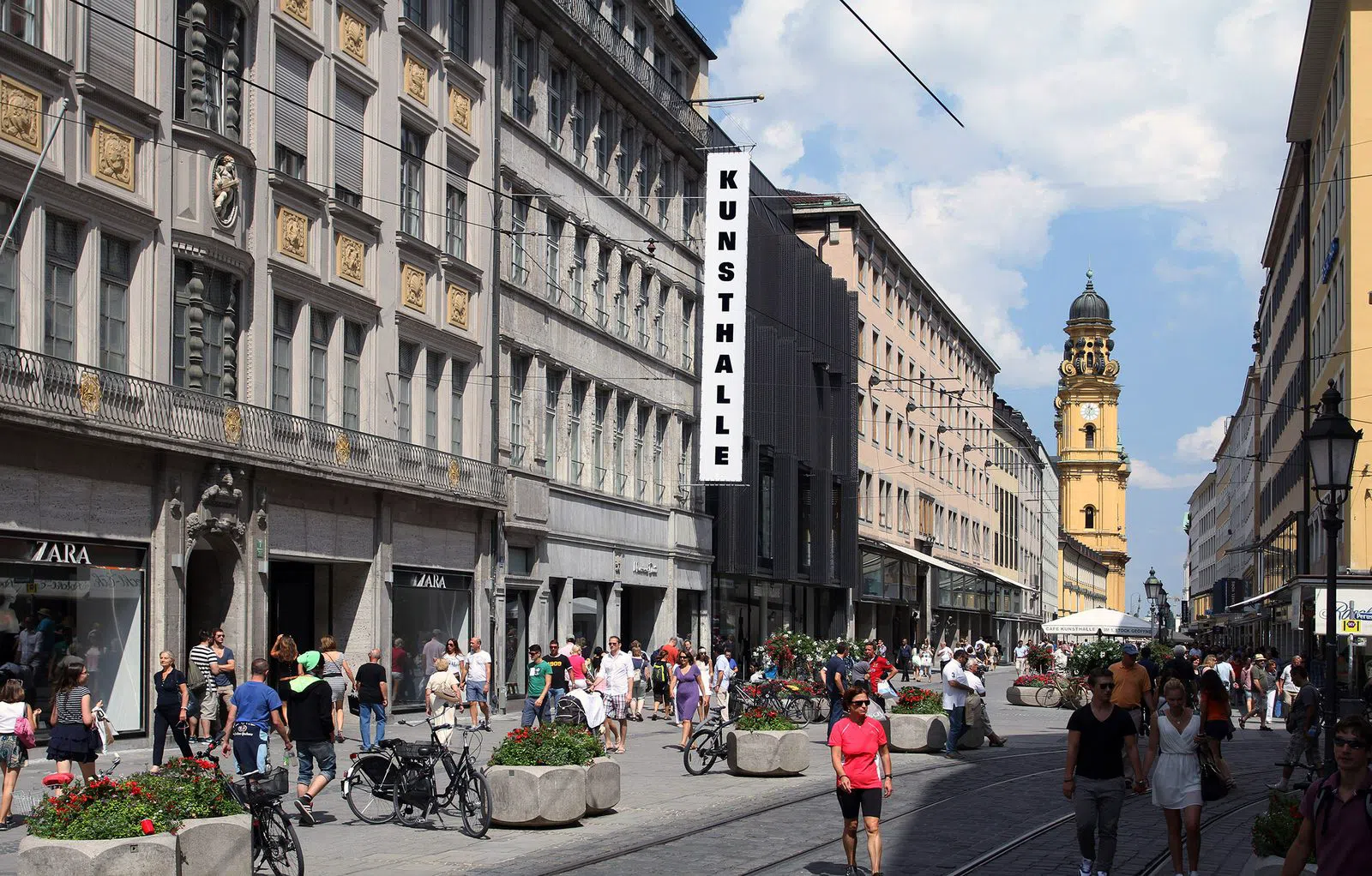
The Kunsthalle München [Altstadt] lives inside the Fünf Höfe shopping arcade and trades in reliably crowd-pleasing themed exhibitions — for 2026, Hair — Stories of Power and Passion, which is exactly the kind of show that works for a mixed party with no specialist in it. It has no permanent collection, so what you get depends entirely on the current exhibition; tickets run about €14, group tickets and tours are available, and it uses timed entry at peak, so book a slot on a weekend. Its central location is the selling point: this is the museum you reach without planning to.
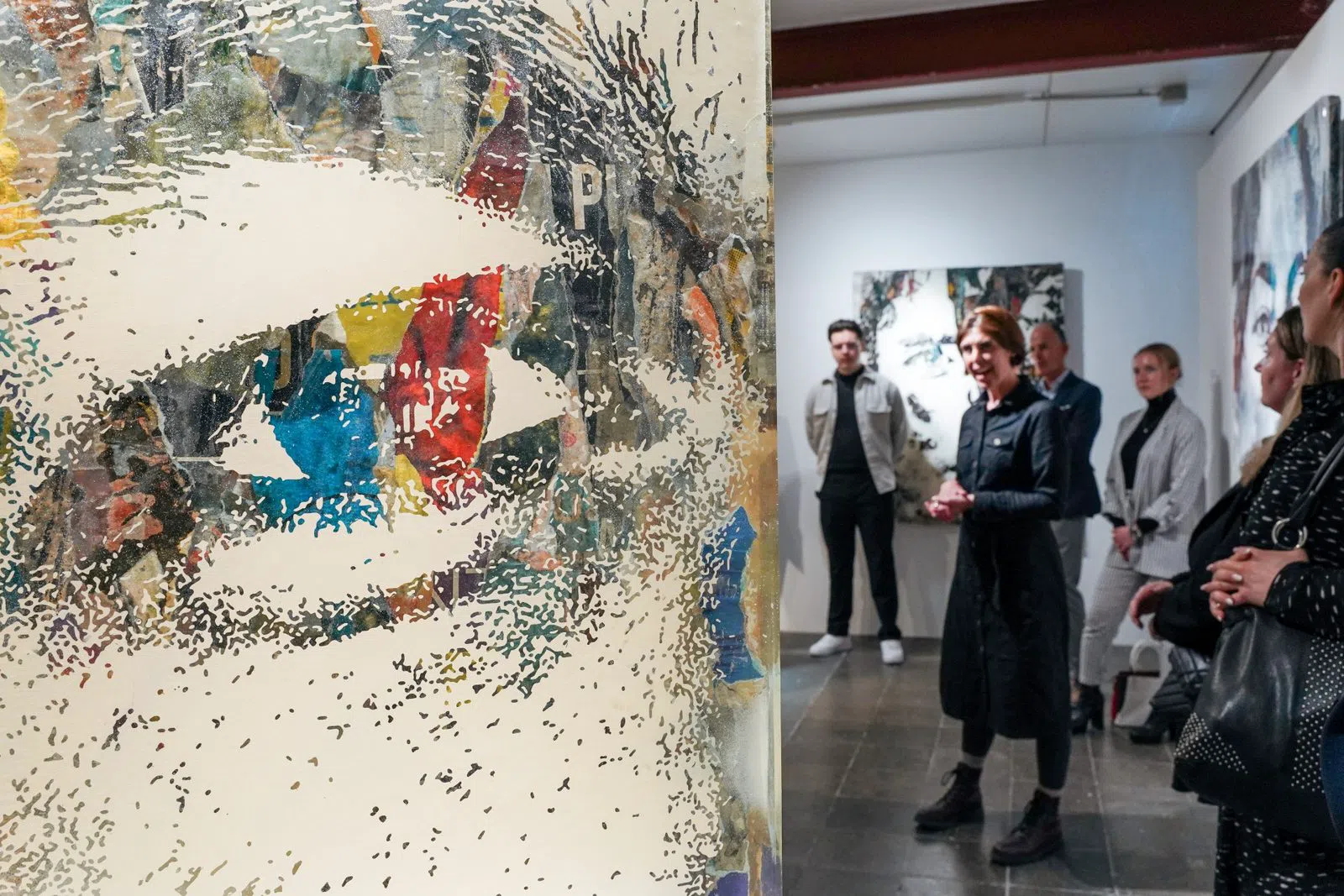
A few streets away, MUCA – Museum of Urban and Contemporary Art [Altstadt] is the counterweight to all those Old Masters — Germany's first urban-and-contemporary-art museum, with Banksy, Obey and Vhils on the walls. At around €14 it's the same money as the Kunsthalle and a very different room, and it lands hardest with a younger, international crowd. MUCA actively takes groups, and its street-art walking tours are a genuine draw if you're travelling with people who'd rather not spend a morning in front of altarpieces. Pair it with the Kunsthalle for a half-day that never leaves the shopping core.
The Prinzregentenstraße axis
East of the old town, one grand boulevard strings together three more collections along the edge of the Englischer Garten. This is a tram trip rather than a walk from the Pinakotheken, but the three sit close enough to each other to make an afternoon.
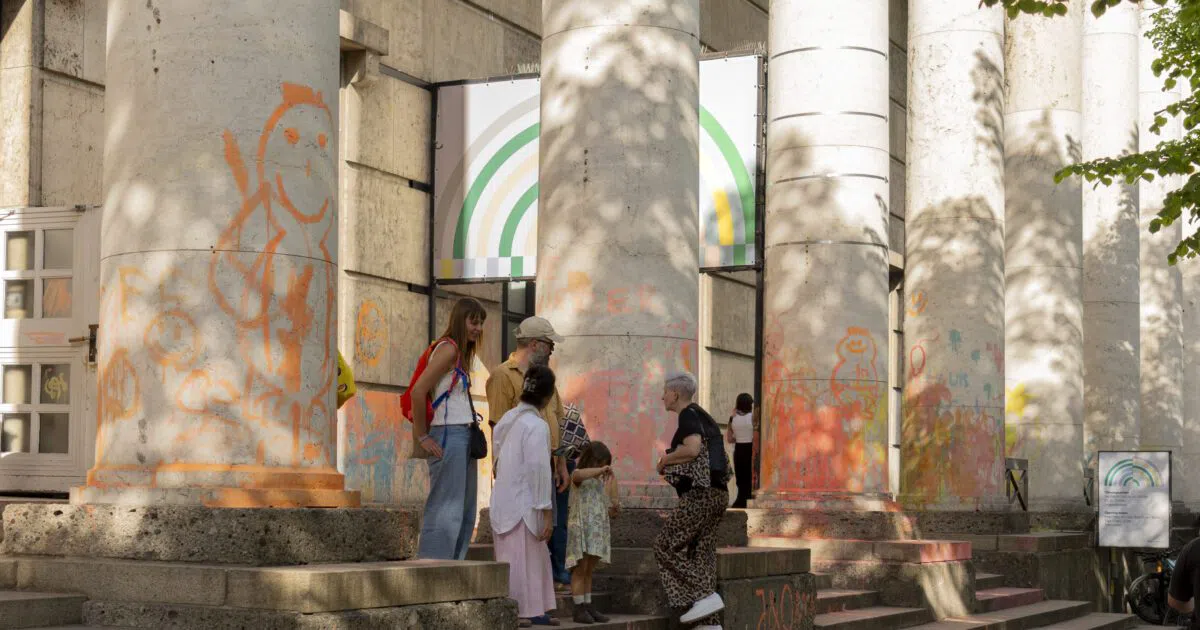
Haus der Kunst [Prinzregentenstraße] anchors the western end, at the corner of the park. It keeps no permanent collection — instead it stages rotating large-format contemporary shows in a building whose history is part of the visit: raised by the Nazi regime as a propaganda gallery, it now addresses that past head-on rather than hiding it. Say so to your group; the context lands with an international audience and turns a gallery visit into something more. Tickets are around €14 and vary by show, the spaces suit large groups, and private and group tours are offered. Check what's on before you commit — with no standing collection, a weak show is a weak visit.
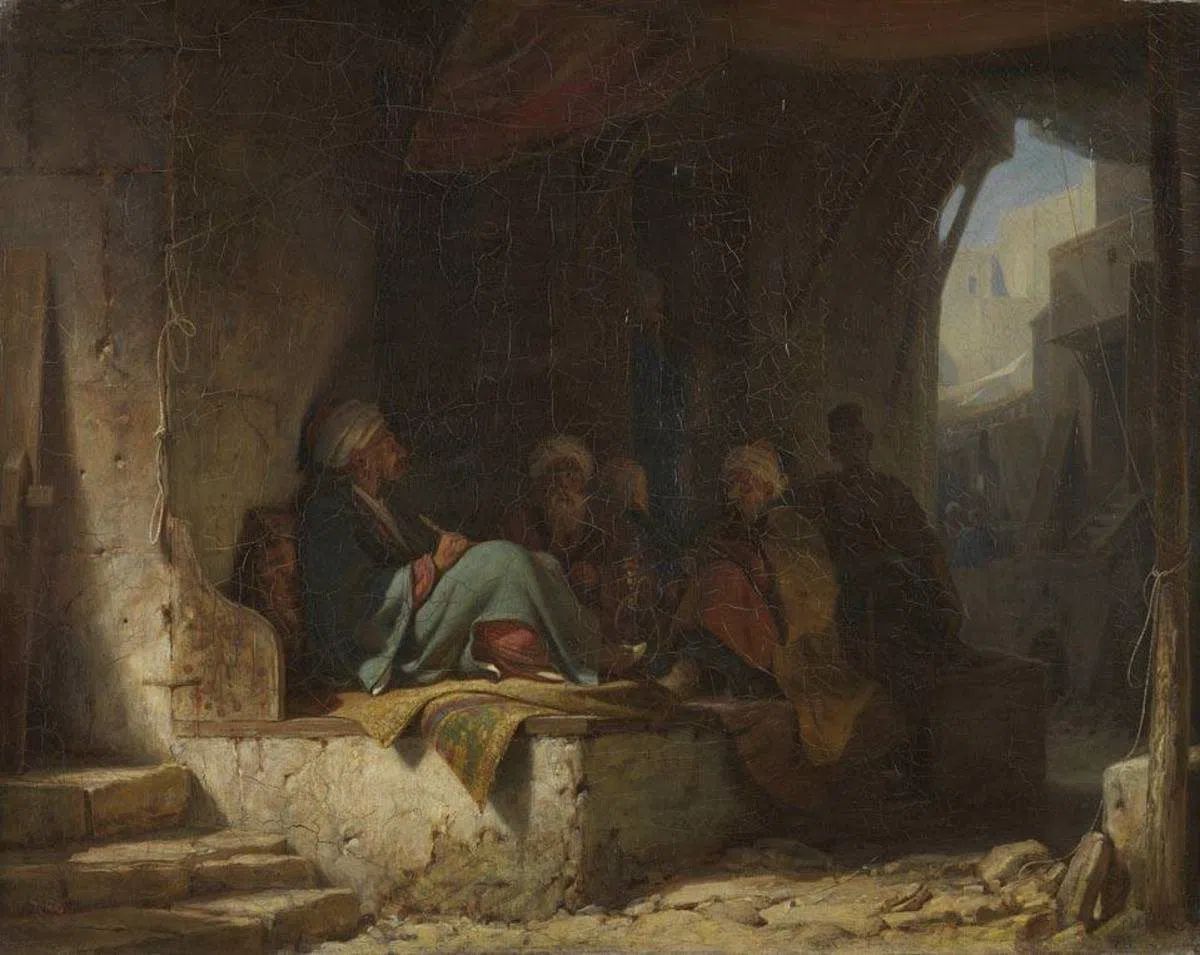
Further along the boulevard, the Sammlung Schack [Prinzregentenstraße] is the quiet one: a hushed connoisseur's gallery of German Romanticism — Böcklin, Feuerbach, Schwind — where, during the Neue Pinakothek's closure, some of that gallery's works now hang. At about €4 (€1 on Sundays) it's the cheapest serious stop in this guide and the most restful; small group tours run by arrangement, but this is really a place for a couple or a solo hour rather than a coach party.
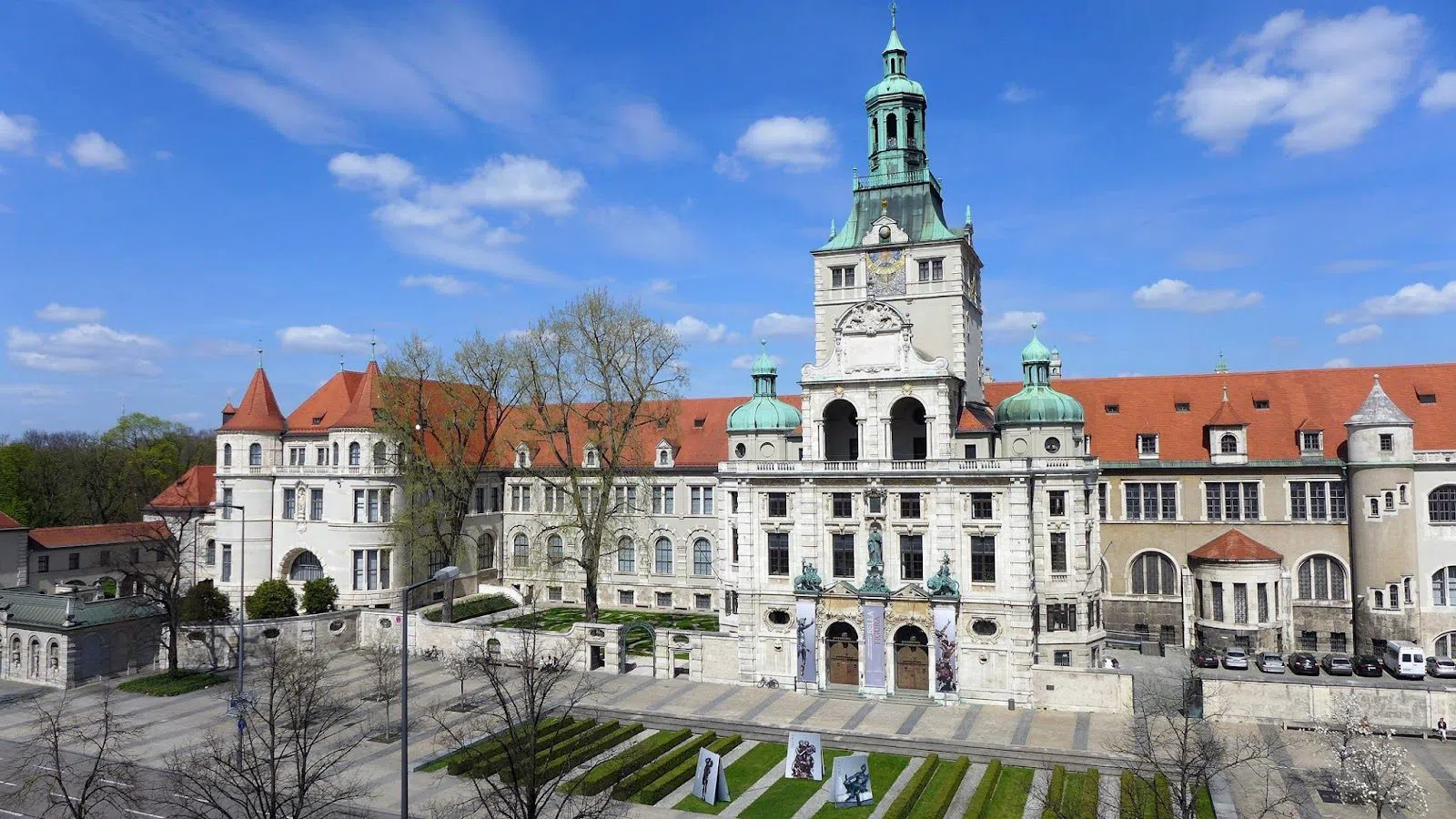
Close by, the Bayerisches Nationalmuseum [Prinzregentenstraße] is broader than a picture gallery — a thousand years of Wittelsbach decorative arts, with Riemenschneider sculpture, tapestries and the celebrated Krippen, the Nativity collection that draws people back each winter. Entry is around €7, €1 on Sundays. It's a large building with a proper education programme and it accommodates group tours readily, so it handles size where the Schack can't. Do these three in order along the boulevard and you have a self-contained afternoon that never crosses back into Maxvorstadt.
Across the Isar: the villa worth the tram
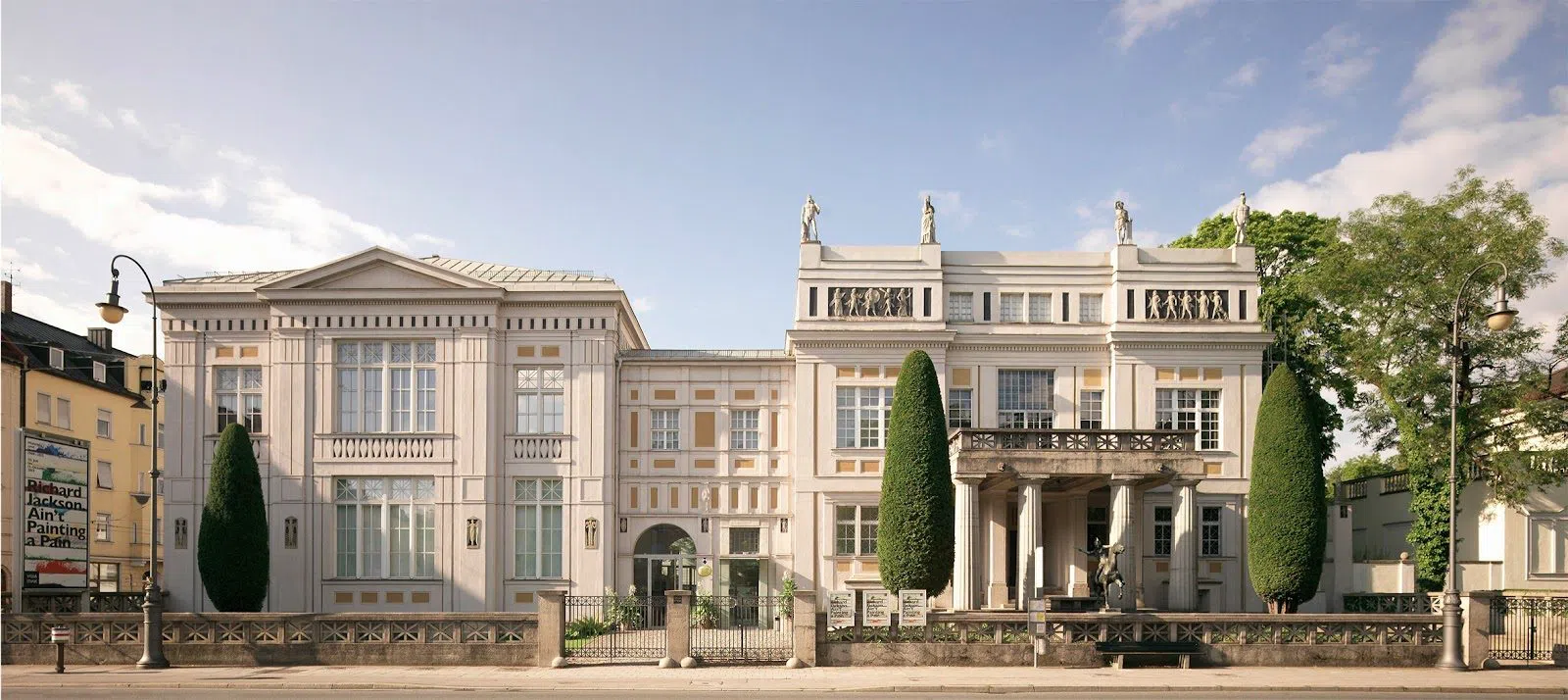
One last detour, and the only one that asks you to cross the river. In Bogenhausen, the Museum Villa Stuck [Bogenhausen] reopened on 14 May 2026 after a full technical renovation — a total-artwork Jugendstil villa, every room designed down to the door handles, that also runs a serious programme of changing exhibitions. Admission is about €9. Guided group tours are possible, but the period rooms are intimate and the museum caps sizes to protect them, so a large party will be split; this is a place that rewards a couple or a small, curious group over a bus tour. It's the furthest stop in this guide and the most atmospheric — worth the tram if Jugendstil interiors are your thing, skippable if your day is already full of the Pinakotheken.
Practical notes: transport, cash, timing, budget
Getting there and around. The whole Kunstareal is walkable once you arrive. Königsplatz has its own U-Bahn stop (U2); from there the Pinakotheken are a five-to-ten-minute walk northeast, so you rarely need transit inside the quarter. The Altstadt pair (Kunsthalle, MUCA) is a short walk from Marienplatz on the U/S-Bahn hub. The Prinzregentenstraße three and the Villa Stuck are best reached by tram along the boulevard. A day travelcard covers everything comfortably.
Cash and tickets. Larger museums take cards, but keep some euro notes for smaller desks, cloakrooms and lockers. Sundays are the value play: many of the state museums — the Alte Pinakothek, Pinakothek der Moderne, Brandhorst, Glyptothek, Antikensammlungen, Sammlung Schack and Bayerisches Nationalmuseum — drop to €1, which turns a full day into a few euros of entry. It also means Sunday crowds, so arrive at opening. Most museums close on Mondays; check before building a Monday itinerary.
Timing and grouping. For a full day, start at Königsplatz at opening, do the antiquities and the Lenbachhaus, break for lunch, then give the afternoon to the Pinakotheken and Brandhorst. Leave the Altstadt, the Prinzregentenstraße axis and the Villa Stuck for a second half-day each — trying to fold them into a single day means rushing the core. For groups: Königsplatz's combined antiquities tour and the Pinakothek der Moderne rotunda are the easiest to marshal; keep Brandhorst, the Schack and the Villa Stuck to smaller numbers. Peak-time shows at the Kunsthalle and Haus der Kunst use timed entry — book a slot rather than turning up.
Budget. Individual entries run from about €4 at the Schack to around €14 for the temporary-exhibition halls, so a two-day, five-museum plan sits comfortably under €60 a head at full price, or a fraction of that if you weight it toward Sunday. Sleep close to the quarter to make the most of early openings — the Munich hotel search covers Maxvorstadt and the Altstadt, both within walking distance of the core cluster. For the wider city beyond the museums, the Munich guide picks up where this route ends.
Before you go
How many days do I need for Munich's Kunstareal?
The core — Königsplatz, the three Pinakotheken and Brandhorst — fits into one disciplined full day or, more comfortably, two half-days. The outriders on Prinzregentenstraße, in the Altstadt and the Villa Stuck across the Isar each add a further half-day, so a serious art visitor should plan two to three days.
Which Munich museums are €1 on Sundays?
Many of the state-run collections drop to €1 on Sundays, including the Alte Pinakothek, Pinakothek der Moderne, Museum Brandhorst, Glyptothek, Staatliche Antikensammlungen, Sammlung Schack and Bayerisches Nationalmuseum. Arrive at opening, as the cheap entry draws crowds, and note most museums close on Mondays.
Is the Neue Pinakothek open in 2026?
No — the Neue Pinakothek remains closed for a long renovation. Its 19th-century highlights are on loan across the quarter: a rotation hangs at the Alte Pinakothek, and further works are shown at the Sammlung Schack, so you can still see much of the collection while the building is shut.
Which Kunstareal museums work best for groups?
The combined antiquities tour across the Glyptothek and Antikensammlungen at Königsplatz, and the Pinakothek der Moderne with its large rotunda, handle big groups most easily, as does the Bayerisches Nationalmuseum. Keep numbers smaller at Museum Brandhorst, the Sammlung Schack and the Museum Villa Stuck, where intimate rooms cap group sizes.
How do I get around the Kunstareal without a car?
Take the U2 to Königsplatz; from there the entire core is a walk of ten minutes or less, so you rarely need transit within the quarter. Use the tram along Prinzregentenstraße for Haus der Kunst, the Sammlung Schack and the Bayerisches Nationalmuseum, and the same line to reach the Villa Stuck in Bogenhausen. A day travelcard covers it all.