The Munich issue
The Isar Runs Through It: Munich's Wild River and the City That Swims in It
A calm, practical route down Munich's glacier-fed river — where to watch the surfers, where it's actually safe to get in, and where to end the day with a Maß by the water.

By Bram JanssenMunich on foot, one neighbourhood at a time
The Isar arrives in Munich the colour of glacier melt — grey-green, cold, and moving faster than a river this close to a city centre has any right to. What's unusual is what Munich does with it. On the first properly warm day of the year the gravel banks fill with people carrying towels, disposable barbecues and crates of beer, and by afternoon whole stretches of water are dotted with swimmers letting the current carry them downstream. This is a guide to using the river the way locals do: where to watch, where it's safe to get in, where to paddle, and where to end the day with a beer in your hand.
Everything here sits within a north–south corridor along the river, so it plans naturally as a route rather than a scatter of stops. For hotels near the water and the wider city, see the Munich guide.
Read the river before you go near it
The Isar is genuinely cold, even in August — it drops out of the Alps and doesn't warm much on the way. The current is stronger than it looks, and the weirs (low dams spaced along the river) create recirculating water below them that has drowned strong swimmers. The rule locals follow is simple: never swim directly below a weir, get in and out on the inside of a bend where the water slows, and treat the river as something to float with, not fight. Sunny summer weekends are busy and social; a warm weekday afternoon is quieter and easier if you want space. None of what follows works if you skip this section.
Plan your Munich trip
Live prices from our booking partners.
Free cancellation on many rooms. We may earn a commission when you book.
The waves: watch one, surf the other
Munich has a rare geographic quirk — standing river waves, where the water moves and the surfer stays put. There are two, and they suit completely different people.
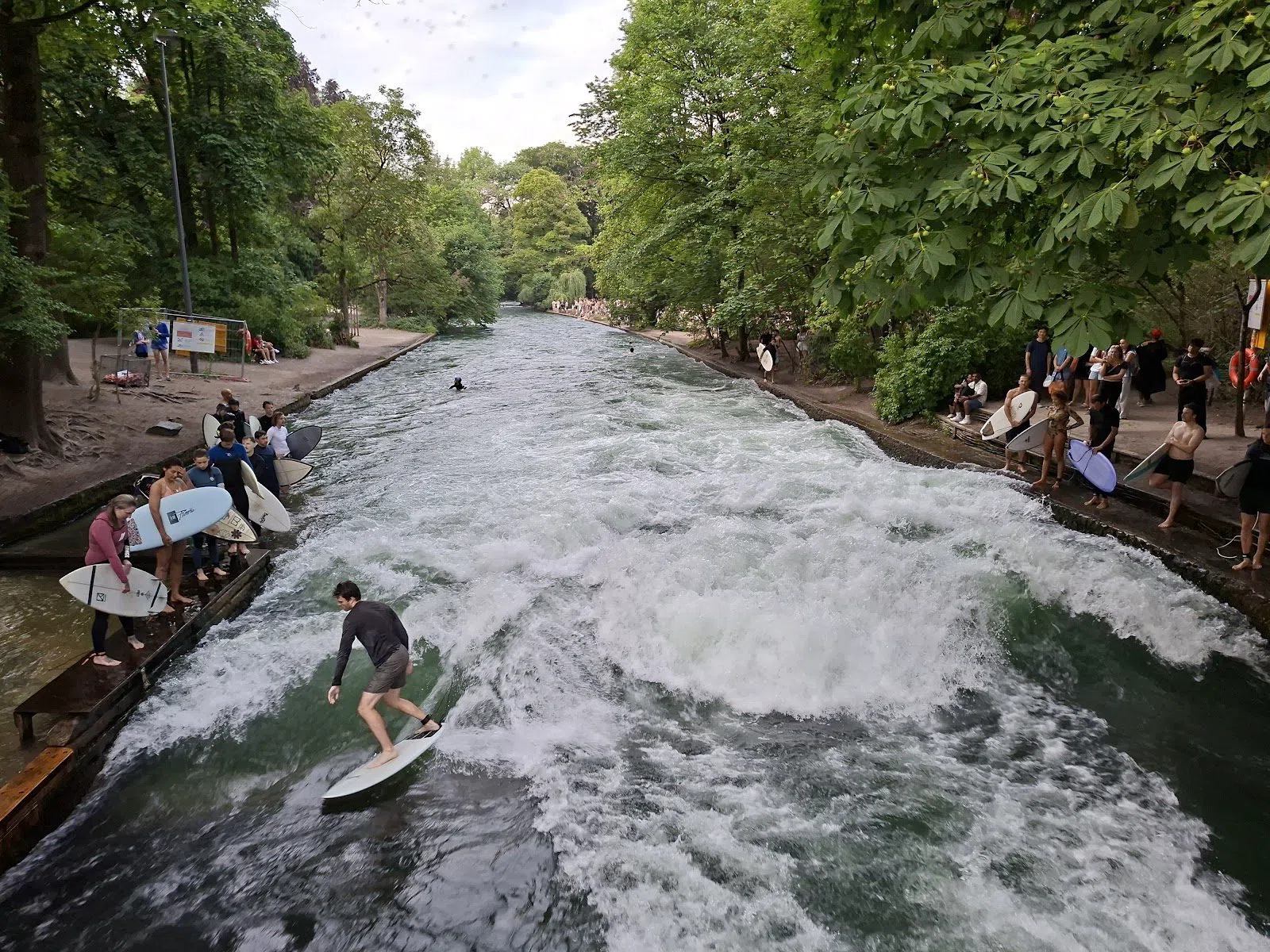
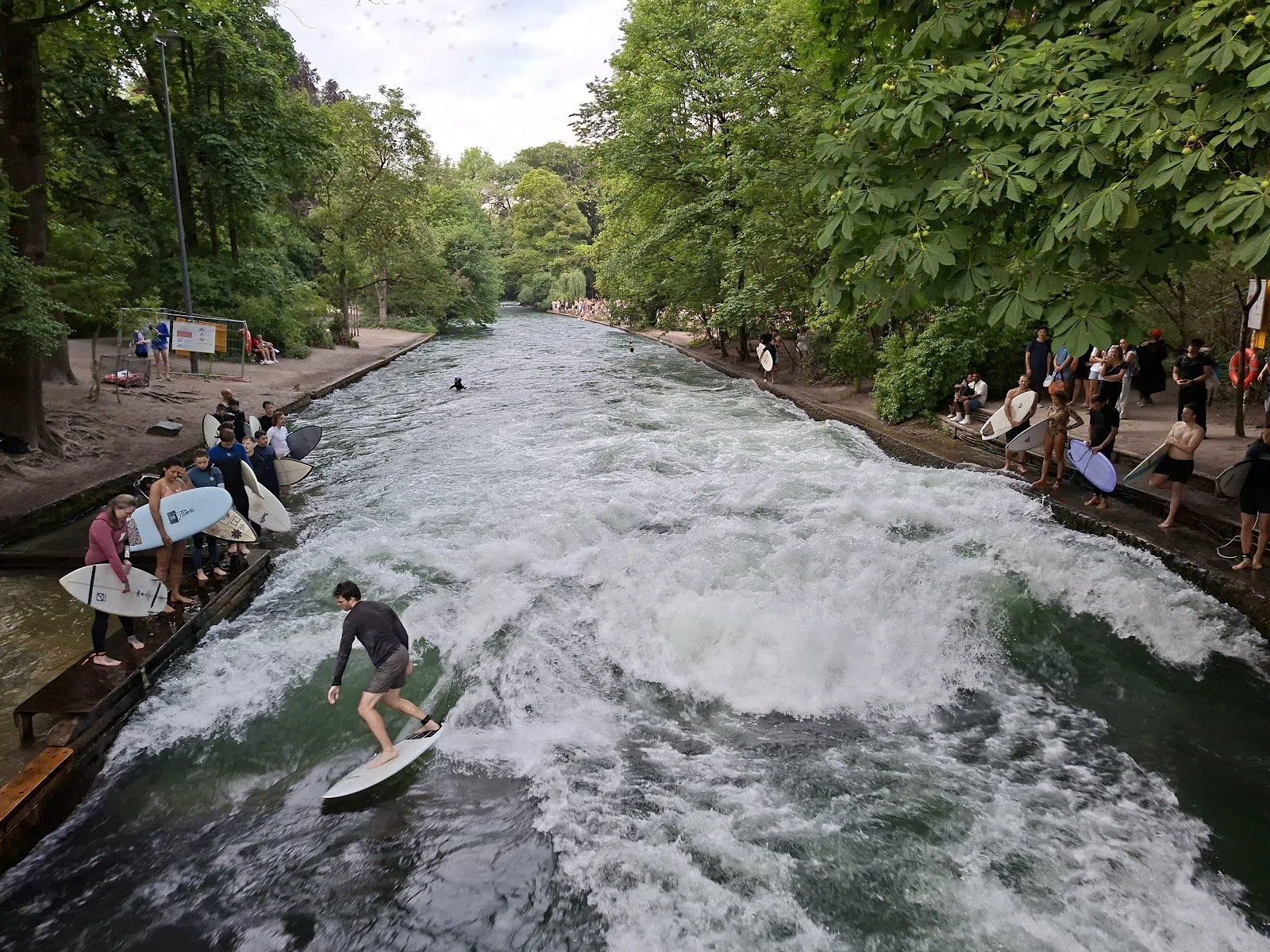
Eisbachwelle (Englischer Garten, at the park's southern tip beside Haus der Kunst) is the famous one — the most photographed urban wave in the world, a knot of surfers taking turns on a chest-high standing wave in the middle of a city park. It reopened in May 2026 after roughly a year of closures following a fatality, and the rules are now stricter: newcomers need a quick-release leash and a companion in the water, there is no board hire on site, and the surfing itself is genuinely experts-only. For everyone else it is a free spectacle and one of the best group photo stops in Munich — you can stand on the bridge and watch for as long as you like at no cost. Come, watch, respect the sign that says this is not a beginner wave. It is a five-minute walk from Odeonsplatz, or take the U3/U6 to Universität.
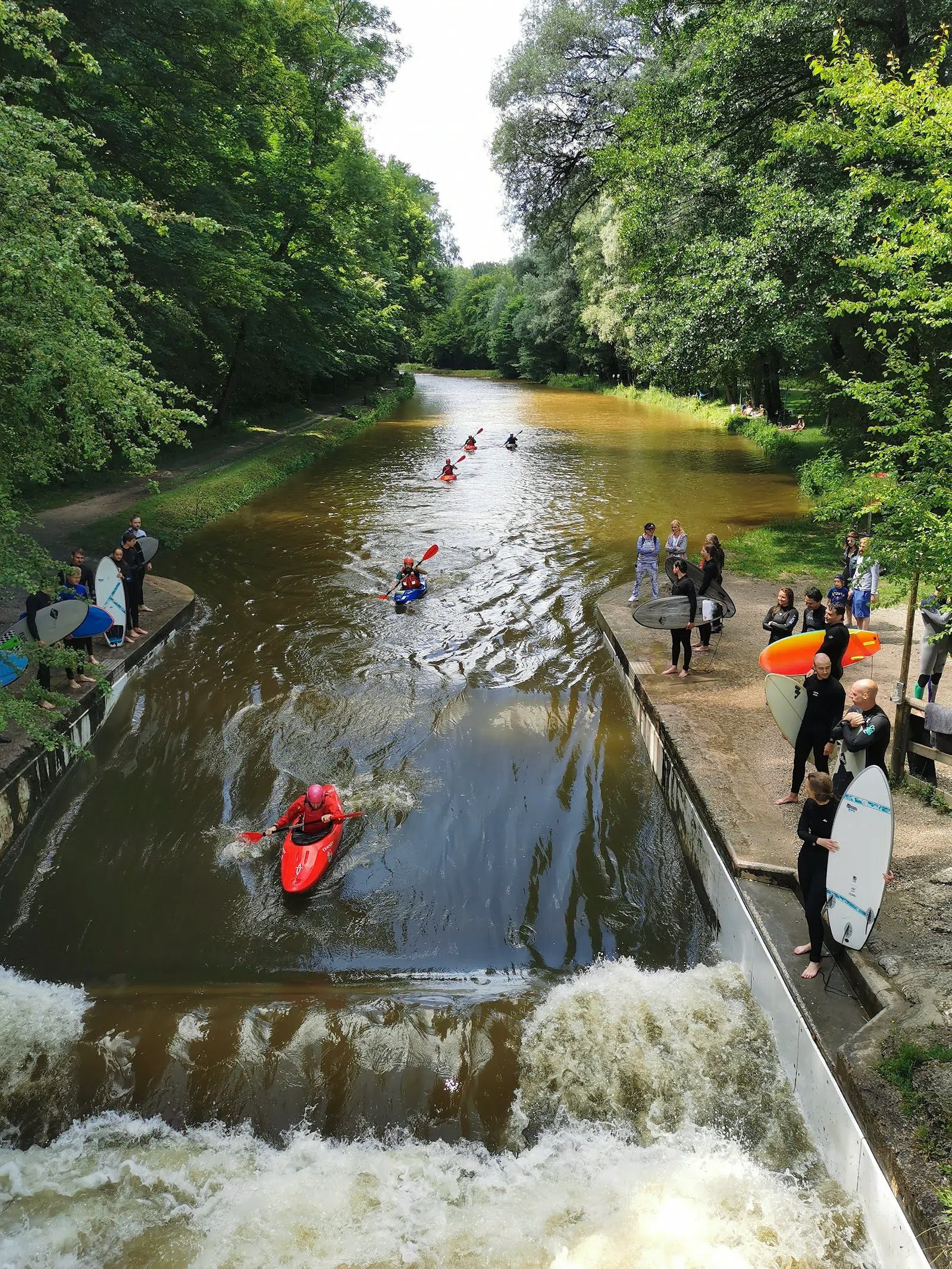
If you actually want to surf, go south to Floßlände Thalkirchen (Thalkirchen), the world's oldest surfed river wave and the sensible place to start. Surf schools run beginner group lessons here, which makes it far more welcoming than the Eisbach; guided sessions run roughly €60–90 per person with gear, and it's free if you bring your own. The important caveat: the wave only runs when the canal is switched on, roughly May to September, so check before you build a day around it. The U3 to Thalkirchen drops you a short walk away.
Getting in: a wild river beach and a palace of a pool
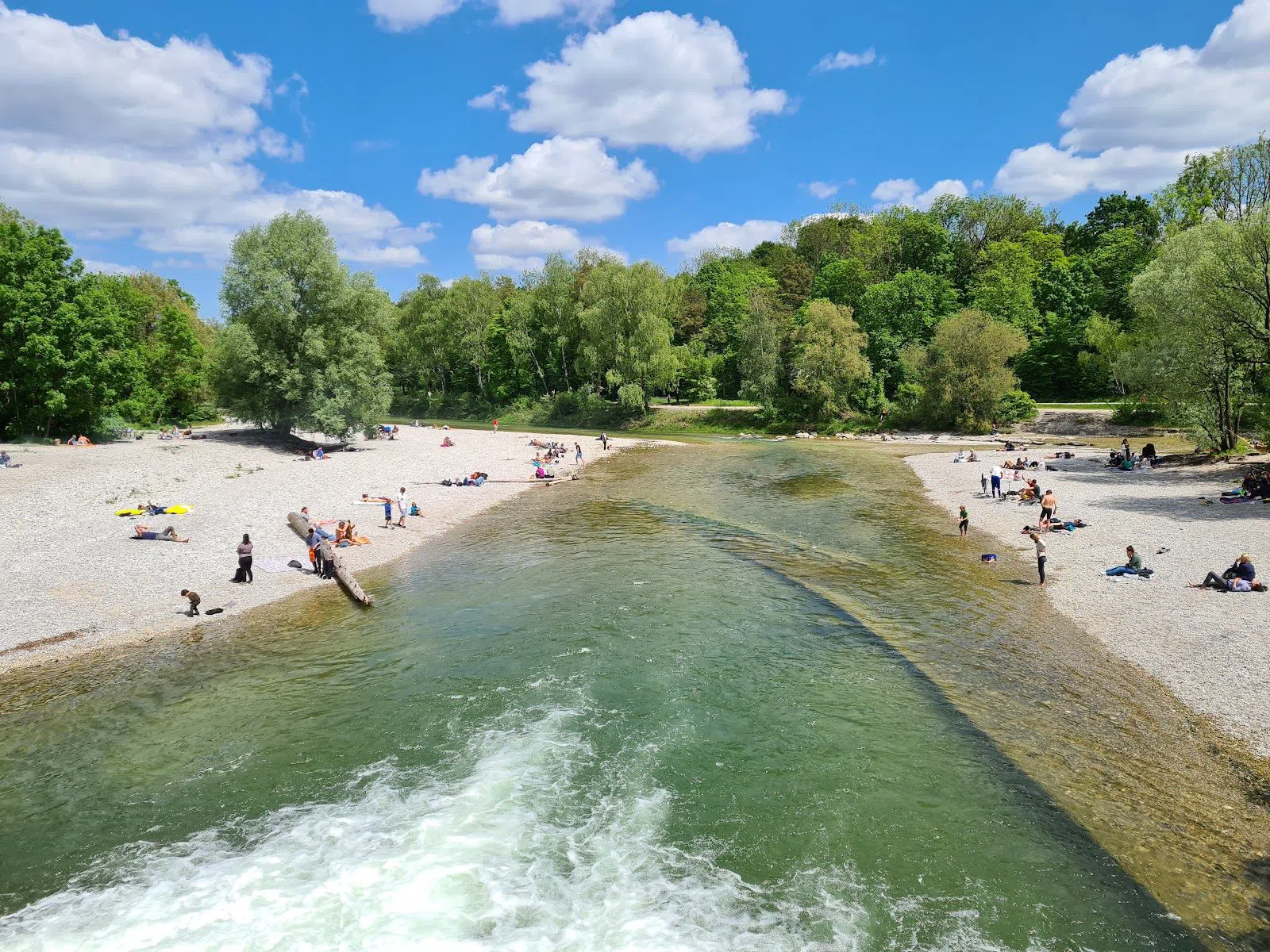
For most visitors, "swimming the Isar" means one place. The Flaucher (the Isarauen woods south of the centre, near Thalkirchen) is Munich's best-loved urban river beach — wide gravel banks, shallow braided channels, and on a summer weekend a genuine crowd of locals swimming, picnicking and grilling. It's free, there are no gates and no booking, and it suits groups perfectly for a swim-and-barbecue day. The honest warning is the same as everywhere on this river: the currents below the weirs here are strong, so pick your spot on a slow inside bend and keep an eye on anyone who isn't a confident swimmer.
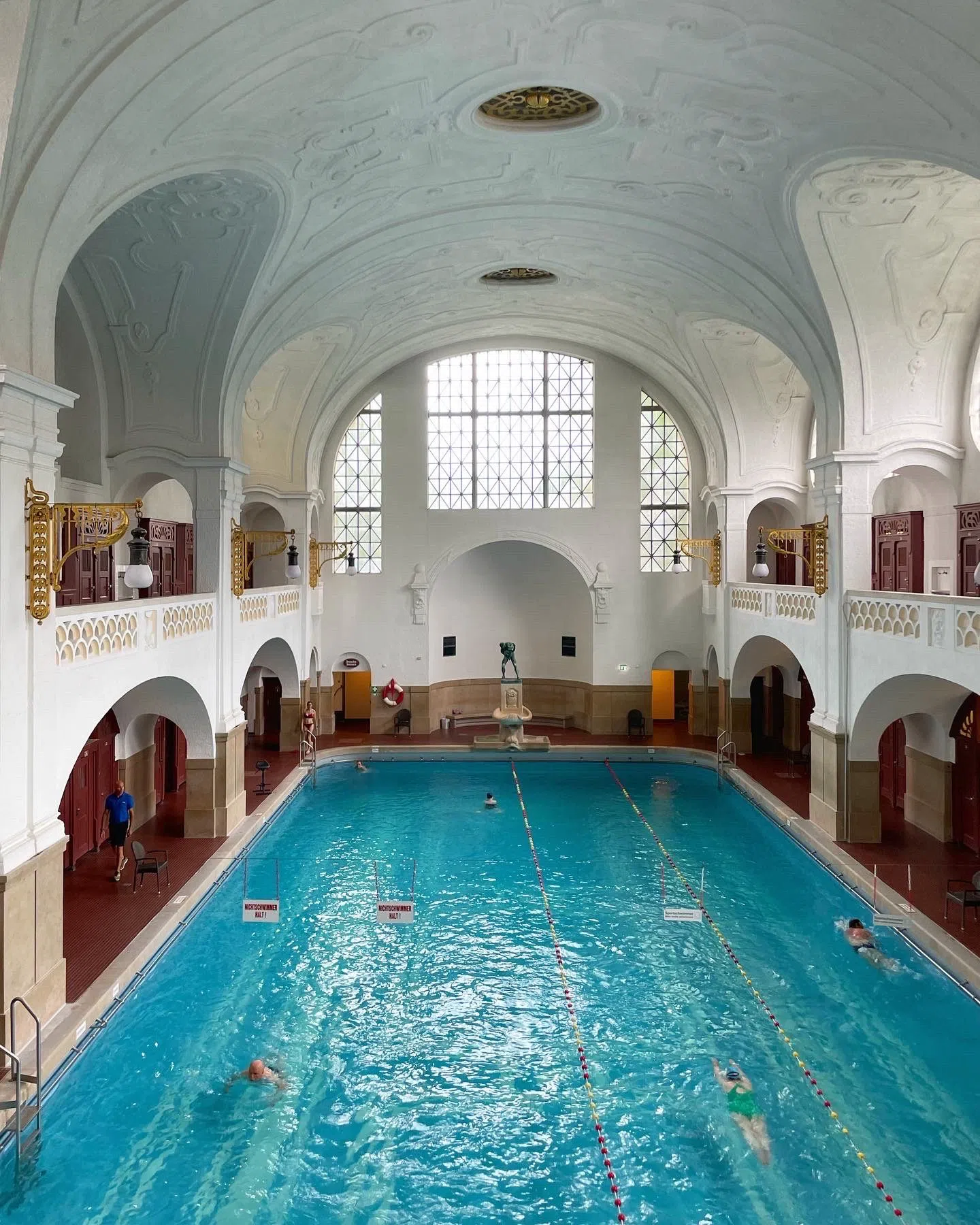
When the weather turns — and Munich weather turns — the indoor counterpart is a destination in its own right. Müller'sches Volksbad (Au, on the river by Ludwigsbrücke) is the city's first public baths, marking its 125th anniversary in 2026, and it is one of the more beautiful places you will ever swim: a barrel-vaulted Jugendstil hall with domes and ironwork overhead. Entry is straightforward for individuals and groups — a swim runs about €5–6, and the adults-only sauna area is roughly €12–16. It works as a rainy-afternoon plan or a quiet, warm bookend to a cold day on the river.
On the water: a party raft and a paddle upstream
Two very different ways to spend a day on the surface rather than in it.
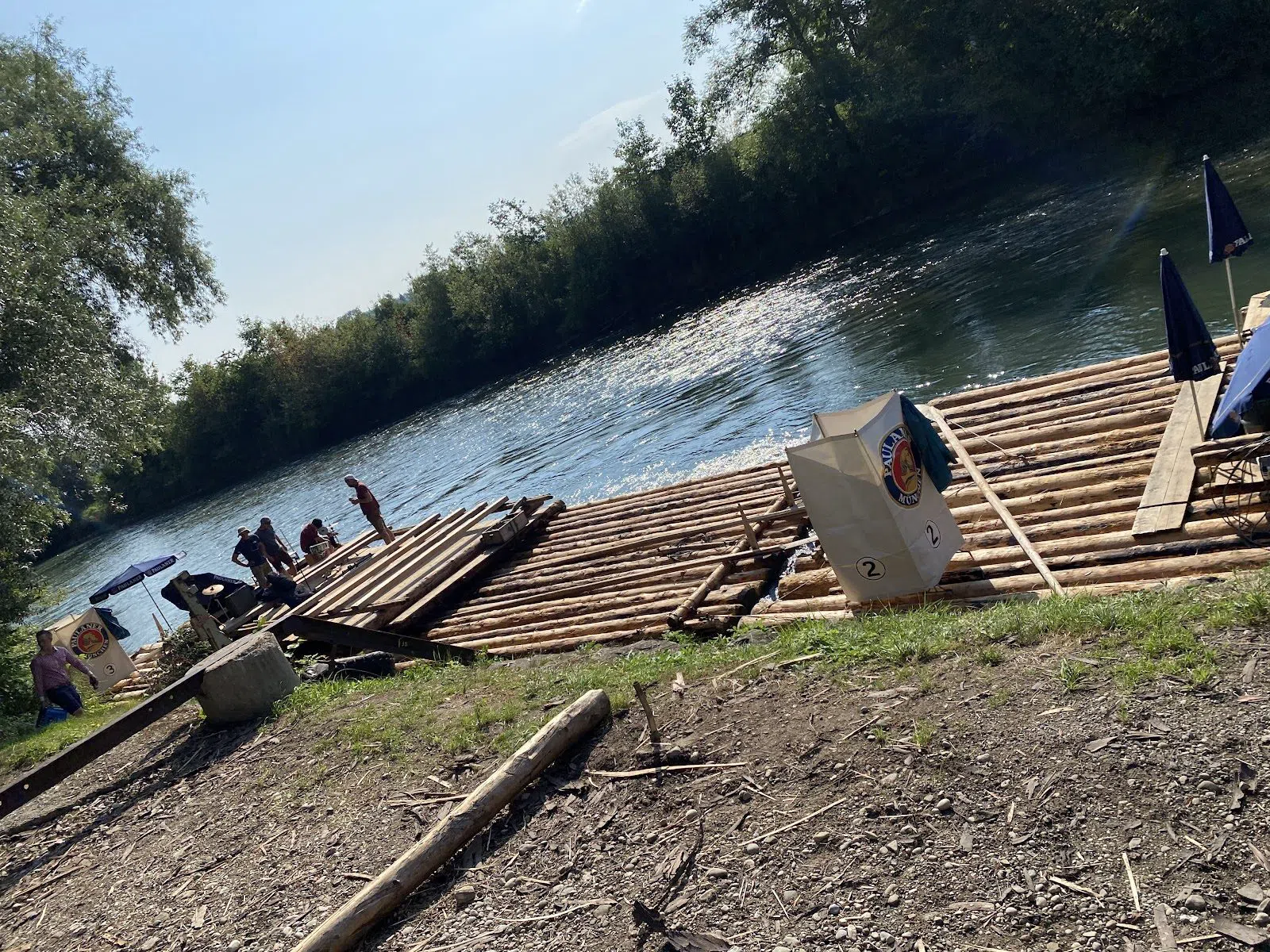
Isarfloßfahrt (running from Wolfratshausen down to Thalkirchen) is the quintessential Bavarian group day out — a purpose-built wooden log raft, effectively a floating beer garden, drifting downriver from May to mid-September. This is leisurely, not whitewater; the appeal is the band, the beer and the company, not the rapids. It's built for numbers — a whole raft charters for up to around 55 people, roughly €40–60 per person in a full group — and large parties often need to book many months, sometimes a year, ahead. If you're a couple or a pair, this isn't your day; if you're organising a big celebration, book early and treat the raft as the whole afternoon.
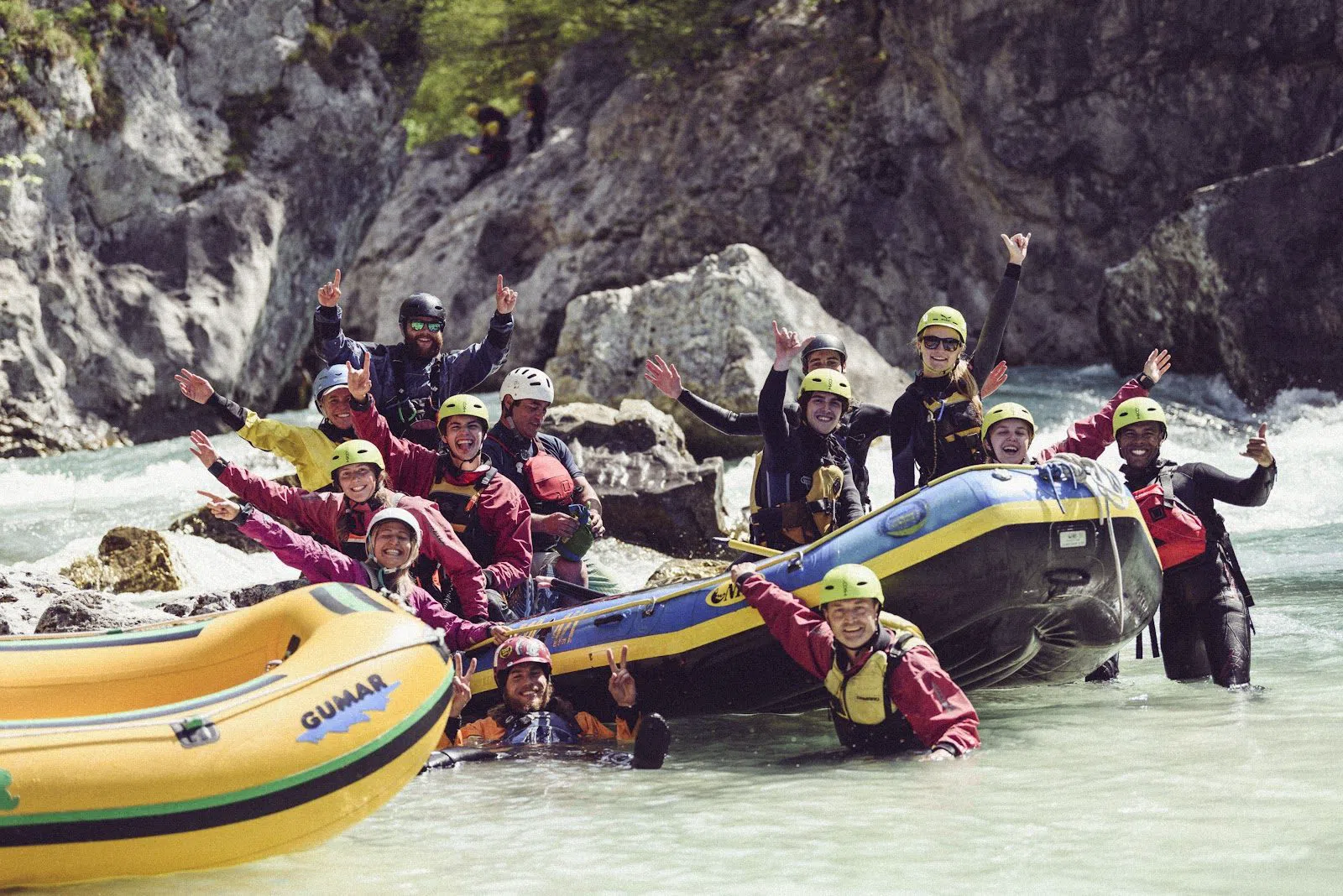
For something more active, Montevia Isar River SUP tour runs guided stand-up paddling on the actual river — not a flat lake — with the base upstream near Lenggries and Bad Tölz. Tours include wetsuit, board, helmet and a return transfer, from around €79 per person. Because the launch point is well upriver, treat this as a guided day-trip out of Munich rather than a walk-out-the-door activity, and book ahead — river SUP depends on conditions and group size.
Beer and grilled fish by the water
Munich's beer-garden culture and its river run together, and two gardens sit right on the Isar.
Zum Flaucher (in the Isarauen, beside The Flaucher beach) is a hidden riverside classic that has been pouring beer since 1870. With around 1,300 seats it swallows walk-in groups easily, a Maß runs about €10–12 and mains €10–18, and the signature move is grilled fish and a beer followed by a dip in the Isar a few steps away. There's a catch that keeps it honest: it's reachable only on foot or by bike, so plan the walk in (about 20–25 minutes from Thalkirchen station through the woods) and don't expect a taxi to the door.
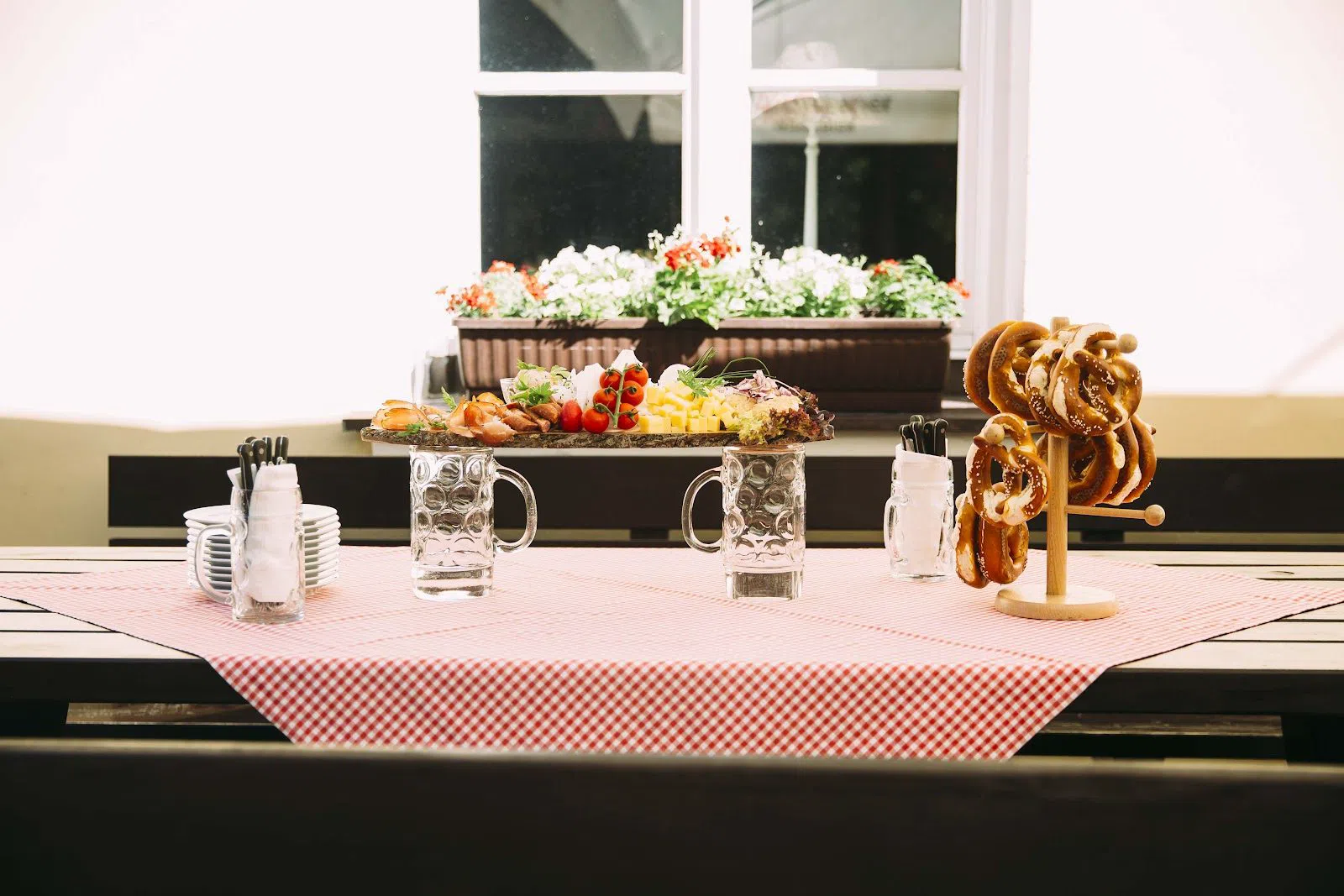
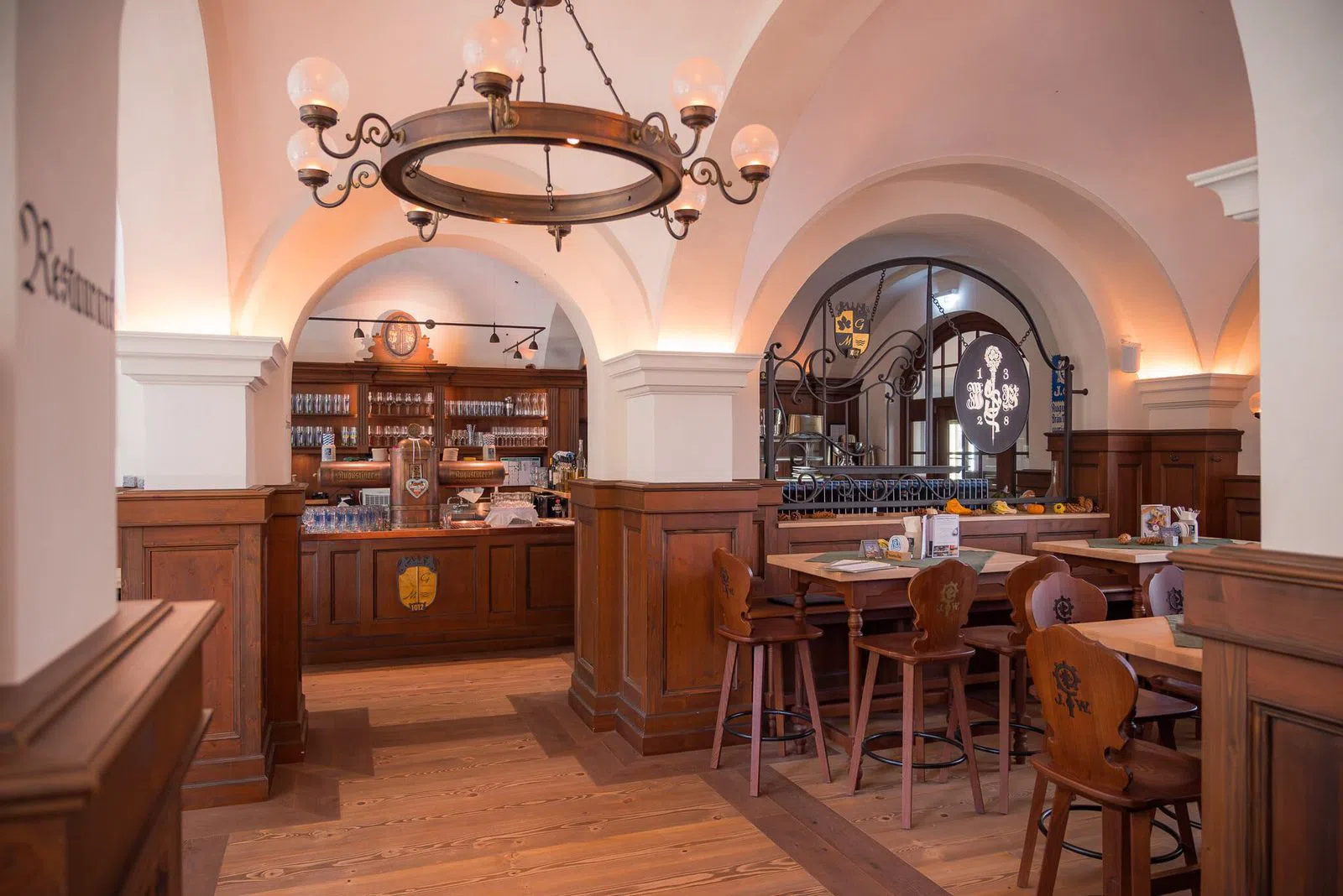
Up on the valley's edge, Augustiner Gutshof Menterschwaige (Harlaching, above the Isar near the Grünwald forest trails) is one of Munich's oldest and largest beer gardens — a leafy escape with a self-service garden, a sit-down restaurant and two playgrounds that make it genuinely family- and group-friendly. Large groups are welcome across both sides, a Maß is about €10–12, and the food is solid mid-range Bavarian. Combine it with a walk in the surrounding forest and you have a half-day that never touches the city centre.
Riverbank culture, into the evening
As the light drops, the river's social life moves to a handful of venues that pair drinks and water with music and events. These vary in character — one is a stranded ship, one a pop-up beach, one a beer garden bolted to a concert hall — so choose by mood.
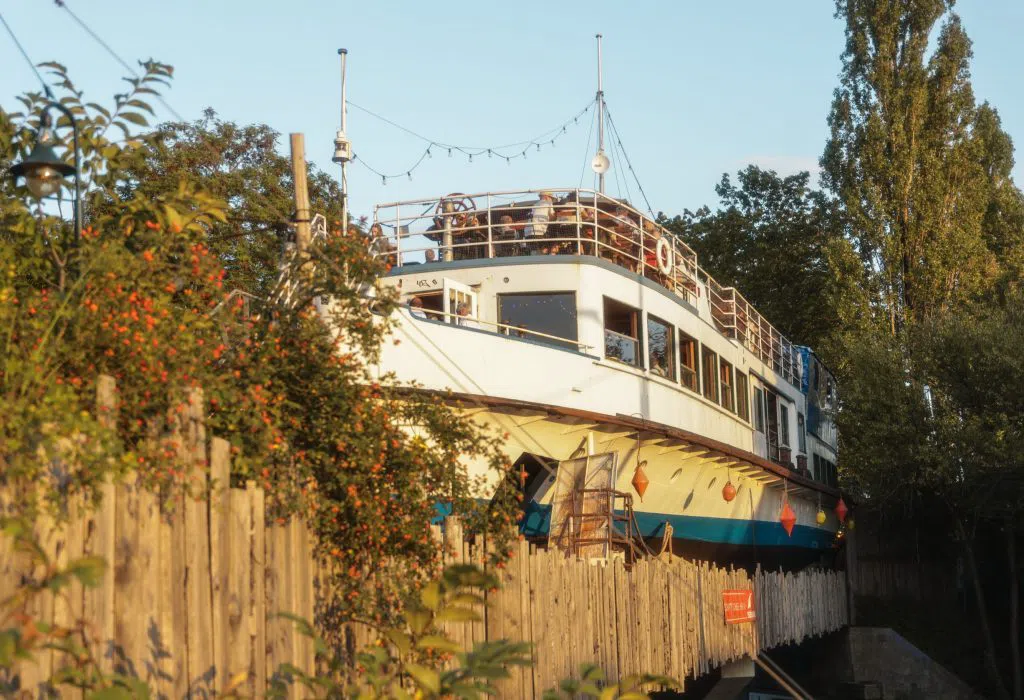
Alte Utting (Sendling) is a beloved fixture of the Munich scene: an old passenger ship repurposed as a bar and cultural venue, with sunset deck drinks, DJs and a changing summer programme. It holds around 600, casual groups are fine, and the whole venue is hireable for private events. Food is stone-oven pizza and the drinks are mid-range — an easy, unfussy place to start an evening.
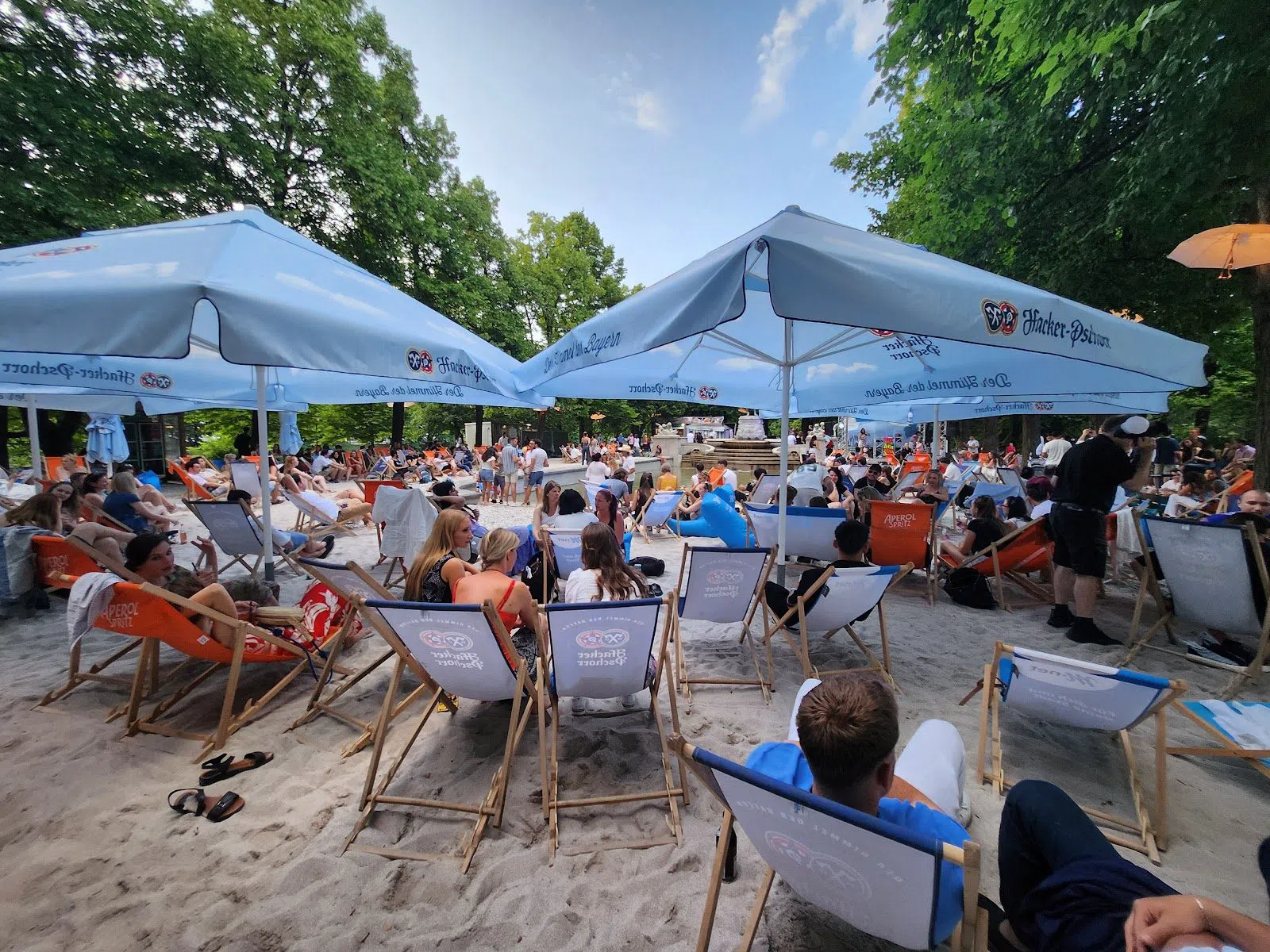
Right over the water in the centre, Kulturstrand (the Urbanauten pop-up near the river's central bridges) is the free, low-commitment option. It's a city-backed summer beach bar running 1 May to 14 September 2026, daily 12:00–23:00, with free concerts, films and workshops and cheap drinks. Entry is free or donation, and it's the kind of place a group can simply roll up to without a plan.
If you want everything in one spot, Biergarten am Muffatwerk (Haidhausen, by the Muffatwerk near the Deutsches Museum island) is the rare venue where a beer garden, an Isar swim next door and a live gig line up in a single evening. It seats about 400, groups are welcome, a Maß runs €9–11, and there's a club and a concert hall attached. The garden's season runs 2 April to 2 November 2026 — longer than most — so it's a good shoulder-season fallback when the wilder riverside spots have wound down.
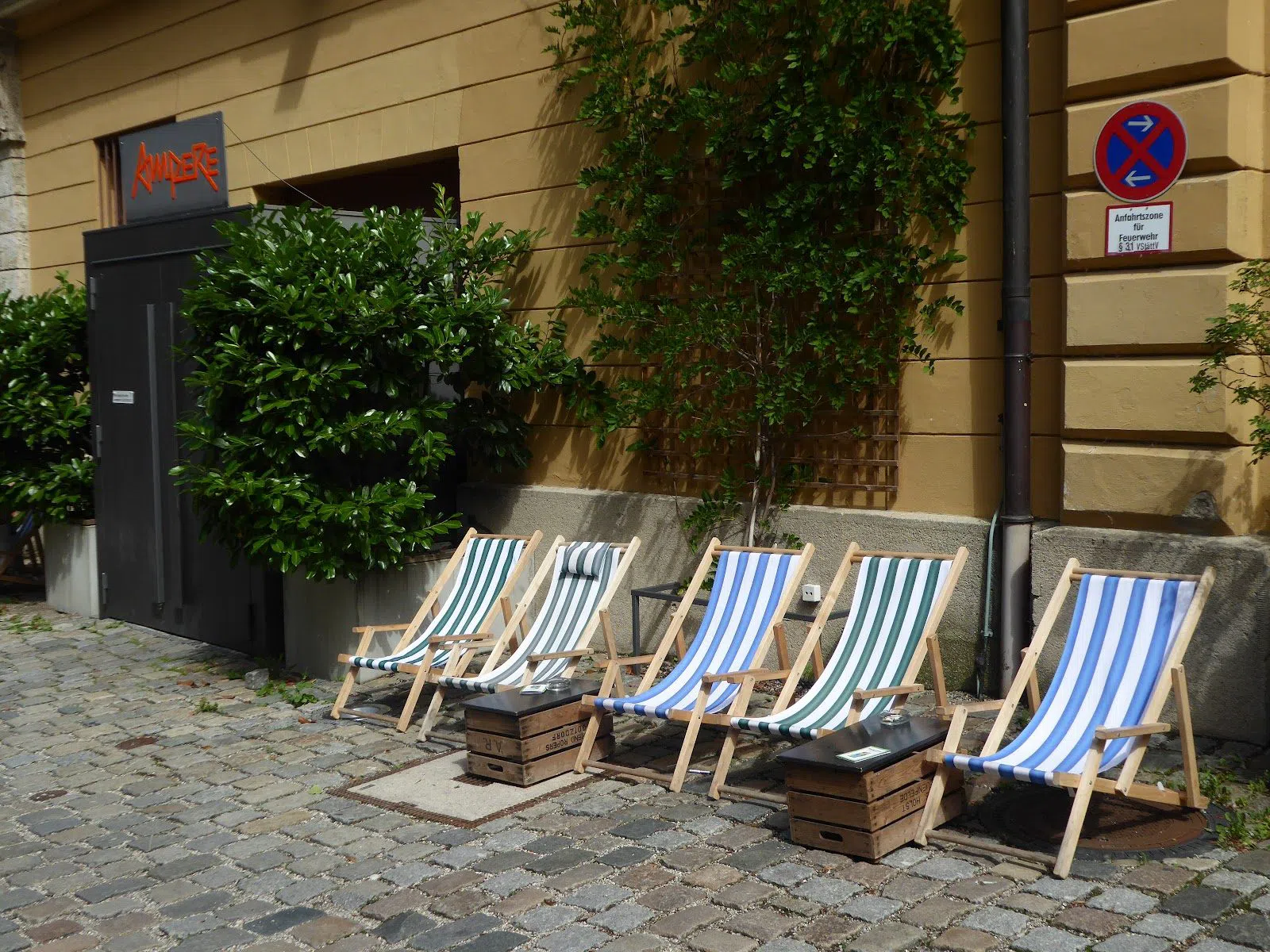
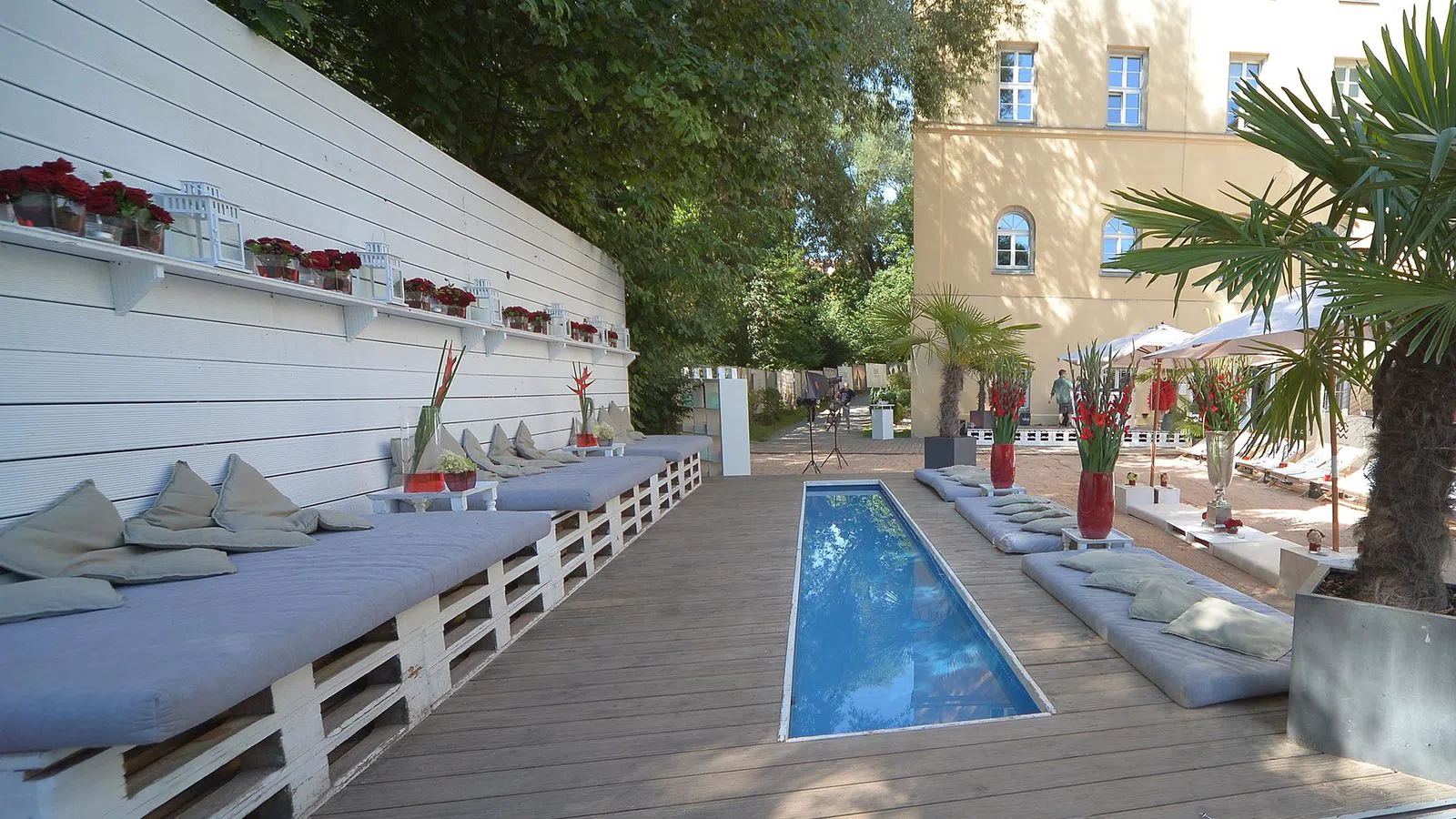
For programmed events, Praterinsel (an island mid-river on the Lehel side) is worth checking against your dates. It hosts open-airs and festivals for up to around 900 people — PULSE on 25–26 July 2026 and IsarInselFest on 4–6 September 2026 among them — alongside the revamped Alpine Museum, and it's also available for private hire. There's no permanent walk-in bar to rely on, so look at the calendar before you cross the bridge; on the right weekend it's the best thing happening on the water.
Practical notes
Season. The river's social life runs roughly May to September. The Floßlände wave and the Isarfloßfahrt rafts are firmly summer-only; Müller'sches Volksbad and the Muffatwerk garden (open into November 2026) stretch the season at both ends. Swimming is realistic from late May once the water is bearable — and it never gets truly warm.
Getting around. The whole corridor is on the MVV network — the U3 threads south to Thalkirchen for the Floßlände and the Flaucher, and the central spots cluster around Isartor, Fraunhoferstraße and Haidhausen. Better still, rent a bike or grab a dock share: the paved Isar cycle paths run the length of the river and are faster and more pleasant than transit for hopping between the beer gardens. Note that Zum Flaucher is foot- and bike-only.
Cash and deposits. Beer gardens and river kiosks still lean on cash more than the rest of the city, so carry some. Expect a refundable Pfand (deposit) on your beer glass and often on bottles — you get it back when you return them.
Budget. The river is generous to a thin wallet: watching the Eisbach surfers, swimming at the Flaucher, and a day at Kulturstrand are all free. A Maß runs €9–12 across the gardens, a swim at the Volksbad is €5–6, and the paid activities climb from there — Floßlände lessons €60–90, a raft charter €40–60 per person in a full group, and a guided SUP day-trip from €79. A relaxed river day of swim, grill and one beer garden can cost very little; the organised group experiences are where the money goes.
Where to stay. Base yourself near the river in Lehel, Haidhausen or the Isarvorstadt and most of this is walkable or a short cycle away — start with a Munich hotel search.
The Isar isn't a backdrop to Munich; it's where the city goes to be itself in summer. Watch the wave, respect the current, pace the beer, and give yourself a full warm day — the river rewards the unhurried.
Before you go
Can you actually swim in the Isar in Munich?
Yes — the Isar is clean enough to swim in and locals do so all summer, mainly at the Flaucher river beach. It's free and needs no booking, but the water is cold year-round and the currents below the weirs are strong, so swim on slow inside bends and never directly below a dam.
Can beginners surf the Eisbachwelle?
No. The famous Eisbachwelle in the Englischer Garten is experts-only, and since reopening in May 2026 newcomers must use a quick-release leash and have a companion in the water, with no board hire on site. Beginners should go to the Floßlände Thalkirchen instead, where surf schools run lessons from about €60–90 per person.
When is the best time of year to visit the Isar?
May to September. The Floßlände surf wave, the Isarfloßfahrt rafts and the Kulturstrand pop-up (1 May–14 Sep 2026) are summer-only, and swimming is realistic from late May. The Muffatwerk beer garden runs into early November 2026 and Müller'sches Volksbad is open year-round for wet or cold days.
Is the Isarfloßfahrt raft trip good for small groups or couples?
Not really — it's built for large parties. A whole raft charters for up to around 55 people at roughly €40–60 per person in a full group, and big bookings often need to be made many months ahead. Couples or pairs are better off with a guided SUP tour or simply a day at the Flaucher.
How much does a river day in Munich cost?
It can be nearly free: watching the Eisbach wave, swimming at the Flaucher and hanging out at Kulturstrand cost nothing. A Maß of beer runs €9–12 in the gardens and a Volksbad swim is €5–6. Organised activities cost more — surf lessons €60–90, a raft charter €40–60 per person, and a guided SUP day-trip from €79.