 In this area
The Munich issue
Altstadt, Munich: the old town that still runs on lunch, beer and bells
Munich’s historic core is more than a postcard: around Marienplatz, the market and the beer halls, the city still keeps its daily time by bells, queues and fresh kegs.

By Katharina HuberMunich makers and concept stores
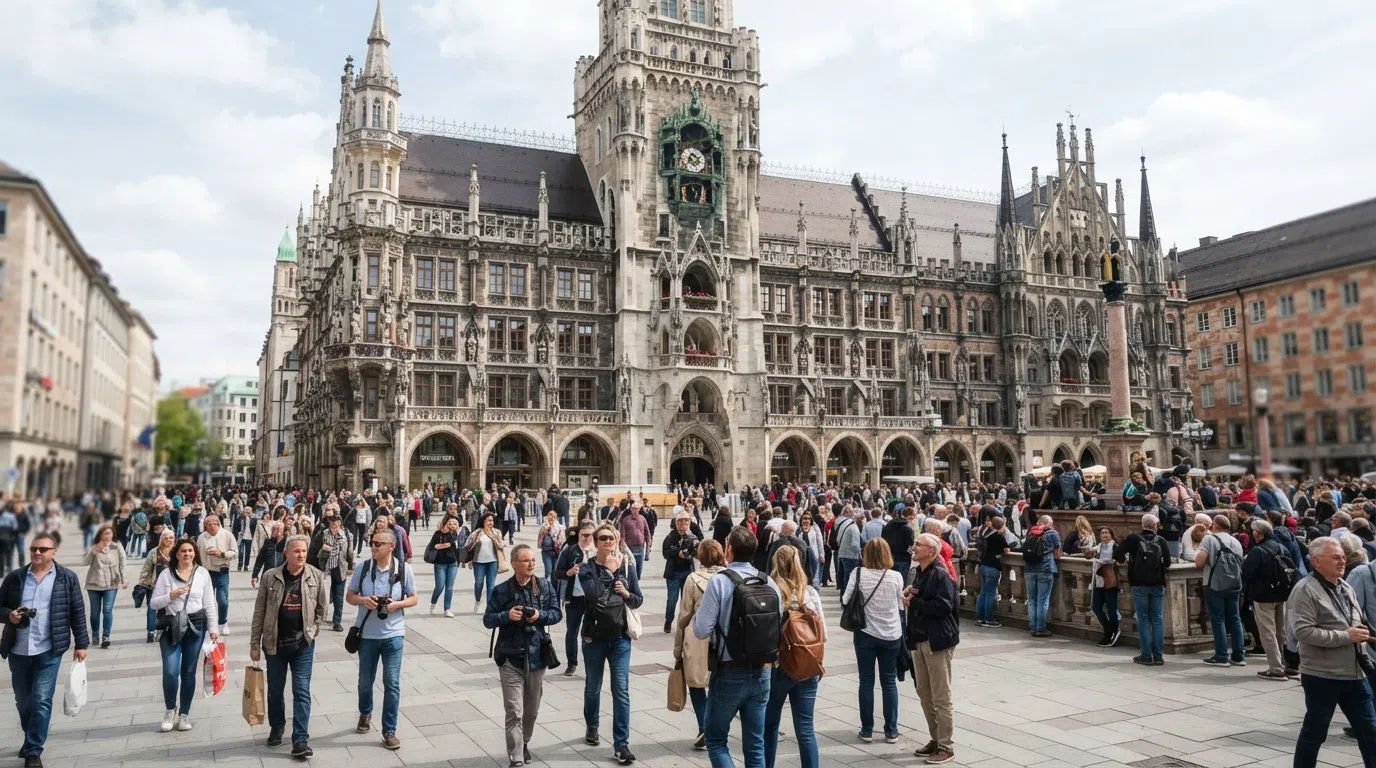
Marienplatz starts its day before the cameras do. By 11am the square is already filling, because the Glockenspiel in the Neues Rathaus has trained everyone to be punctual whether they like it or not: 43 bells, dancing figures, a little 16th-century wedding theatre above the heads of commuters and tour groups. That is Altstadt in one neat lesson. This is the walled-city core Munich grew out of, and it still behaves like the city’s old engine room — grand, busy, a touch self-important, and absolutely useful. The Frauenkirche’s twin domes anchor the skyline, the Residenz keeps the royal furniture polished, and the Viktualienmarkt feeds the whole district between coffee and lunch. If you want the Munich of beer halls, church towers and shopping streets, it is all here within a fifteen-minute walk. The trick is to arrive with your eyes open and your feet ready.
What the Altstadt is known for
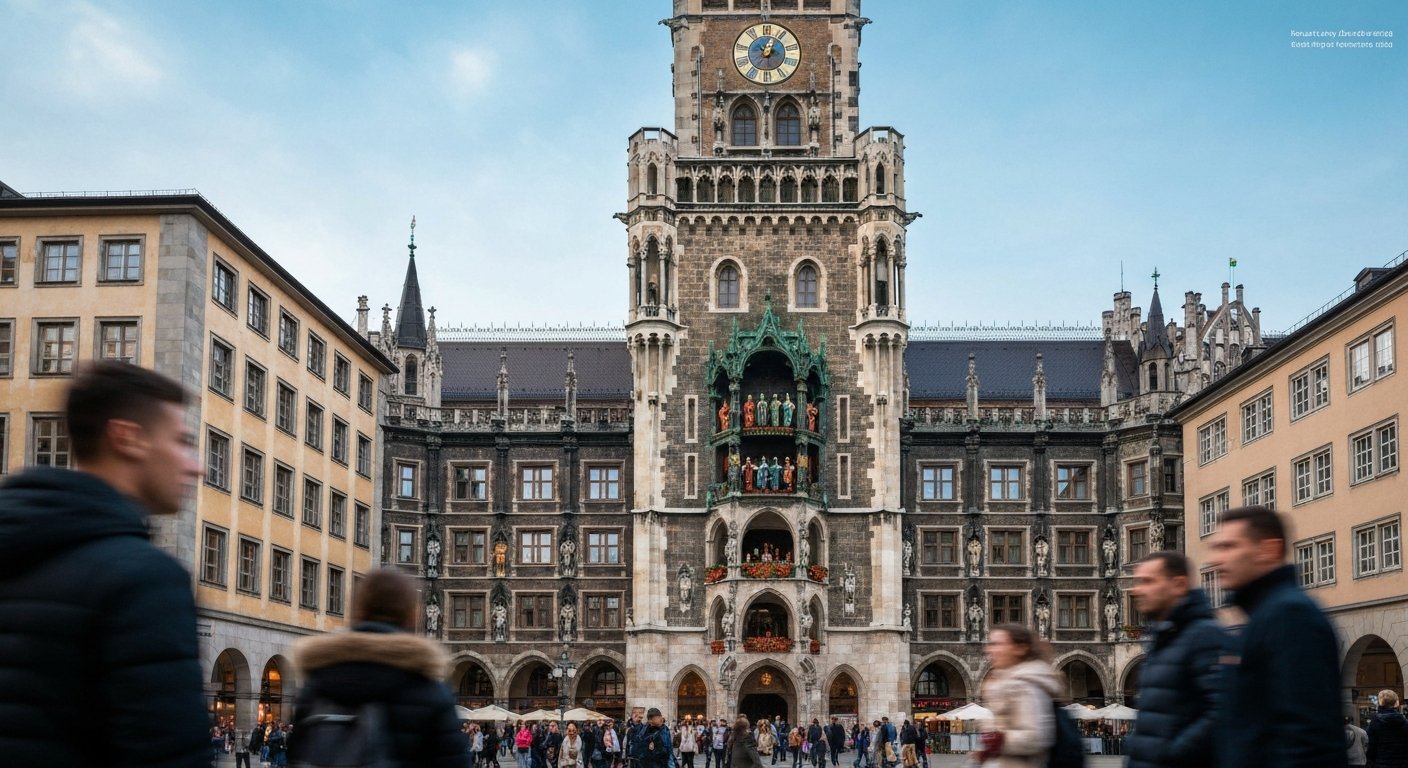
Altstadt is Munich in its most legible form. Start at Marienplatz, where every walking tour seems to begin and every local knows to use as a compass point. The Neues Rathaus rises over the square with the Glockenspiel tucked into its façade, and the show — daily at 11am, again at noon, and in summer at 5pm — still pulls a crowd because people do love a bit of mechanical pageantry when it is done properly.
A block south, Alter Peter, St. Peter’s Church, gives the district its best old-town panorama if you are willing to earn it. There is no lift, only 306 steps and a ticket that costs about €5, with children paying less. On a clear day the Alps sit on the horizon as if someone has placed them there for balance. The board at the base telling you whether they are visible that day is one of those small, practical Munich touches I trust more than any sightseeing brochure.
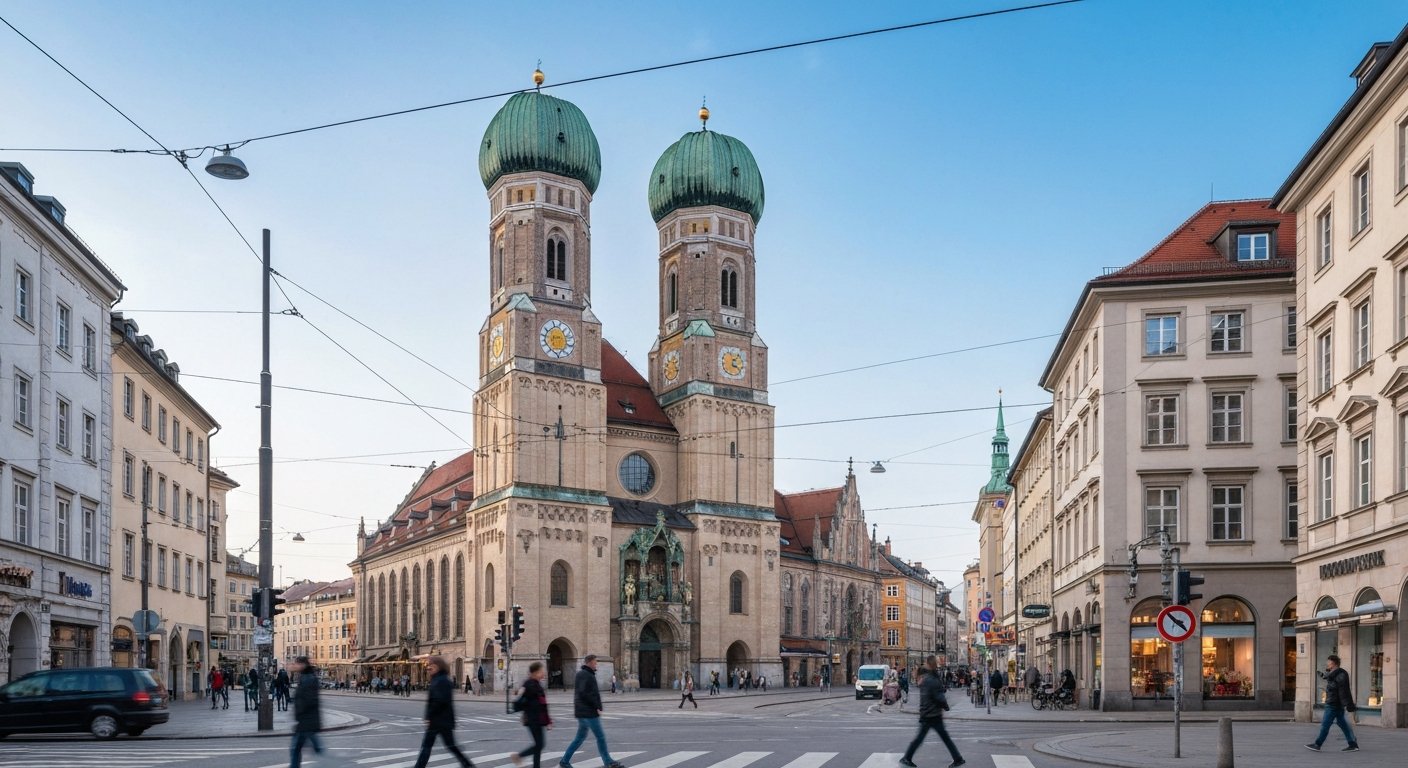
The Frauenkirche is the other landmark everyone uses without thinking. Its twin onion domes are the city’s shorthand, and the church is free to enter. If you want a different angle, its south tower can be climbed. Around it, the old town feels most like a proper centre rather than a museum set: trams curving past church fronts, office workers cutting across the square, and visitors trying to decide whether the bells are charming or bossy. Munich has always preferred bossy.
The Residenz, north of Marienplatz, is the other great piece of the puzzle. It was the Wittelsbachs’ former royal palace, and it behaves like one — room after gilded room, with the Antiquarium, treasury and court theatre giving you a full tour of dynastic self-regard. It is one of those places that reminds you the city’s prosperity did not arrive by accident. The old rulers built to impress, and the modern city has simply inherited the habit.
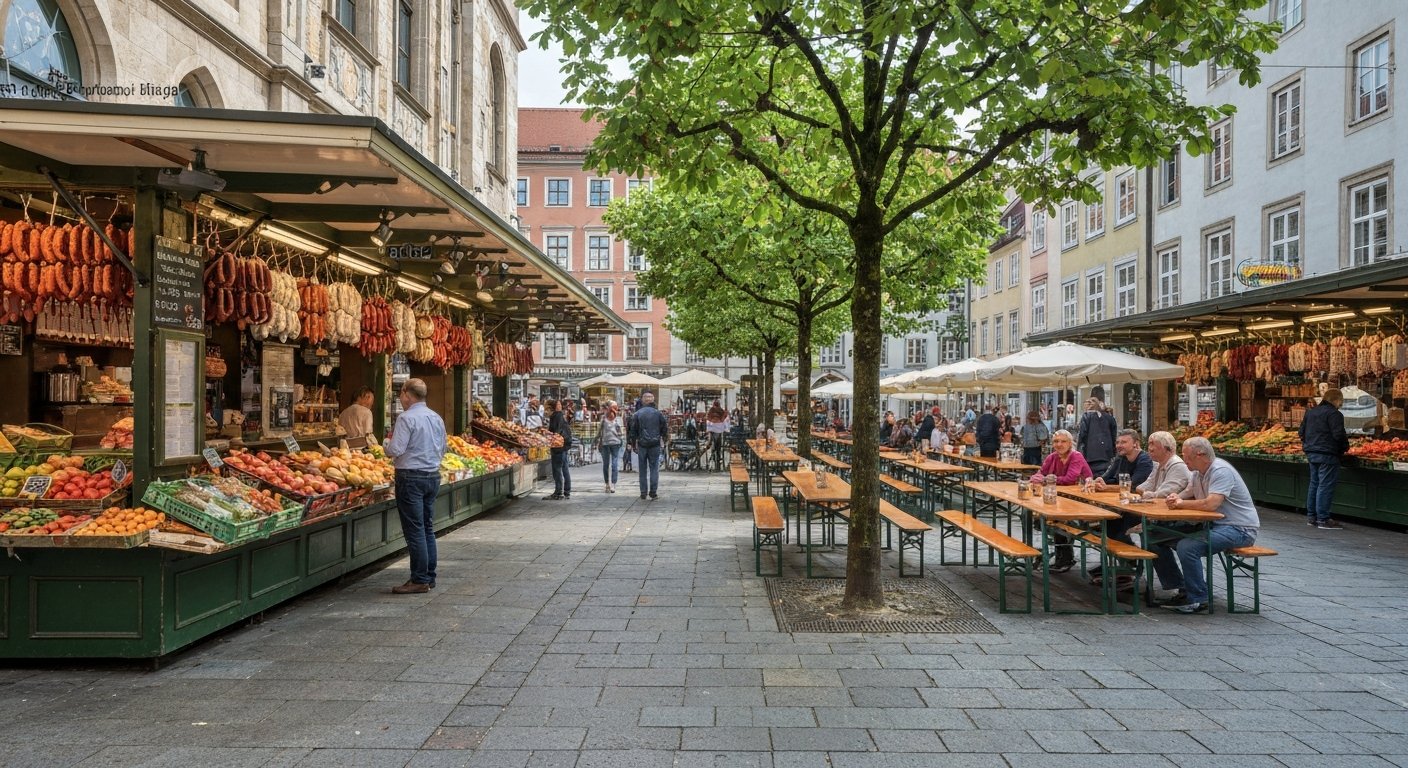
Then there is the Viktualienmarkt, which is not just a market but the district’s social heart. It sits just off Marienplatz, ringed by stalls and centred on a beer garden, and it is one of the few places in the old town where locals still do ordinary things on purpose. They buy cheese, horseradish, mustard, honey, sausage, herbs. They stop for lunch. They argue about what is fresh. They do not behave as if they have been sent there by a guidebook. That matters.
Plan your Munich trip
Live prices from our booking partners.
Guests & rooms
Free cancellation on many rooms. We may earn a commission when you book.
Where to eat & drink
The Altstadt eats best when you stop trying to “do lunch” and start grazing like a sensible person. The Viktualienmarkt is the place for that. It is a working open-air market of around 100 stalls, open Monday to Saturday roughly 8am to 8pm, with some traders closed on Mondays. The rhythm is steady: traders setting out vegetables, office workers lining up, tourists drifting in after the first church bell. Come hungry, but not in a hurry.
Caspar Plautz is the cult stop I would send anyone to if they want to understand how a potato can become a small event. Two friends have run the stall since 2017, and the loaded baked potatoes with inventive toppings cost around €12. It queues for a reason, so either arrive before noon or after 2pm and spare yourself the crowding. It is not fancy in the empty sense. It is just good, and good is rare enough.
Die Münchner Suppenküche, the market’s original soup kitchen since 1982, is the place for the weather that Munich likes to pretend it does not have. Stews, goulash soup, something hot in a bowl — the sort of thing that makes a market lunch feel like a proper lunch rather than a snack with ambitions.
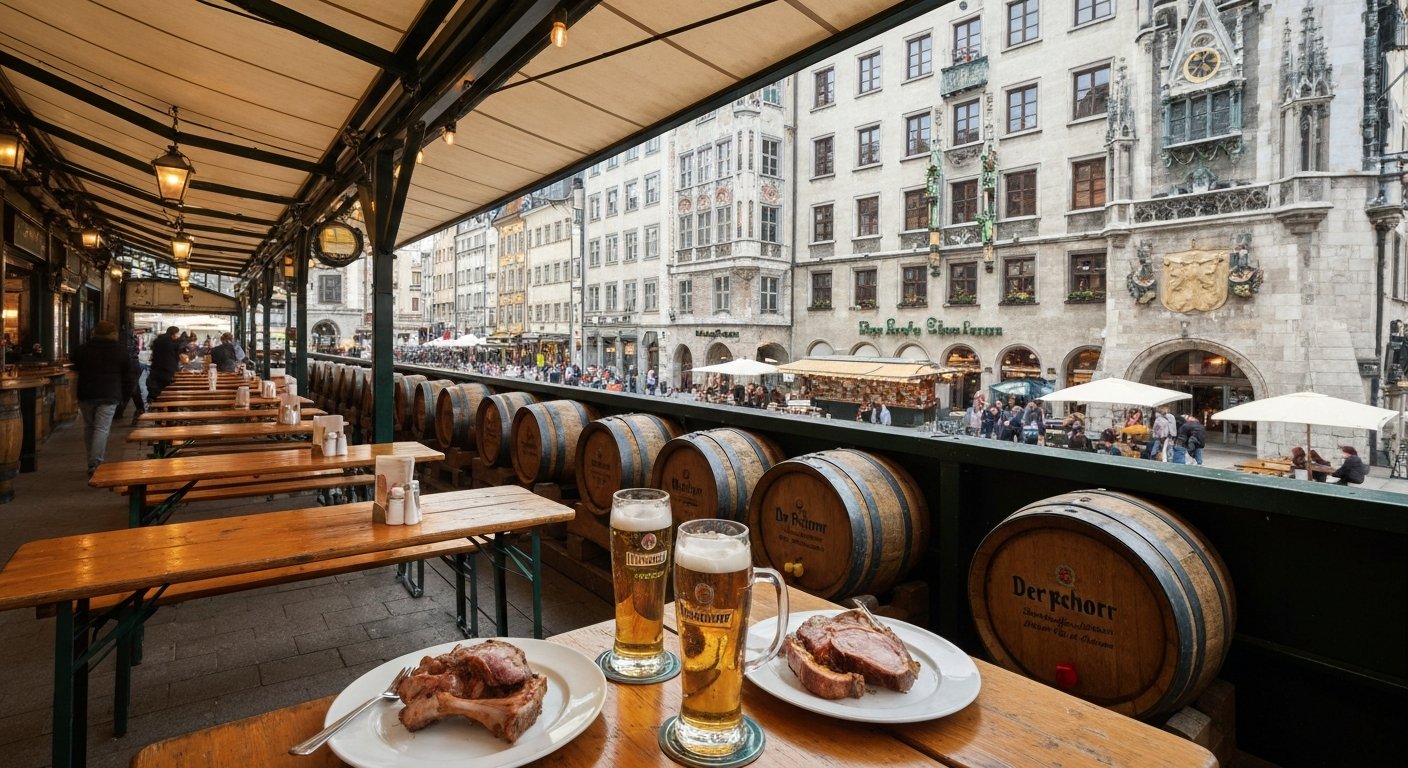
For a sit-down Bavarian meal, Der Pschorr at Viktualienmarkt 15 looks over the stalls and behaves like a serious tavern should. Hacker-Pschorr comes tapped from wooden barrels, the roast-pork and dumpling menu is solid, and the terrace is large enough that you can watch the market work while you eat. It is not subtle, and it should not be. Bavarian cooking is at its best when it remembers its own purpose.
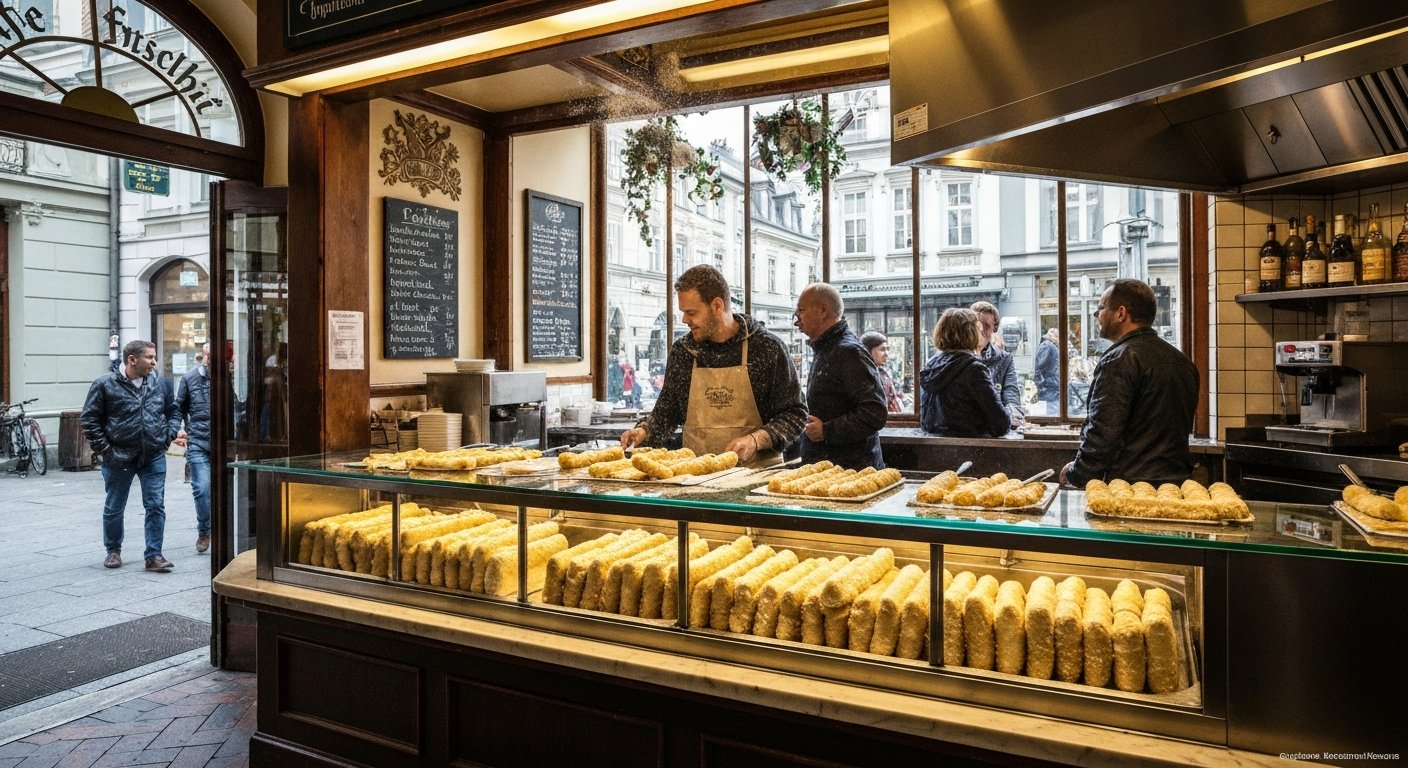
For sweetness, walk two minutes to Café Frischhut — everyone just says Schmalznudel — on Prälat-Zistl-Straße 8. Since 1973 it has been frying its namesake lard-dough pastries in front of you, Monday to Saturday, closed Sunday. The smell does half the selling. The other half is the first bite, which is exactly as rich and unapologetic as it ought to be.
If you want a more polished pause, Dallmayr on Dienerstraße 14 is the old grand delicatessen, 300 years and counting, with an upstairs café-bistro that runs roughly 9.30am to 6pm. Coffee, cake, a light lunch behind the town hall — civilised, yes, but not in a brittle way. Downstairs, the shop is a proper edible treasure house with more than 6,000 products, from meats and seafood to cheeses, chocolates, wines and the famous coffee. It is where you go for gifts when you want to look like you thought ahead.
Going out
At night, Altstadt is not a club district pretending to be cool. It is beer-hall country, and that is more honest. The Hofbräuhaus on the Platzl has been going since 1589 and remains the world’s most famous beer hall, which means exactly what you think it means: vaulted ceilings, an oompah band, litre steins and seating for around 3,500. It is a spectacle, and also a rite of passage, though one that benefits from either a reservation or the discipline to arrive early. If you want the full tourist theatre of Munich, there it is, loud and unapologetic.
For something a shade less overrun, the Augustiner Stammhaus on Neuhauser Straße pours Augustiner in one of Munich’s last grand Jugendstil beer palaces. That phrase can sound like marketing until you sit down and realise the room still knows how to behave like a beer palace: big, ornate, and built for lingering rather than posing.
Around the Frauenkirche, the evening has a more neighbourhood feel. Augustiner am Dom on Frauenplatz offers barrel-tapped Augustiner and a beer garden, while Andechser am Dom at Frauenplatz 7 serves Andechs monastery beer with a terrace facing the cathedral and stays open late into the night. These are the places where the old town stops being a monument and starts being a place where people actually sit down.
If your night needs a cocktail rather than a litre stein, Schumann’s Bar am Hofgarten at Odeonsplatz is the northern-edge answer. Charles Schumann’s legendary bar is a regular on the World’s 50 Best list, and it draws the smart, media-and-society crowd that likes its drinks with a side of reputation. Schumann himself is often still behind the stick, which is the sort of detail that keeps a bar from becoming a museum exhibit.
Things to do
The cleanest way to see Altstadt is to walk it in a loop and let the landmarks do the organising. Start at Marienplatz for the Glockenspiel at 11am, or noon if you are late, or 5pm in summer if you are taking your time. Then climb Alter Peter. It is 306 steps, no lift, about €5, and worth every calf complaint. The view is the point, of course, but so is the sense of the city laid out in proper layers: church towers, roofs, traffic, then the Alps if the weather decides to cooperate.
The Frauenkirche is next because it is free to enter and because the old town is easier to understand once you have stood inside its most recognisable church. The south tower climb gives a different view, less famous than Alter Peter but useful if you like your panoramas without the full queue. Then head north to the Residenz. The palace complex is one of Europe’s great urban palaces for a reason: the Antiquarium, the treasury and the court theatre are not decorative extras, they are the evidence.
The Viktualienmarkt is a thing to do as much as a place to eat. Wander the stalls, buy something you can carry, and take it to the central beer garden, which is the only one in the city not tied to a single brewery. It rotates through Munich’s big six every few weeks, and you may bring your own food as long as you buy the drinks. That is the kind of rule I respect: practical, generous, and not pretending to be a lifestyle concept.
Finish at Odeonsplatz and the adjoining Hofgarten for a quieter ending. The colonnades, the trees, the more measured pace — it is a useful correction after the market and the shopping streets. Altstadt can be noisy and crowded in the middle of the day, but it knows how to step back by evening.
Don’t miss in Altstadt
Marienplatz and the Neo-Gothic Neues Rathaus
The food stalls and beer garden of the Viktualienmarkt
The vast Residenz palace complex
Shopping
Altstadt is Munich’s main shopping ground, and it does not bother to hide that fact. The Neuhauser Straße and Kaufingerstraße pedestrian zone runs roughly 700 metres from Marienplatz west to Karlsplatz (Stachus), and it is one of the busiest retail stretches in all of Germany. It is wall-to-wall high-street fashion, department stores and sportswear, the kind of place where you can buy everything and remember nothing. Useful, certainly. Charming, not especially.
If you want a more polished browse, Fünf Höfe — the “Five Courtyards” — has been open since 2003 and threads more than 60 shops and cafés through covered arcades between Theatinerstraße and Kardinal-Faulhaber-Straße. It mixes international luxury names with Munich labels, which is a better balance than the pedestrian zone’s more generic churn. I always think of it as the place where the old town takes a breath and puts on better shoes.
For edible shopping, Dallmayr on Dienerstraße is hard to beat. With more than 6,000 products across meats, seafood, cheeses, chocolates, wines and coffee, it is the place to buy something that will survive the train ride home and still feel like a gift. The Viktualienmarkt, though, remains the more local shopping ground. Bavarian mustards, honeys, spices, cured meats and cheese to carry away — this is the old town doing what old towns used to do before they were mainly asked to sell handbags.
Where to stay in the Altstadt
Staying in Altstadt buys you convenience in the bluntest possible sense. Marienplatz, the Viktualienmarkt, the beer halls and the main shopping streets are all on your doorstep, and you can walk to the Hauptbahnhof or the airport train without much drama. The trade-off is price. This is a premium base, especially around Oktoberfest and major trade fairs, when room rates spike sharply and you should book ahead unless you enjoy paying for procrastination.
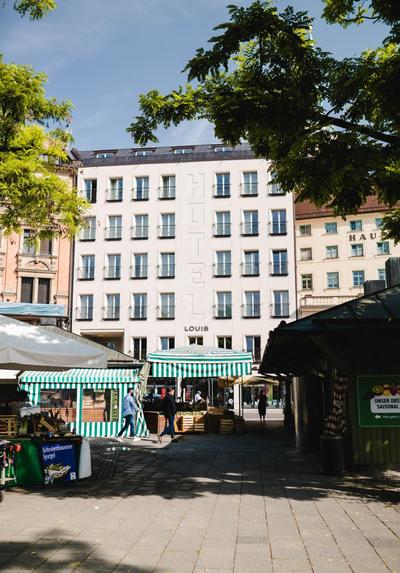
The sweet spot is the area around the Viktualienmarkt and Marienplatz: central, but a touch calmer than the pedestrian shopping streets. The Louis Hotel is a 72-room design hotel that overlooks the market itself and has a rooftop terrace, which is a very Munich way to say you want to be in the centre without sleeping inside the noise. The Cortiina is a short walk away, low-key in the best sense, with a well-regarded wine bar and breakfast made partly from market produce. That sounds sensible because it is.
Streets right on the Kaufingerstraße and Neuhauser Straße axis are the most convenient for shopping, but they are also the busiest and can be noisy. If you prefer a little less footfall, look south and east toward the Isartor and the market. You are still in the old town, just with slightly fewer rolling suitcases under the window.
Hotels in Altstadt
Our best-rated stays in this neighbourhood. Prices are approximate “from” rates — confirmed at the provider when you continue. We may earn a commission if you book through our partners — at no extra cost to you.
In this area In this area
 In this area
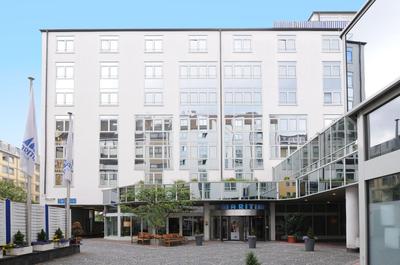 In this area
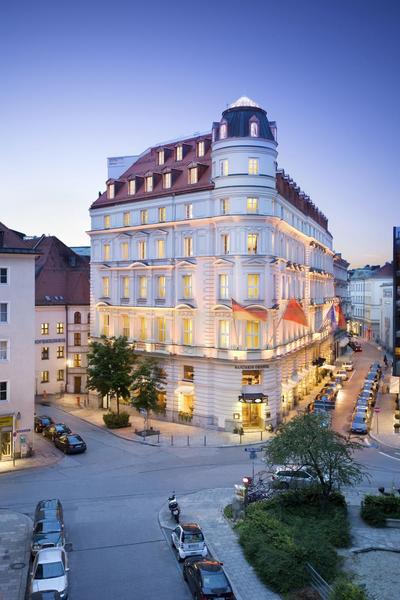 In this area
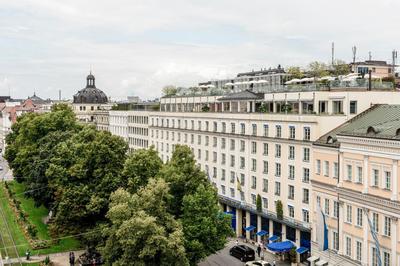 In this area
Altstadt
Hotel Bayerischer Hof - The Leading Hotels of the World
8.2· 3,184 reviews
approx. from£593 / nightSee prices
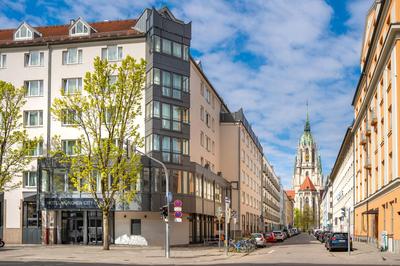 In this area
Altstadt
Hotel München City Center, Affiliated by Meliá
8.2· 4,272 reviews
approx. from£158 / nightSee prices
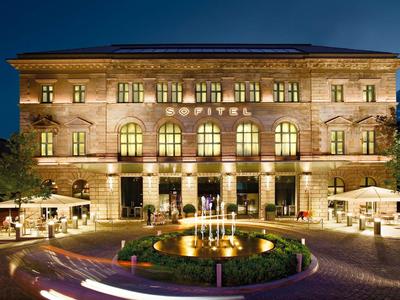 In this area
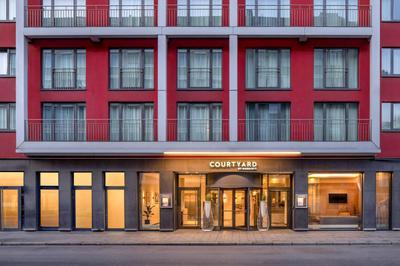 In this area
Altstadt
Courtyard by Marriott Munich City Center
8.1· 3,180 reviews
approx. from£274 / nightSee prices
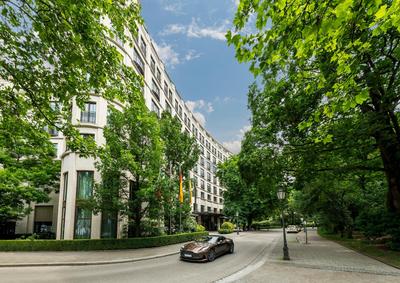 In this area
 In this area
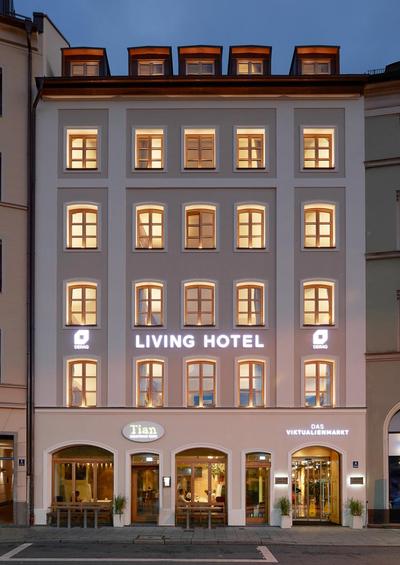 In this area
Getting around
Altstadt is made for walking. You can cross the historic core in about fifteen minutes, and much of it is pedestrianised, so there is little point in bringing a car unless you enjoy expensive frustration. Marienplatz is the hub, with the U3 and U6 plus a stack of S-Bahn lines on the trunk route through the city. Odeonsplatz covers the northern old town by the Residenz, while Isartor and Sendlinger Tor frame the southern edge.
From Marienplatz, the Hauptbahnhof is one to two S-Bahn stops or about a ten-minute walk, which is as useful as it sounds. For Munich Airport, take the S1 or S8 direct from Marienplatz; the ride is roughly 40 to 45 minutes. Trams and buses fill in the gaps, and the whole old town sits in the same inner fare zone. In other words: arrive by rail, move on foot, and let the city do the rest.
Gallery
Altstadt in pictures
Altstadt — your questions
Is the Altstadt a good area to stay in Munich?
Yes, if convenience is your priority. It puts Marienplatz, the Viktualienmarkt, the beer halls and the main shopping streets on your doorstep, and it connects cleanly to the airport and the main station. The trade-offs are premium room rates and daytime crowds, so it suits short-trip and first-time visitors better than anyone hunting for a quiet local base.
Is the Altstadt safe at night?
Very. Munich is one of the safest big cities in Europe, and the old town stays busy and well-lit into the evening. The main thing to watch is pickpocketing in the densest tourist crowds around Marienplatz and the market. Keep valuables secure and you will be fine.
Do I need to book the Hofbräuhaus or beer halls?
For the Hofbräuhaus and the tavern-restaurants around the Frauenkirche, a reservation or an early arrival helps, especially at weekends and during Oktoberfest. The Viktualienmarkt beer garden is first-come, first-served, and you can bring your own food as long as you buy the drinks.
What is the best thing to do first in Altstadt?
Start at Marienplatz for the Glockenspiel, then climb Alter Peter for the view. That gives you the old town’s basic map in one morning: bells, rooflines, church domes and the market below.