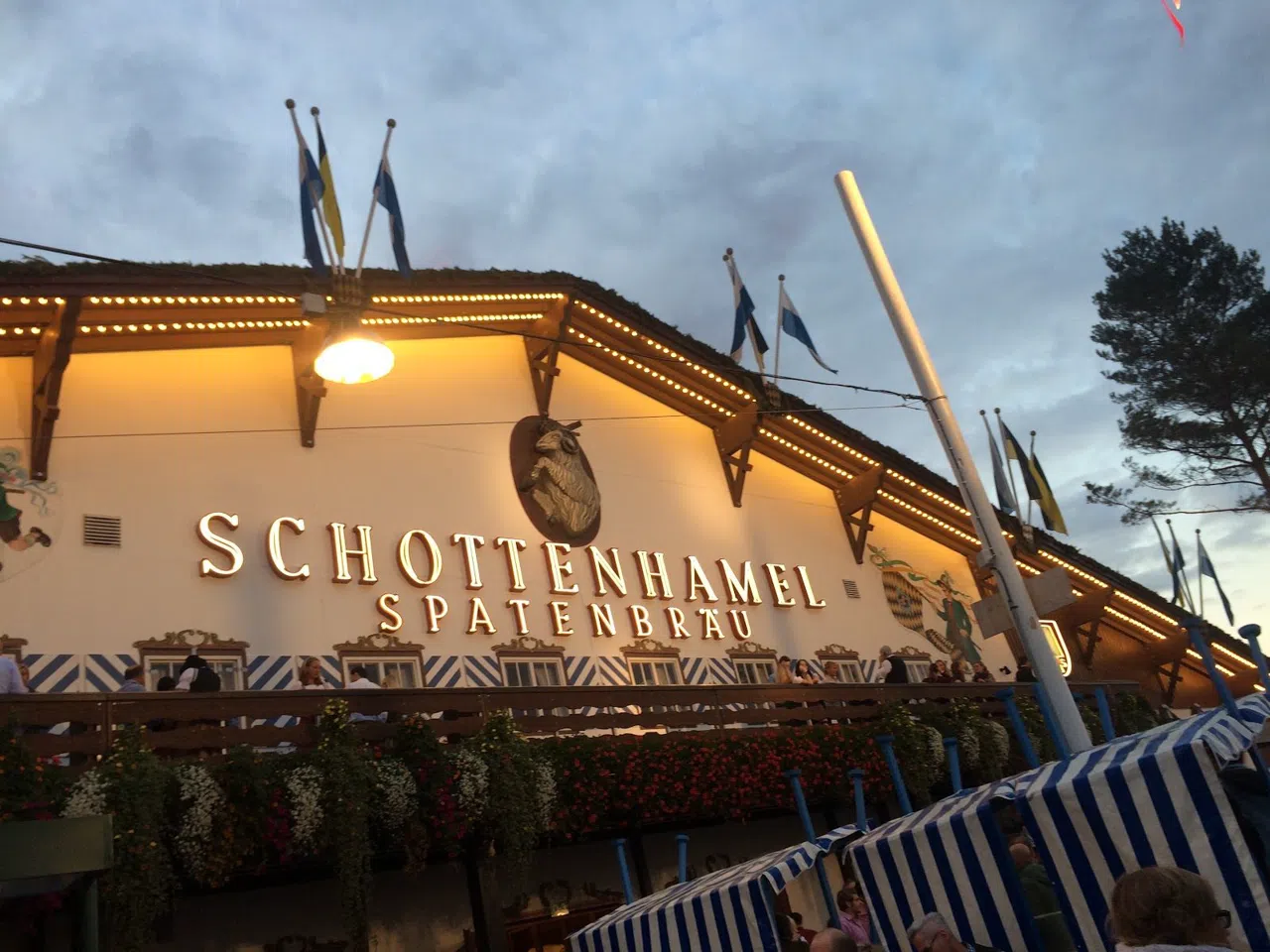
At noon on the first Saturday, Munich's mayor drives a wooden tap into a keg on a small stage inside a tent, and the whole festival reads its omens from how many hits it takes him. Two clean strikes and the beer is good luck for the season; a botched six or seven makes the local papers for a week either way. That single detonation, the Ozapft is!, opens sixteen days on a fairground the size of a small town, where several million people will get through around seven million litres of beer, and where nearly every mistake a first-timer makes was avoidable if somebody had told them first. Oktoberfest 2026 runs from Saturday 19 September to Sunday 4 October, its 191st edition, and this is that warning.
A royal wedding grew into the world's biggest beer festival
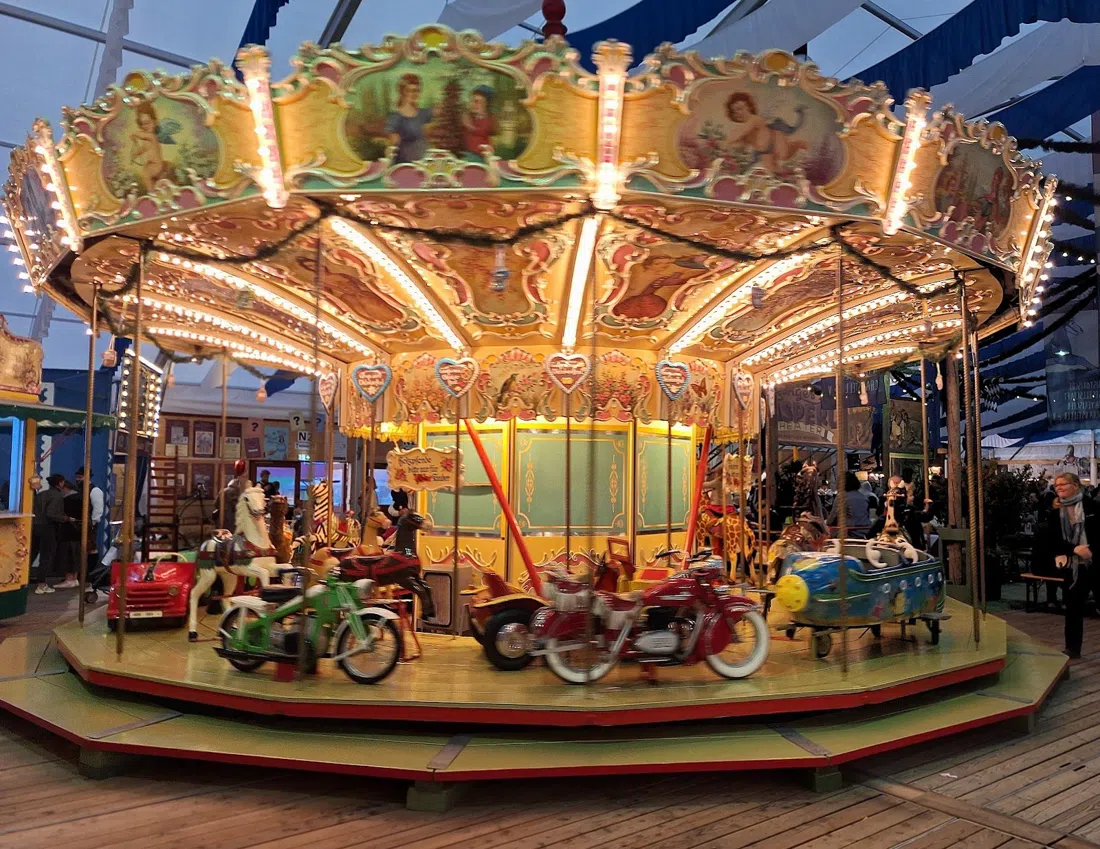
The festival exists because Crown Prince Ludwig of Bavaria married Princess Therese of Saxony-Hildburghausen in October 1810, and Munich threw the newlyweds a party that got out of hand in the best way. The formal wedding was on 12 October; five days later, on 17 October, the city ran a horse race on open fields just outside the gates, with tens of thousands watching. Everyone had such a good time that they agreed to do it again the following year, added an agricultural fair to the horse race, and by year three had accidentally invented a tradition. The fields were renamed Theresienwiese in the princess's honour, and the beer tents, the fairground rides and the crowds all arrived later, stacked onto a celebration that started as a wedding party and a horse race. A fenced-off corner of the modern grounds, the Oide Wiesn (in the southern third of the fairground, behind its own ticket gate), rebuilds that older, plainer version on purpose: smaller tents, no rides beyond a vintage carousel and a Ferris wheel, and a dress code that leans dirndl and lederhosen rather than fancy dress. It costs €4 for anyone over 15 and is free after 9pm, and it's the section of the piece to keep in your back pocket once the main grounds start to feel like too much.
Finding your way around the Wiese
The Theresienwiese fairground and rides (Ludwigsvorstadt-Isarvorstadt, walking distance south-west of the Altstadt) is free to enter; you only pay for what you eat, drink and ride. The nearest stop is U4/U5 Theresienwiese, and on weekend evenings it is genuinely unpleasant: solid crowds, slow-moving lines for the escalators, and station staff funnelling people like cattle. One stop further out, Schwanthalerhöhe is quieter and the walk in takes maybe ten extra minutes, which is a fair trade most nights. Inside the gates, the big tents ring a central promenade, the Bavaria statue watches over the whole thing from a rise at the southern end, and the fairground rides (a mix of vintage carousels and full-size roller coasters, individually priced) fill the northern half. None of it requires a ticket to walk through; the only barrier to entry is finding a seat once you're inside a tent. For where to base yourself for the run of it, the Munich hotel search is worth doing early: decent rooms near the Hauptbahnhof or the U4/U5 line sell out weeks ahead of the festival, not days.
The big tents and how their mood changes after dark
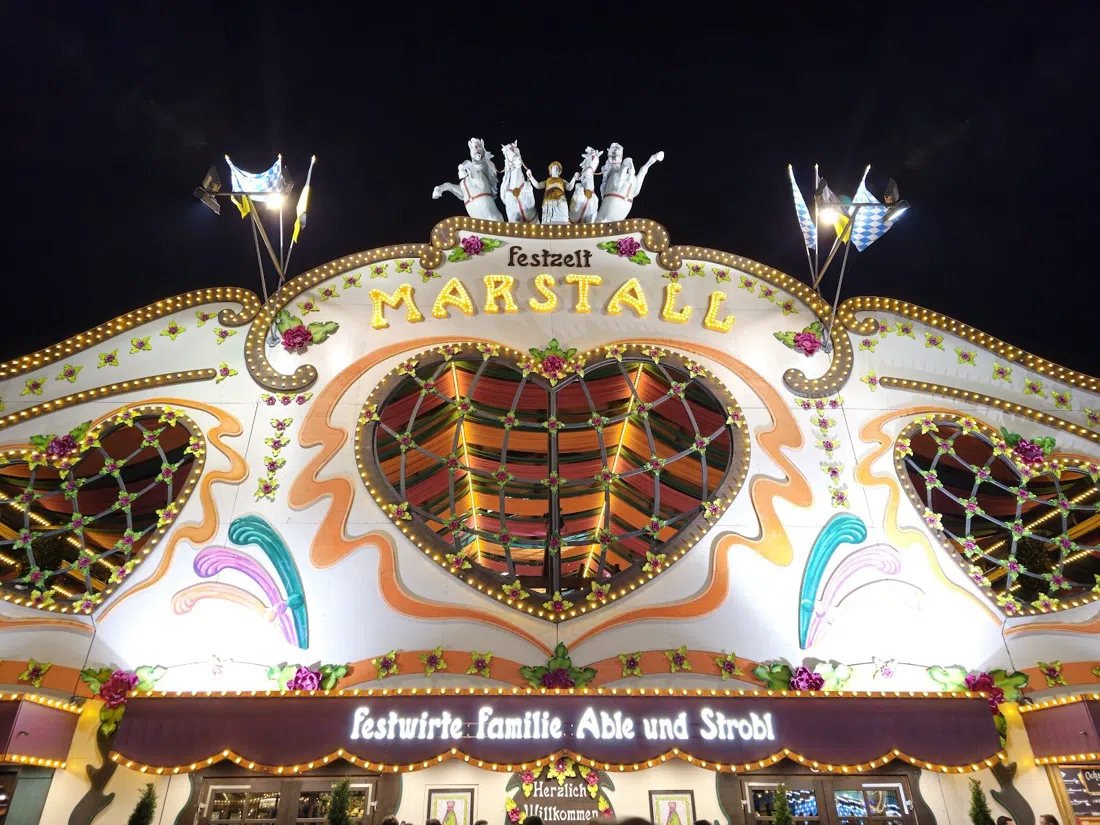
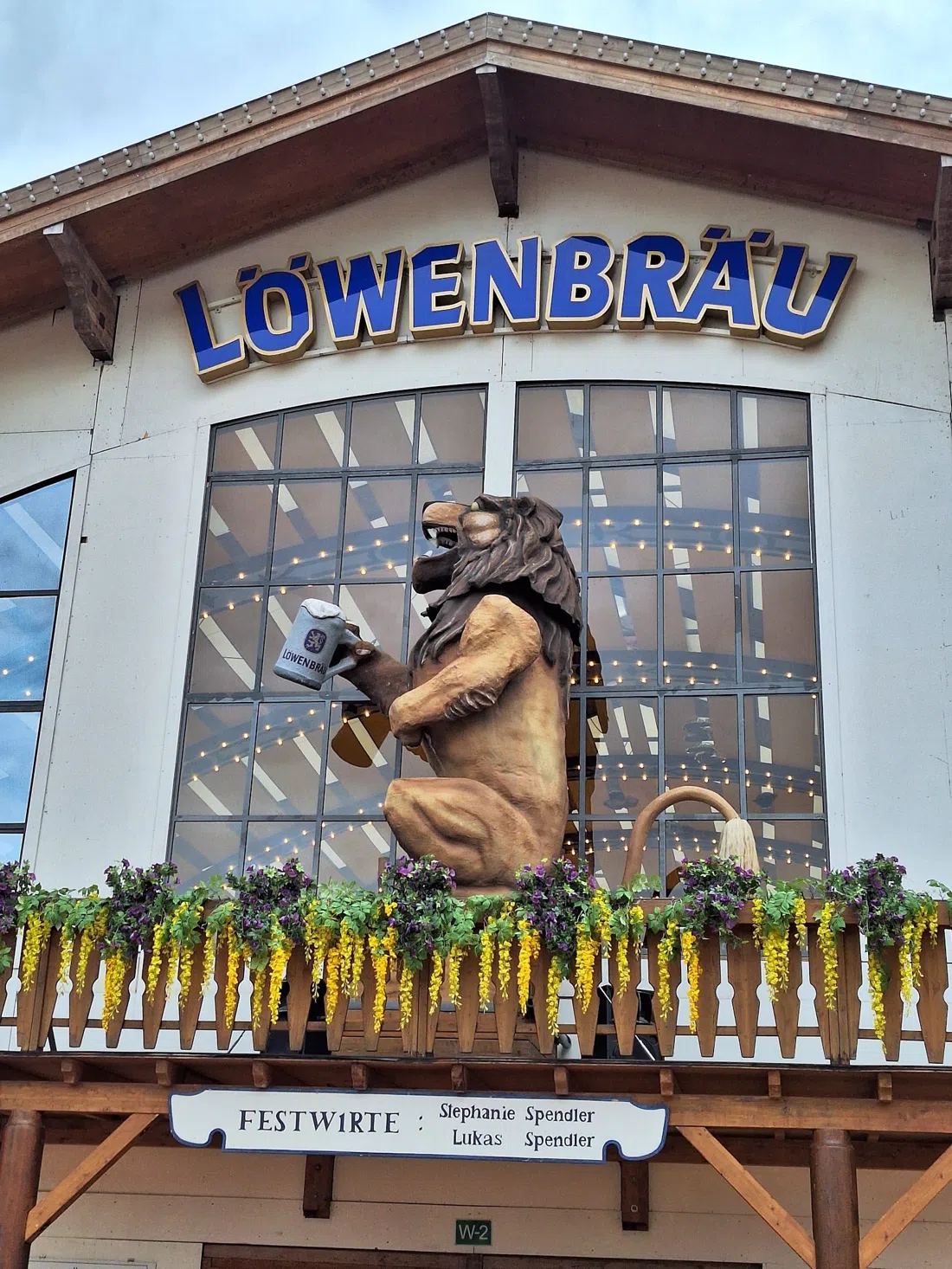
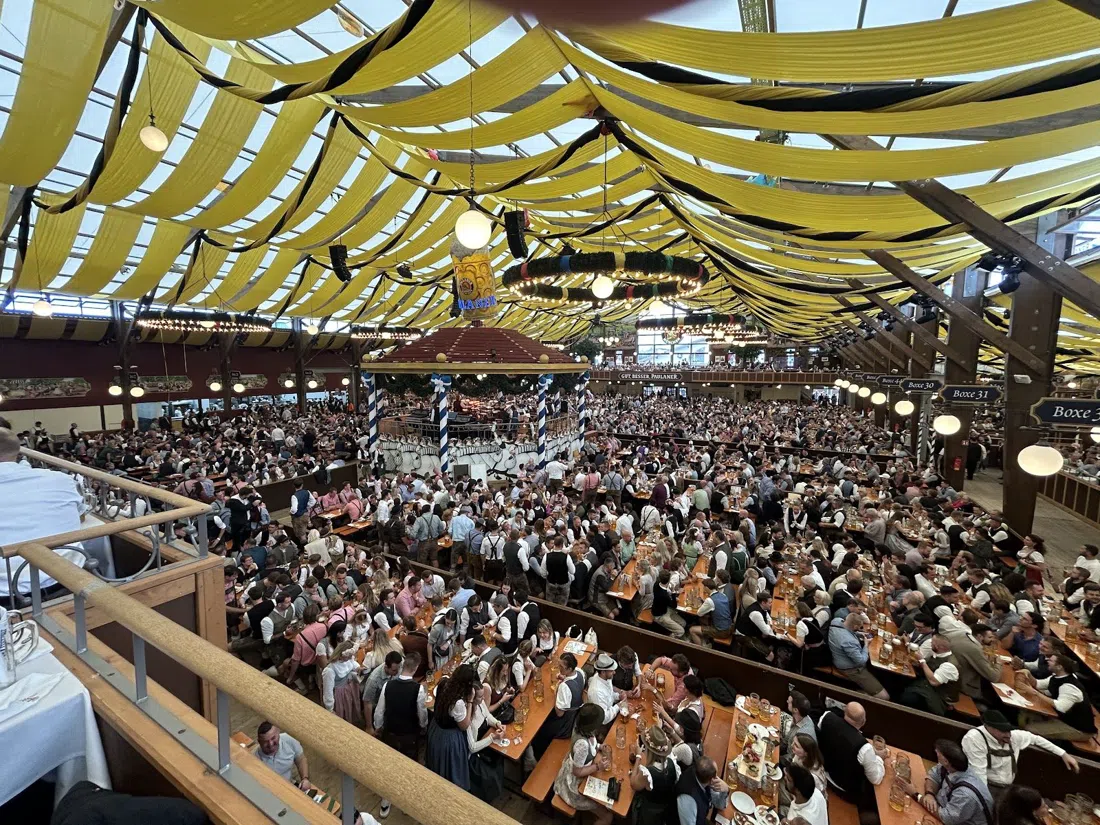
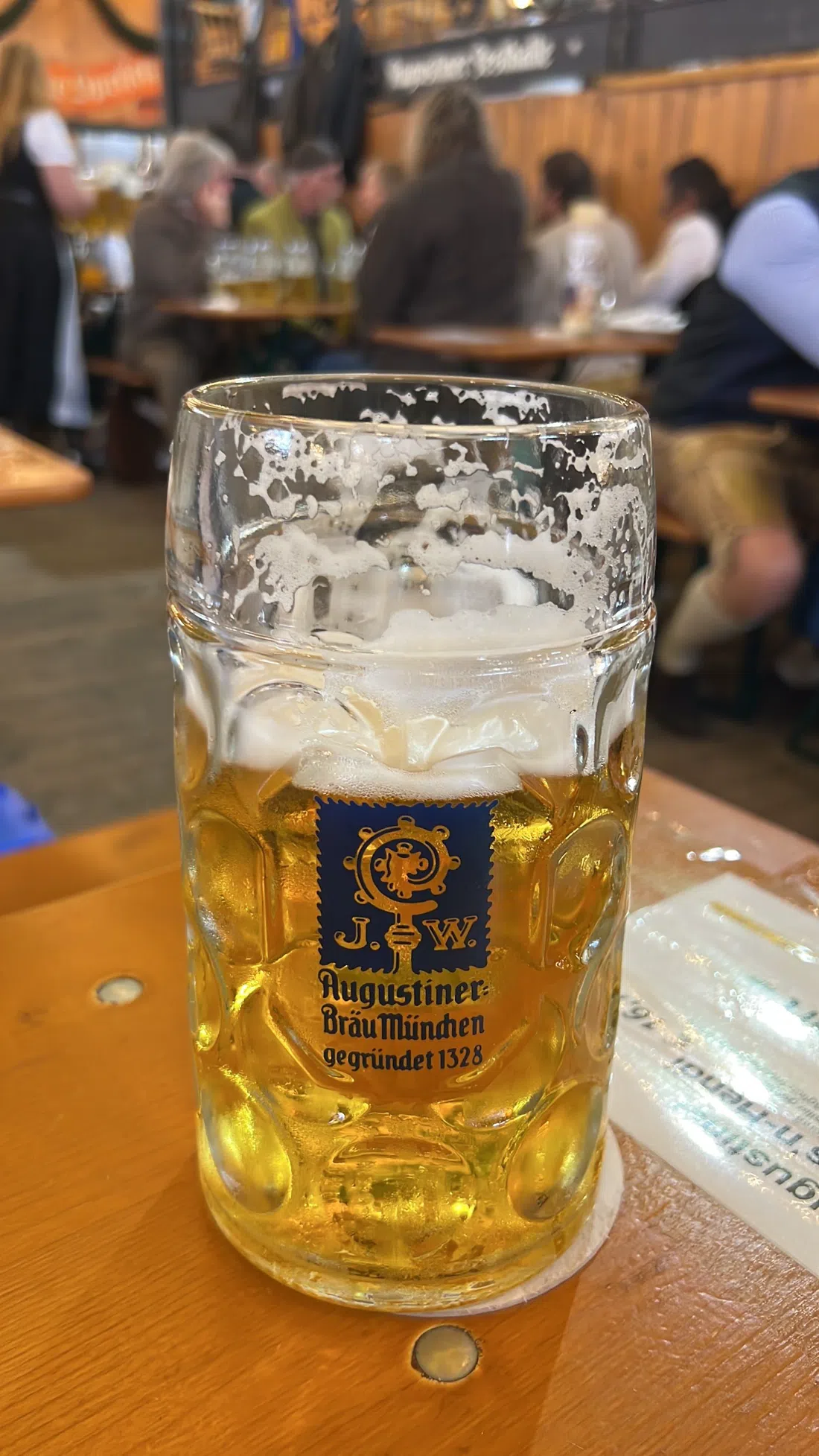
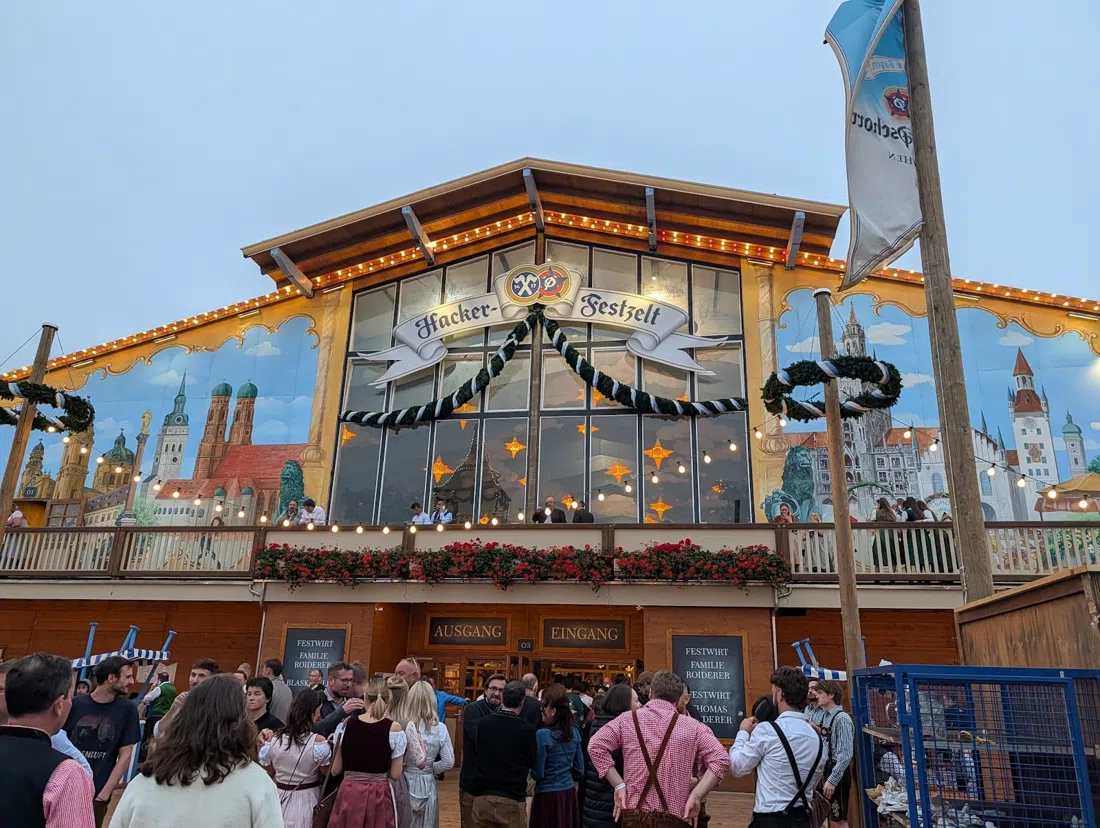
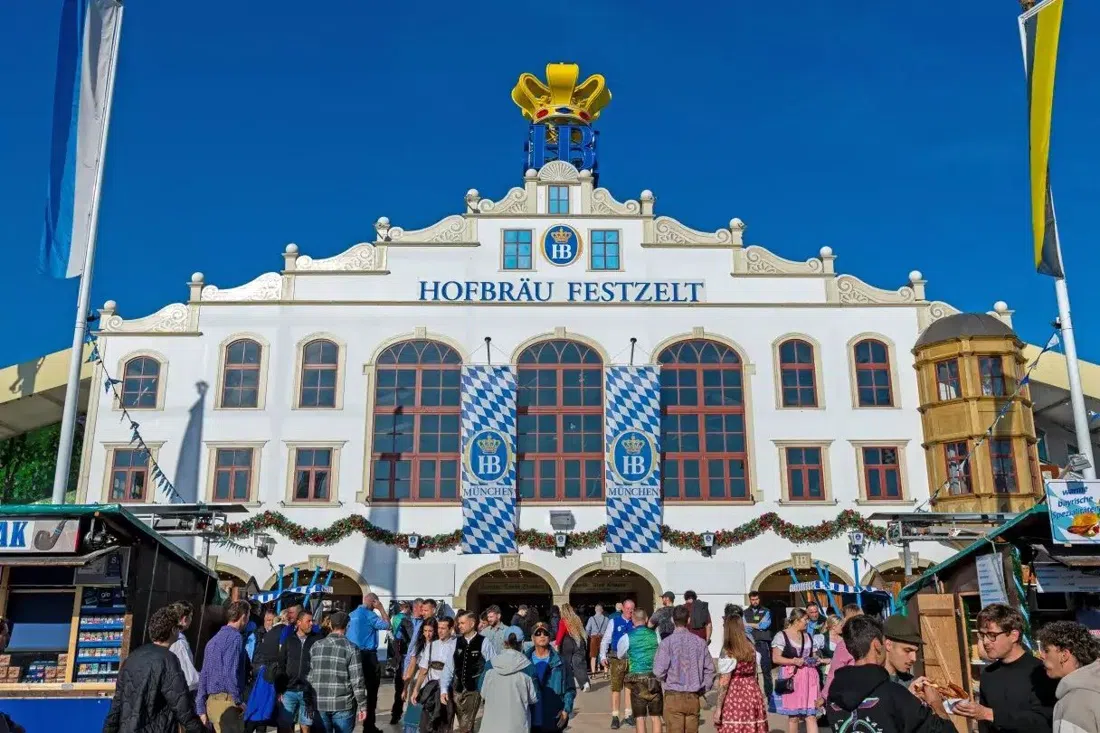
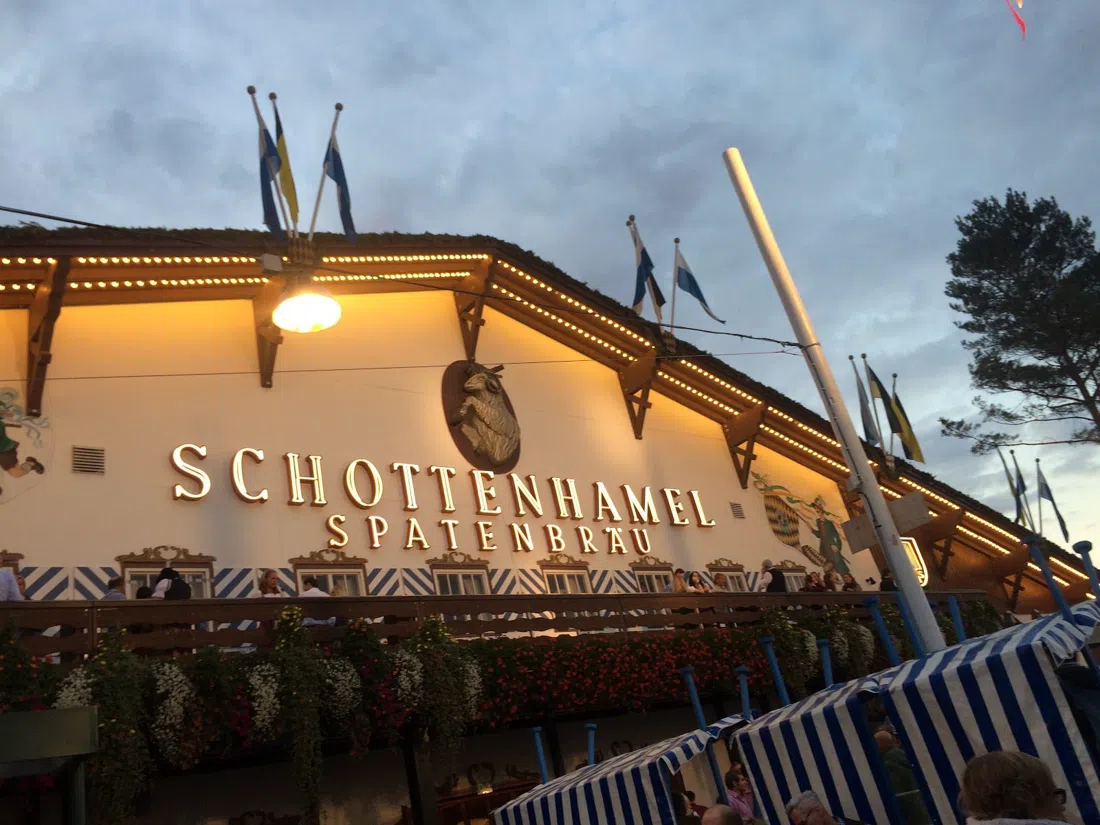
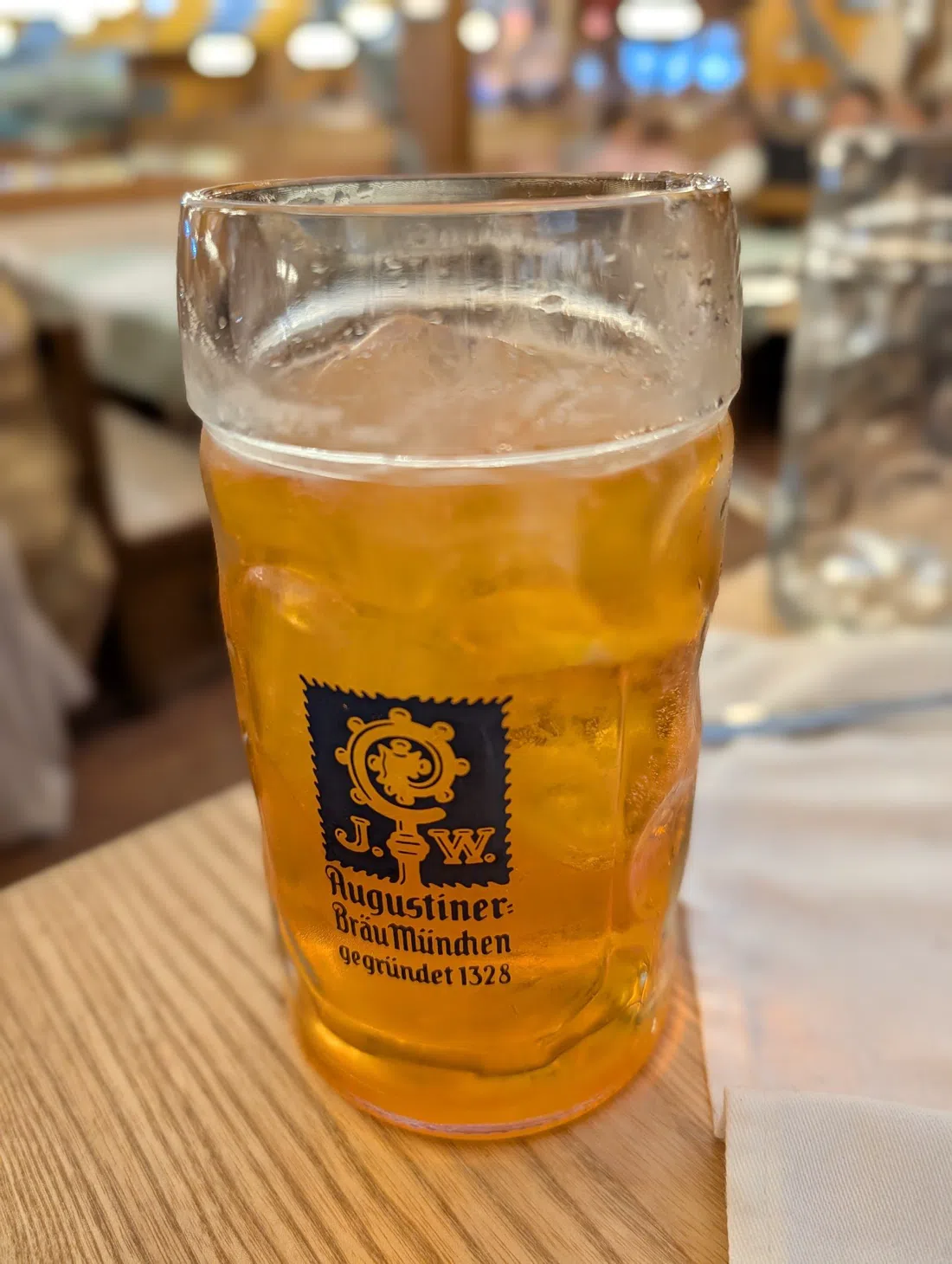
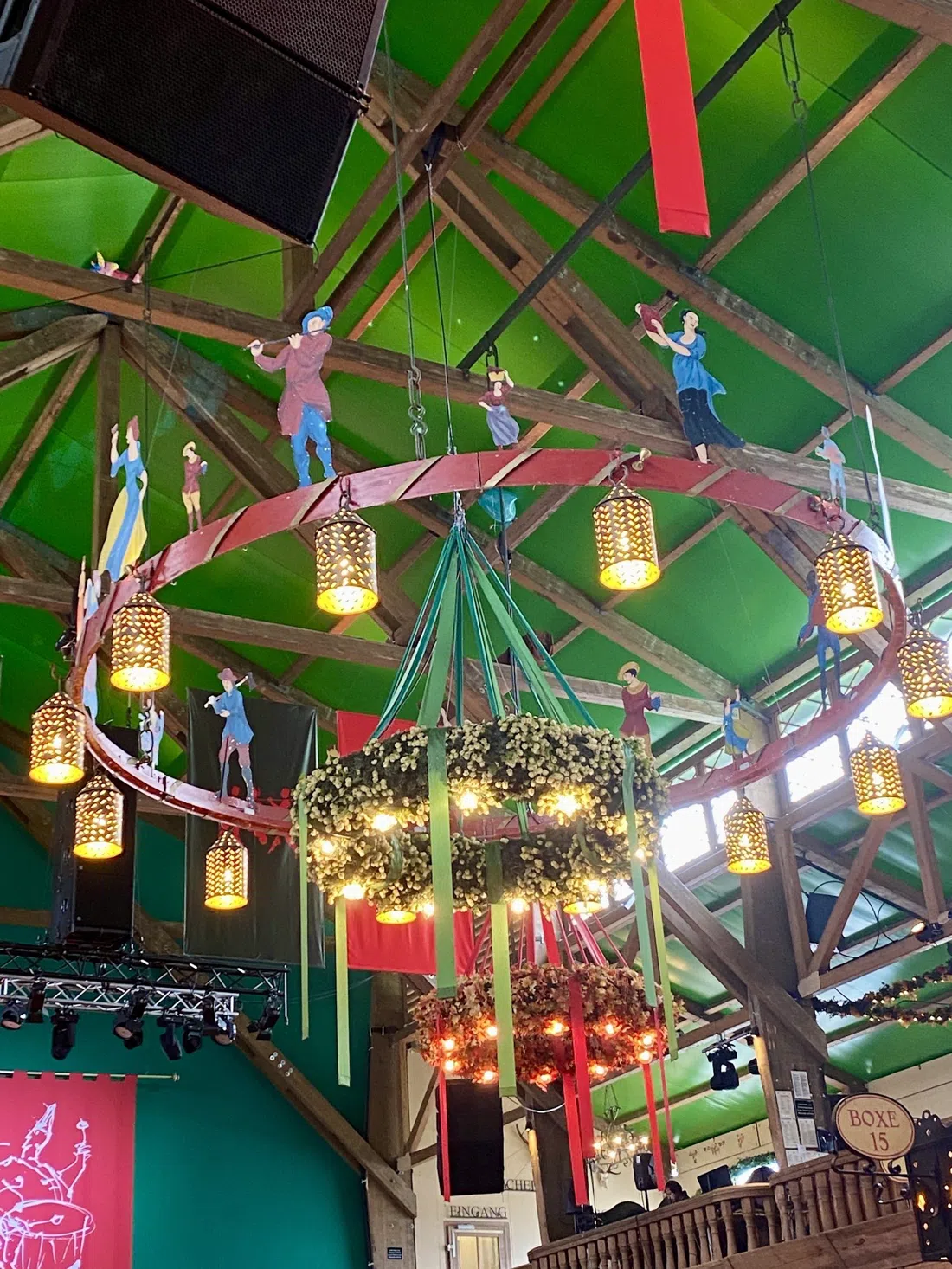
Festhalle Schottenhamel is where the tapping happens, the tent the whole festival opens from. Reservations for opening weekend book out nearly a year in advance, but a weekday table is genuinely gettable if you ask. Hofbräu-Festzelt is the internationally famous one: the easiest big tent for a group of visitors who don't speak German, with English spoken everywhere and a standing floor that's walk-in even when every table is booked. It runs on families and quiet conversation at lunch and turns into a full-volume singalong by 8pm, the clearest single example on the Wiese of a tent's day mood versus its evening mood. Hacker-Festzelt has the best interior on the grounds, a painted sky ceiling that shifts with weather and stage lighting, worth walking through even if you're not staying. Groups are welcome, though a guaranteed weekend table needs a reservation. Augustiner-Festhalle is the pick for the least touristy version of a big tent: wooden-cask beer, a heavier local crowd, and, unusually for the big tents, a large number of seats deliberately held back for walk-ins, especially out in the attached beer garden. Paulaner Festzelt, also called Winzerer Fähndl, is the largest tent on the grounds, under new hosts Christine and Lorenz Stiftl for 2026, and its rotating stein tower on the roof is the single easiest landmark for finding your bearings anywhere on the Wiese. Löwenbräu-Festzelt has the roaring mechanical lion above its entrance, one of the festival's genuine visual gags, and it's one of the more realistic big tents to walk into outside the weekday-lunch reservation crush. Marstall Festzelt, done up with an equestrian theme, is the most polished of the big tents and skews more reservation driven, a good choice if you want the scale of a big tent with less of the rowdiness. Across all of them, expect a Maß (the one-litre glass mug) to run €14.80-€15.90 in the 2026 range set by each tent's host and reviewed by the city, with Augustiner at the low end at €14.90.
The smaller tents worth knowing about
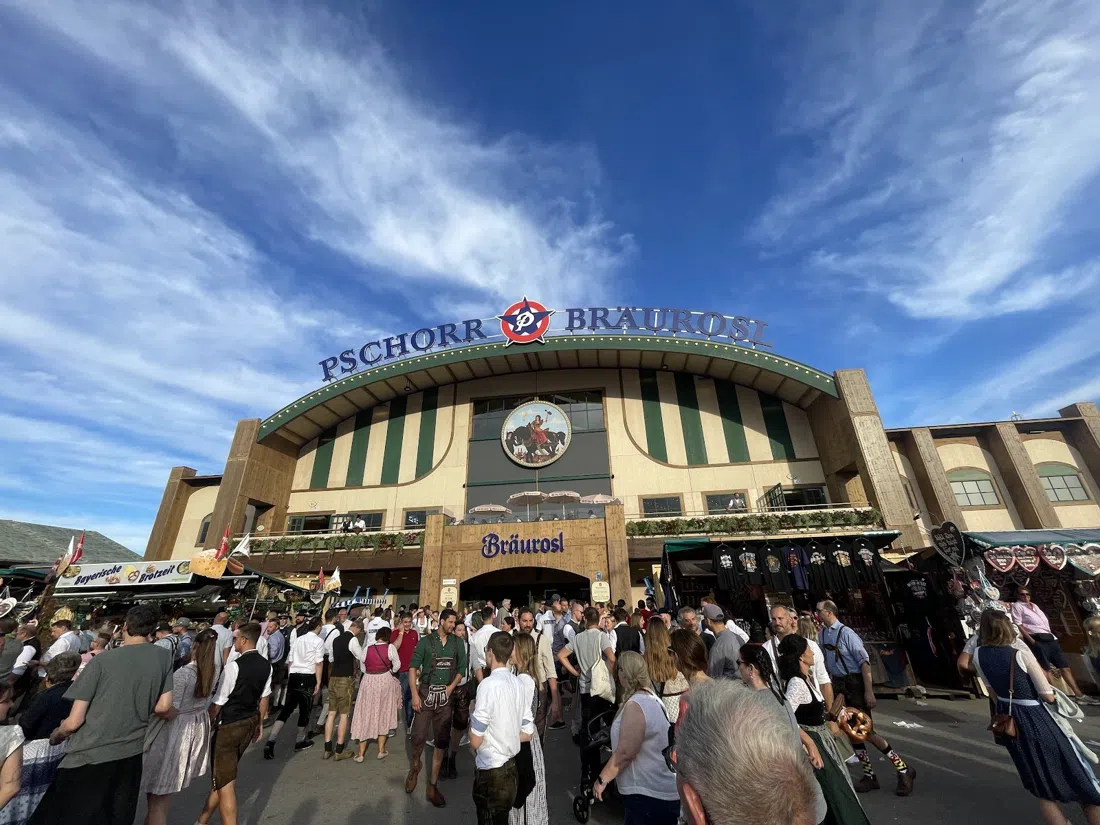
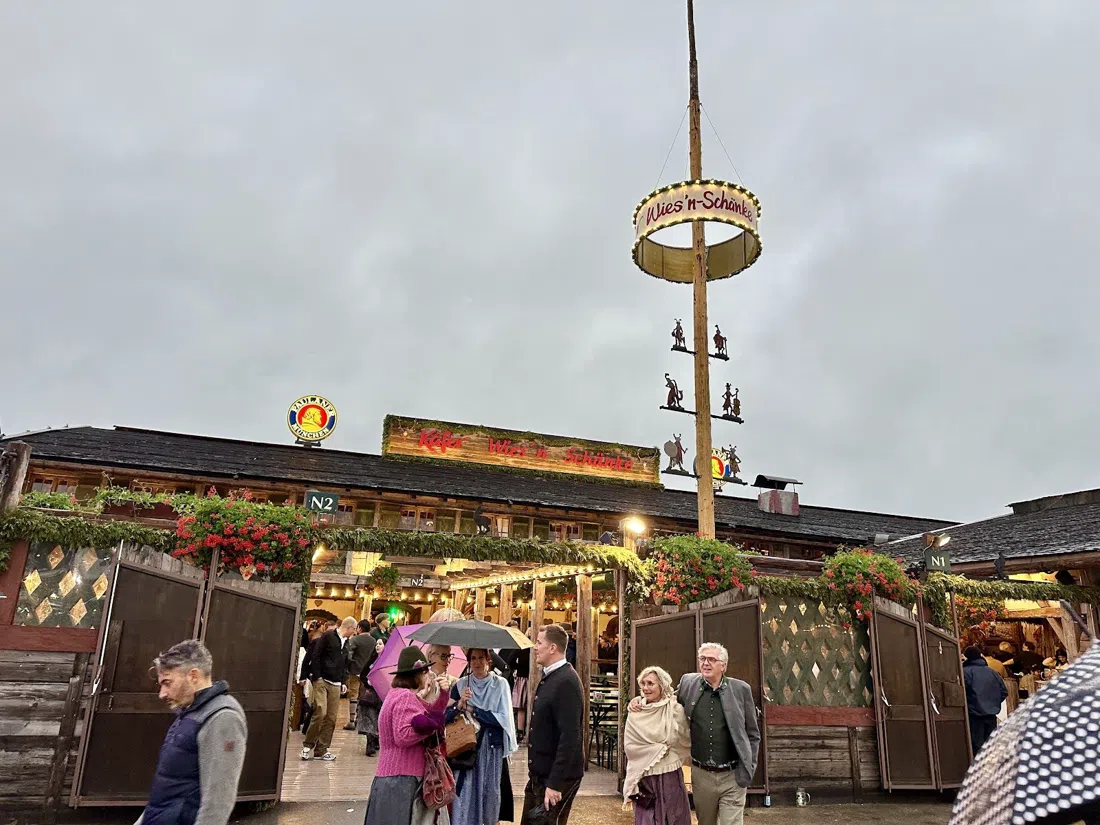
Käfer Wiesn-Schänke is, plainly, the hardest tent on the entire Wiese to get into: reservations open months out and last-minute access is difficult even for Münchners with connections, and its pricing sits toward the top of the 2026 range, close to €16.90 a Maß by some pricing round-ups. It's worth naming for what it tells you about the festival rather than as a realistic plan: this is what the "locals and celebrities" version of Oktoberfest looks like, and it's not the version most visitors will see. Kufflers Weinzelt is the one tent on the grounds that isn't built around beer at all: wine and champagne by the glass or bottle, the smallest of the big tents at under 2,500 seats, and a noticeably calmer pace than anywhere else on the fairground. It's a genuinely good move for a couple who want the atmosphere without the mass-beer tempo, though its size means groups need to book well ahead. Fischer-Vroni is the real hidden gem of the list: smaller, food-led rather than spectacle-led, built around fish specialities, and one of the better bets for walking in without a reservation, especially at opening time or on a weekday afternoon between 2 and 4pm. It also follows Munich's post-2005 noise rules to the letter (brass music only, capped volume, last orders by 6pm), which makes it one of the few tents where you can actually hold a conversation. Pschorr-Festzelt Bräurosl is the tallest tent on the grounds and the one with the best history hook: it was the first tent at Oktoberfest to get electric light, in 1901, and it's named after a real person rather than a brewery slogan. Reservations open each January, but groups are welcome and it's worth a walk-through for the history alone.
Where the locals actually slip away
The Oide Wiesn does the quiet-afternoon job better than anywhere else on the grounds. Three smaller tents sit inside it, Festzelt Tradition, Schützenlisl and Boandlkramerei, and none of them come close to the queues at the main-ground giants. It's a brass-band, dirndl-and-lederhosen kind of afternoon rather than an EDM-adjacent evening, and it's genuinely where you take grandparents or small children without anyone having a bad time. The festival also runs family days with reduced ride prices on the fairground on the first two Tuesdays, which pairs naturally with an afternoon in the heritage section. Beyond that, the trick to a quiet Oktoberfest is timing rather than geography: any tent, even Hofbräu, is a different and calmer place at 11am on a Tuesday than at 7pm on a Saturday, and Fischer-Vroni's 2-4pm weekday window is the closest thing on the whole Wiese to a guaranteed table without a booking.
Dirndl and lederhosen without the tourist markup
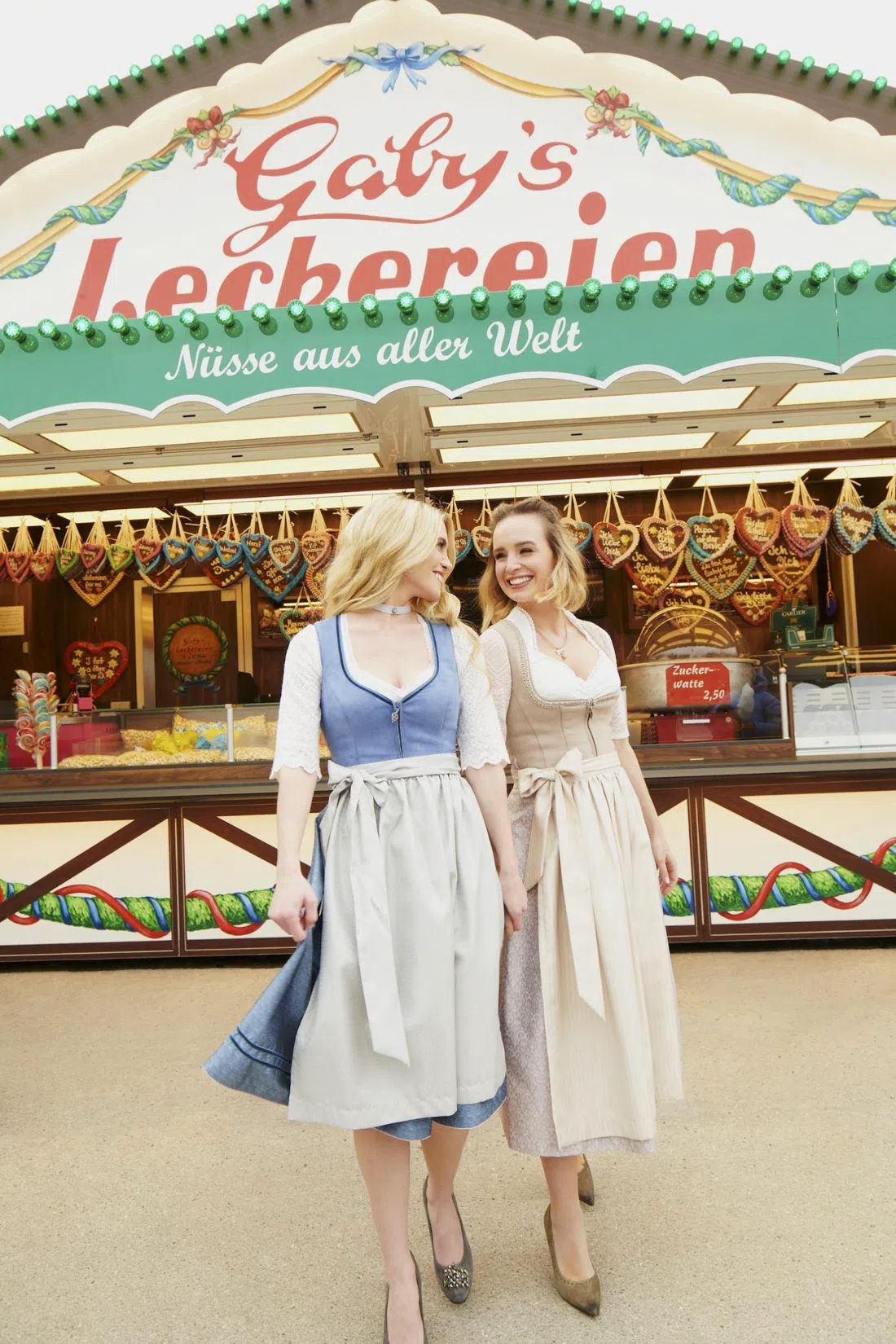
Wearing Tracht (the dirndl for women, lederhosen for men) isn't costume in Munich. It's what a large share of the crowd wears without irony, and turning up in it is read as effort rather than appropriation. The trap is the difference between real Tracht and the cheap polyester versions sold as festival novelties: proper cotton dirndls and leather lederhosen cost noticeably more because the materials and construction are genuinely different, not because of a tourist markup. Trachten Angermaier (Altstadt, central Munich) is the city's biggest traditional-costume specialist, 76 years in the trade, and it regularly handles tour groups and bulk fittings through September. Book ahead if you're arriving as a group. Buying mid-tier there runs roughly €150-€400 for a proper set; renting is the more sensible option for a single trip, and other outfitters around the city rent lederhosen or a dirndl for about €33-€43 a day. Either way, buy or rent before you fly rather than at a Wiesn souvenir stand, where the same money buys something that will visibly fall apart by the second tent.
Gemütlichkeit, toasts and the etiquette of sharing a table
Gemütlichkeit is the word the whole festival runs on, and it translates roughly as a warm, unhurried, shared kind of comfort, which is why strangers end up singing at the same long wooden table by the second hour. The etiquette is simple but not obvious: you don't sit down at a table without asking, even if there's an obviously empty seat, and once you're seated, a raised Maß and a shouted "Prost!" (or "Ozapft is!" if it's opening weekend) is the standard toast before anyone drinks. The brass bands, not DJs, set the tempo in every big tent, alternating oompah standards with a handful of pop songs the whole room knows the words to. The festival's own calendar adds two set-piece parades worth building a morning around: the Einzug der Wiesnwirte, when the tent hosts, brewery wagons and waitresses parade from Sonnenstraße to the grounds on opening morning, arriving around 11:30am ahead of the noon tapping, and the Trachten- und Schützenzug, a nearly seven-kilometre procession of costume groups, riflemen's clubs and marching bands that has opened the festival's first Sunday every year since 1950. In 2026 that's Sunday 20 September, setting off from the Maximilianeum area around 10am.
What actually goes wrong and how to avoid it
The single most common mistake is assuming you can walk into any tent on a Friday or Saturday evening: by early afternoon, every big tent's doors close once it hits capacity, reservation holders or not, and they don't reopen until a table clears. Arrive before 11am on the days you actually want a big tent, or shift the plan to a weekday lunch, when tables are dramatically easier. Reserved tables are also genuinely reserved: sitting down at one because it looks empty is one of the fastest ways to get moved on by staff, and reservation blocks typically run until a set time printed on the table, after which anyone can sit, so check that time rather than guessing. On the beer itself: Wiesnbier is brewed stronger than standard lager, typically 6% or a little above, and a Maß is a full litre, so pacing matters more than it looks like it should after the first one. Eat something substantial before you start, drink water alongside the beer, and don't try to match a table of regulars round for round. Bring cash: most tents and stalls still don't take cards for a quick beer or a pretzel, and card machines that do exist queue badly under pressure. Crowds this dense are also exactly where pickpockets work, particularly on the packed U-Bahn platforms and inside the tents once everyone's arms are full of steins; keep valuables in a front pocket or a bag worn across the body, zipped. If every tent you try is genuinely full, the honest fallback is the Oide Wiesn or one of the smaller tents like Fischer-Vroni rather than waiting outside a closed door. Getting home is easier if you leave before the last U-Bahn crush rather than with it; Schwanthalerhöhe again beats the main station for a faster walk to a train that isn't already full.
Getting there, cash and budgeting for the Wiese
Take the U4 or U5 to Theresienwiese, or walk the extra stop from Schwanthalerhöhe if you're arriving during peak evening hours. Grounds entry is free; budget separately for beer (€14.80-€15.90 a Maß at most tents, up to around €16.90 at Käfer), food, and rides if you're doing the fairground. Bring more cash than feels necessary: a night that mixes a couple of Maß, food and a reservation tip easily runs past what a card alone will smoothly cover. Book tent reservations as far ahead as you can for weekends, especially for Schottenhamel on opening weekend or anything at Käfer or Kufflers Weinzelt, and treat weekday lunchtimes as the reliable walk-in window everywhere else. If you're building a longer Munich trip around it, start with the Munich guide for the rest of the city, and lock in a room through the Munich hotel search well before September: anything within walking distance of the U4/U5 line sells out first, and taxis on Wiesn nights are neither cheap nor fast.